
November Event Security Guide 2026: Fall Events to Holiday Season Safety in Los Angeles
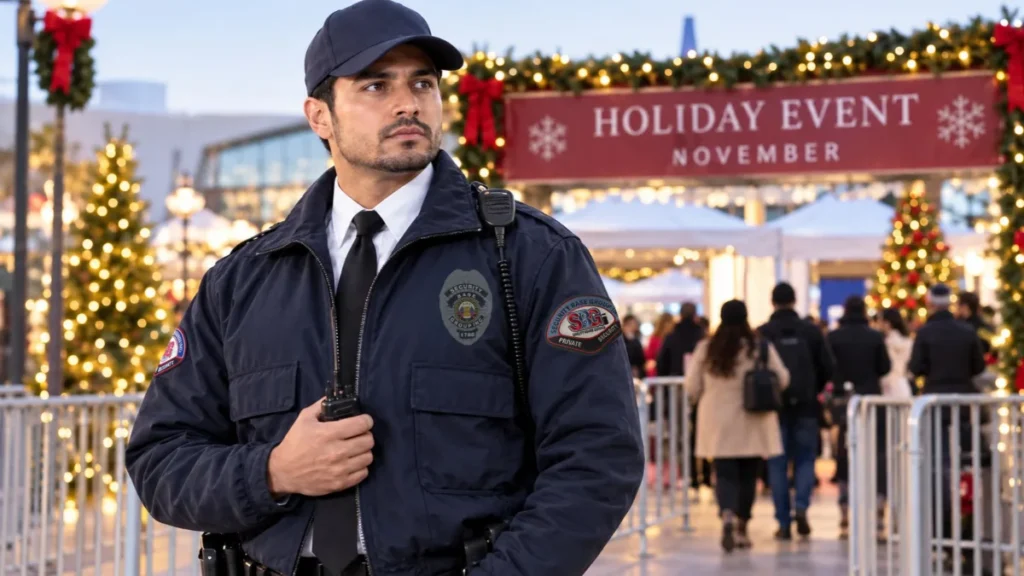
In November, Los Angeles event calendars stop being seasonal and start getting crowded. Late fall festivals are still running, Thanksgiving gatherings fill banquet halls and private homes, corporate year-end functions begin, and the first holiday markets open before the month is over. In 2026, Thanksgiving falls on November 26, so Black Friday and the first big holiday weekend land in the final days of the month.
That mix changes what security needs to do. Fall event security is about moving pedestrians and managing vendors. A Thanksgiving dinner is about knowing who is in the room. A holiday market is about congestion, queues, and merchandise. This November event security guide explains those differences and shows how to plan for holiday-season safety in Los Angeles before the rush leaves you short on staff, time, and options.
Why November Events Require a Different Security Approach in 2026
Attendance is the first difference. Many events grow in November because they are free, family-oriented, or tied to a holiday. A community event that drew 400 people in September may draw far more once the weather cools and schools close for Thanksgiving week. Infrastructure is the second.
Holiday events rely on temporary tents, string lighting, extension cords, stages, fencing, and rented heaters, and each one changes how people move and where hazards sit. Early darkness adds another layer: an event that ended in daylight in September now ends after sunset, so lighting and parking-lot visibility become security issues. Staffing is the third. Licensed personnel are in demand across the same few weeks, and organizers who wait until mid-November often end up with crews assembled in a hurry and briefed poorly.
Major November Events and Gatherings That Need Security Planning
Fall Festivals and Outdoor Community Events
Outdoor festivals spread across parks, streets, and parking lots, which makes them hard to monitor. Pedestrians cross lanes used by delivery trucks, food vendors run generators and propane, and temporary structures create blind corners. A few clearly marked entrances are easier to staff than many informal openings. Assign a guard to the vendor loading area, usually the least supervised part of the site, and keep fire lanes clear of booths.
Thanksgiving Events and Corporate Gatherings
Thanksgiving event security starts with guest verification, because these events are often invitation-only. A guard at the door with a printed or digital list, and a clear rule for plus-ones prevents the problems that come from invitations circulating on social media. Vendors should use a designated entrance, wear identification, and know which areas are off-limits. If alcohol is served, guards and bar staff should agree in advance on who handles an intoxicated guest; a quiet escort to a rideshare at 9 p.m. beats a confrontation at 11.
Holiday Markets, Shopping Events and Seasonal Celebrations
Holiday markets create steady, dense foot traffic. Narrow aisles between stalls become bottlenecks, and queues for popular vendors or limited-release merchandise can spill into walkways. Guards should manage queues with simple barriers, keep exits open, and watch for people entering through vendor routes. Vendors need lockable storage, and someone should patrol overnight.
Private Parties, Fundraisers and Family Celebrations
Private events carry a different risk because the venue is often someone’s home or a rented estate. A guest list, one controlled entrance, and a plan for where cars park keep the property from becoming an open house. Discreet VIP protection at fundraisers means a coordinated arrival, a defined route through the venue, and a guard who knows the guest’s schedule. At residential events, agree on which rooms are closed to guests.
Holiday Season Safety in Los Angeles: Security Risks Event Organizers Should Understand
Holiday season safety in Los Angeles depends on the region’s layout as much as the calendar: cars, shared streets, and a patchwork of private and public property shape every risk below.
Increased Foot Traffic and Crowd Congestion
Crowding rarely begins as an emergency. It starts as a slow queue, a blocked path, or a stage that draws more people than expected. Guards at natural choke points can redirect flow early. A holiday market with one entrance and one exit, for example, fills unevenly; a second exit and someone counting entries keep conditions manageable. Good holiday crowd safety is mostly this kind of early, quiet adjustment.
Vehicle Access and Parking Lot Security
Los Angeles events often depend on surface lots and parking structures, so vehicle control matters. Typical problems are blocked fire lanes, theft from parked cars, and pedestrians crossing driveways in the dark. Mark pedestrian routes, direct traffic at arrival and exit, and patrol lots while the event runs.
Theft, Unwanted Visitors and Property Protection
Crowded events favor opportunistic theft, from unattended bags to unlocked vendor displays. Lock equipment storage, make sure staff can identify who belongs in back-of-house areas, and handle uninvited guests calmly at the entrance, not after they have mingled.
Changing Weather and Outdoor Event Conditions
November in Southern California can bring wind, cool evenings, and occasional rain. Wind topples tents and signage, and rain makes tarps, cords, and stage surfaces slippery. Outdoor event security should include a weather trigger plan: who decides to pause or close the event, how that is announced, and where people go.
Fire Safety and Seasonal Decorations
Dry decorations, string lights, candles, and heaters raise fire risk, especially in enclosed tents. Keep decorations away from heat, use properly rated cords, and never let displays block exits. Confirm permits and occupancy limits with the venue and the local fire authority.
Essential Event Security Measures for November and Holiday Season Gatherings
Access Control and Guest Verification
Access control means deciding who gets in, where, and how. At a corporate dinner, it may be a guest list and name badges; at a ticketed market, scanned tickets and wristbands. The goal is consistency: the same rule at every entrance, applied politely, with a supervisor to resolve exceptions.
Crowd Management and Entry-Exit Monitoring
Crowd management is mostly observation. Guards watch density, listen for tension, and redirect people before a line becomes a crush. Counting arrivals and departures tells organizers when they are approaching capacity, and unobstructed exits let people leave quickly if needed.
Parking, Perimeter and Mobile Patrol Security
A perimeter patrol checks fencing, gates, loading zones, and lots that fixed posts cannot see. At larger or spread-out events, mobile patrol security covers multiple points, responds to alerts, and checks the site before opening and after closing.
Surveillance and Incident Reporting
Cameras help at entrances, cash areas, and storage, but only if someone reviews them. Written reports matter just as much: documenting incidents, from a medical call to a trespass warning, protects organizers. See these security guard daily activity report examples and best practices.
Emergency Response and Evacuation Readiness
Every guard should know the nearest exits, first aid and fire equipment, and how to reach the event lead and emergency services. Walk the evacuation route before doors open and agree on a meeting point away from the building.
How to Prepare an Event Security Plan for November 2026
Good event security planning follows a clear sequence:
- Assess attendance and event-specific risks: Estimate realistic turnout, including walk-ups, and weigh alcohol service, VIP guests, cash handling, and time of day.
- Conduct a venue walkthrough: Visit at the same time of day as the event to check lighting, sightlines, and foot traffic.
- Identify entrances, exits, restricted zones, and emergency routes: Mark them on a site map shared with all staff.
- Determine security personnel requirements: Match staffing to the layout and crowd, not just headcount.
- Establish communication procedures and post orders: Give each post written duties, check-in times, and escalation steps.
- Coordinate with venue managers, vendors, and organizers: Confirm load-in times, access routes, and who makes decisions.
- Review arrangements before the event opens: Brief the team, test radios, and confirm every post is covered.
Example: 300-Person Thanksgiving Gathering vs. Large Outdoor Holiday Market
A 300-person Thanksgiving gathering in a banquet hall has one main entrance, a guest list, and a fixed schedule. A reasonable approach is a guard at the door for verification, another moving through the room and restricted areas, and someone checking parking at arrival and departure.
A large outdoor holiday market is a different problem. Thousands of people may pass through over several days, with vendors, queues, and parking lots to oversee. That calls for a supervisor, guards at each entrance, roaming guards for congestion and theft, vendor-area monitoring, overnight protection of stock, and mobile patrol on the perimeter. One plan cannot serve both.
Choosing the Right Security Guards for Different Holiday Events
California regulates guards through the Bureau of Security and Investigative Services (BSIS). When hiring, ask whether the people on your site are BSIS-licensed security guards and whether the company holding the contract is properly licensed.
Unarmed Security Guards
Unarmed guards handle most event work: checking guest lists, controlling entrances, patrolling, observing, and reporting. They deter problems through presence and call law enforcement when a situation exceeds their role. For most holiday event security needs, including markets, corporate dinners, and fundraisers, this is the right level.
Armed Security Guards
Armed guards are used in limited situations with a documented, elevated risk, such as large amounts of cash or specific threats. In California, armed duty requires additional BSIS authorization and training beyond standard registration. An armed post should be backed by a written risk assessment and approved by the venue and insurer. For most family-oriented events, it is unnecessary.
Mobile Patrol and Supervisory Security
Mobile patrol covers parking areas, perimeters, and multiple sites without a fixed post at each. Supervisors manage the team, handle exceptions, and link guards to the organizer. On larger events, a supervisor is what turns a group of individuals into a coordinated team.
Los Angeles Event Security Considerations for Local Organizers
Los Angeles is a collection of very different environments, so a plan that works in one area may fail in another. These are general planning considerations, not claims about crime levels.
- Downtown Los Angeles: Dense pedestrian traffic, mixed commercial and residential buildings, and event-day street closures make entry control, crowd flow, and coordination with building management priorities.
- Hollywood and West Hollywood: Busy sidewalks and nearby nightlife make queue management and communication with neighboring businesses useful. Parking is limited and often shared.
- Santa Monica: Outdoor events near the coast and public spaces call for attention to weather, visitor volume, and permits for public areas.
- Burbank and Pasadena: Studio lots, corporate campuses, and civic spaces often have their own access rules. Confirm who controls the property and how credentials are issued.
- Beverly Hills and Bel Air: Private estates and residential streets call for discreet guest verification, valet and parking coordination, and respect for neighbors and local rules.
In every area, ask who controls the space, how people and vehicles arrive, and how many attend.
November Event Security Checklist for Event Organizers
- Expected attendance and venue capacity
- Entrance and exit arrangements
- Guest verification
- Security personnel assignments
- Parking and loading areas
- Lighting and temporary installations
- Emergency communication
- Vendor coordination
- Pre-event security briefing
- Post-event inspection
When Should You Hire Professional Event Security Guards in Los Angeles?
Professional support makes sense when the cost of a problem exceeds the cost of prevention. Large gatherings, holiday markets with heavy foot traffic, ticketed events, private parties with high-profile guests, corporate functions serving alcohol, and venues with restricted access all benefit from trained personnel.
Security Base Group (SBG) is a licensed California security provider offering professional security services, including event security. Organizers who want help assessing risk, staffing posts, or building a plan can review SBG’s event security guards in Los Angeles service page. Security staff cannot eliminate every risk, but they can lower it, respond faster, and keep an event running when something goes wrong.
Frequently Asked Questions
1. Why is the November Event Security Guide important in Los Angeles?
November combines larger crowds, early darkness, temporary installations, and a packed holiday calendar. Security helps manage access, congestion, parking, and emergencies.
2. What security measures are important for Thanksgiving events?
Guest verification, vendor coordination, restricted-area control, responsible alcohol handling, and clear exits matter most. Parking supervision and a short pre-event briefing also help.
3. How many security guards are needed for a holiday event?
There is no fixed ratio; it depends on layout, attendance, alcohol service, and risk. A 300-person indoor gathering may need a small team, while a large outdoor market needs entrance, roaming, and perimeter coverage plus a supervisor. A venue walkthrough settles it.
4. Should outdoor holiday events have mobile patrol security?
Often, yes. Outdoor events with parking lots, wide perimeters, or overnight equipment benefit from mobile patrol, which covers areas fixed posts cannot.
5. When should event organizers book security guards for holiday events?
As early as possible, ideally several weeks ahead, because demand rises sharply in November and December. Early booking also leaves time for a walkthrough and a proper briefing.
Final Thoughts: Make November and the Holiday Season Safer for Everyone
A safe November rests on a few habits: plan early, control access, manage crowds before they become a problem, use trained personnel, and prepare for emergencies before they happen. Done well, none of it feels heavy-handed; guests simply notice that the event ran smoothly. Use this November event security guide as a starting checklist, then adapt it to your venue.
If you are organizing an event in Los Angeles this season, Security Base Group is available to discuss your requirements at 844-999-9928
 Previous Post


