
Trade Show Security Planning: How to Protect Exhibitors, Equipment, and Deliveries Before Opening Day
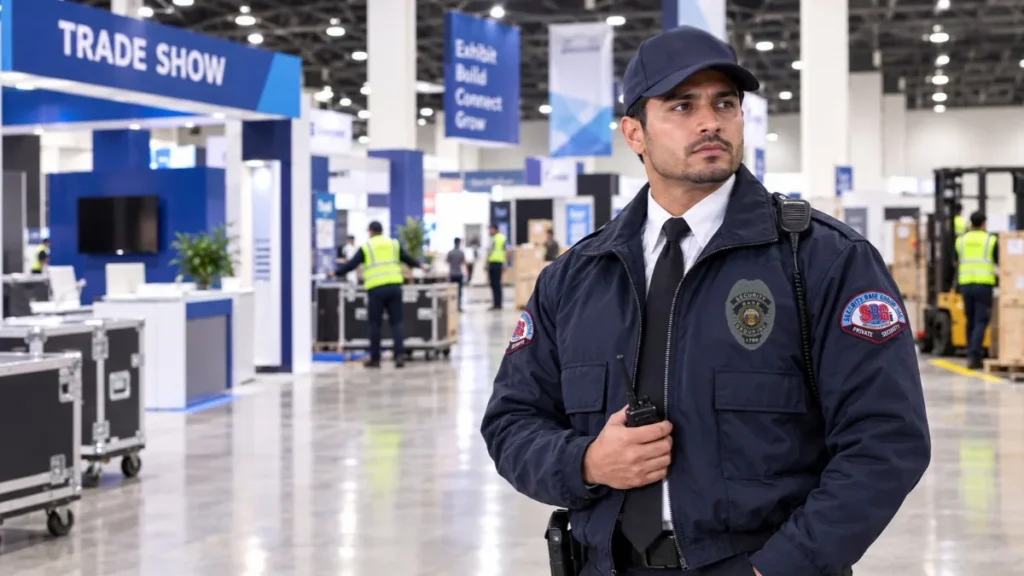
Why Trade Show Security Must Start Before Opening Day
Most people picture trade show security as a few guards at the entrance once attendees arrive. In reality, some of the riskiest hours come before a single badge is scanned. Pallets sit on loading docks, exhibitors unpack laptops and prototypes, contractors move through back corridors, and half-built booths stand open overnight.
That is why trade show security planning has to begin well ahead of opening day. Move-in brings together freight carriers, decorators, audiovisual technicians, exhibitor staff, and venue crews, many of whom have never met. Each needs access to something, but few need access to everything.
For organizers of business exhibitions in Los Angeles, where events run in large convention halls, hotel ballrooms, and multi-use commercial venues with tight dock schedules, the challenge is as much coordination as protection. This guide covers what to assess, who is responsible, and what should be in place before the doors open.
What Is Trade Show Security Planning?
Trade show security planning is the process of identifying risks to people, property, and operations across an exhibition, then assigning procedures, responsibilities, and trained personnel to manage them. It is a specialized form of event security planning, shaped by high-value goods, many temporary workers, and constantly changing access.
Pre-show security differs from security during public hours. Once the show is open, attention shifts to attendee flow, credential checks, and a visible presence on the floor. Before opening, the priority is controlling who enters work areas, tracking what comes in and out, and protecting property nobody is watching.
Responsibilities usually divide like this:
- Organizers set security requirements, approve access rules, and brief exhibitors.
- Venue management controls building systems, dock availability, house rules, and emergency procedures.
- Exhibitors protect and document their own inventory and follow booth rules.
- Logistics teams keep to delivery windows, carry paperwork, and report discrepancies.
- Security personnel enforce access rules, patrol, document incidents, and escalate problems.
When roles are written down, gaps become visible. When they are assumed, gaps become losses.
The Biggest Security Risks Before a Trade Show Opens
The same problems appear at nearly every exhibition:
- Unauthorized access: Propped-open move-in doors and a hi-vis vest let almost anyone pass as crew.
- Portable equipment theft: Tablets, cameras, and demo units are easy to carry and resell.
- Unattended deliveries: Crates left at the dock without a named recipient can be taken or misdelivered.
- Unsecured booths: Partly built booths holding valuables, with no lock, are a common weak point.
- Contractor access: Subcontractors who arrive without credentials, or bring extra helpers, multiply the unknown people in the building.
- Vehicle movements: Trucks backing into docks while pedestrians cross create safety risks as well as theft opportunities.
- Blocked emergency routes: Stacked freight and empty crates can quietly obstruct exits and fire lanes.
Risk varies. A two-day consumer electronics show carries different exposure than a five-day industrial exhibition where heavy machinery is hard to steal but costly to damage. Inventory value, event length, open entrances, and how long booths stay unfinished all shape what needs protecting.
Create a Pre-Show Security Plan and Assign Responsibilities
Effective trade show security planning starts with a walkthrough. Tour the venue with the venue manager, your security lead, and your logistics coordinator. Identify every exterior door, dock, service corridor, freight elevator, storage room, and stairwell, and decide which will be open, locked, or staffed.
Then build the plan around these elements:
- Access points and guard assignments: Match posts to risk; the dock, main hall, storage area, and credential desk need different coverage.
- Restricted zones: Mark areas that need specific credentials, such as storage cages and staging areas.
- Communication: Decide who carries radios, who calls whom, and how the venue’s own security fits in.
- Incident reporting and emergency contacts: Agree on one report format and one recipient, and keep a current contact list.
- Shift handovers: Require a briefing at every change of shift covering open issues and expected deliveries.
Map the plan to the full event lifecycle. During setup, concentrate on credentials and dock control. During opening hours, shift attention to the floor, entrances, and crowds. For overnight protection, define who is on site and how often areas are patrolled. During teardown, expect another surge of unfamiliar people and outbound freight.
Finally, plan for change. Delivery windows slip, and trucks arrive early. Decide in advance who may approve a schedule change and how security is told.
How to Secure Exhibitor Equipment, Booths, and Valuable Displays
Exhibitors carry most of the financial risk, so give them clear guidance well before move-in.
- Document everything: Ask for an inventory with descriptions, serial numbers, and photos of high-value items. It speeds up reports and insurance claims.
- Use locked storage: Provide lockable cages or rooms. If an item fits in a backpack and costs a few hundred dollars or more, it shouldn’t stay out overnight.
- Limit booth access during setup: Only registered booth staff should be in a space while it is assembled, and décor and AV helpers should be identified in advance.
- Do end-of-day checks: Exhibitors should clear counters, remove laptops and tablets, and report anything missing. A guard walking the aisles at close can flag unsecured booths.
Some realistic examples:
- A product prototype can stay in a locked crate until each morning’s demonstration.
- Large LED screens and audiovisual gear may need tagged cables and a rule about who powers equipment down.
- Demonstration tablets can sit on locking stands rather than loose on a table.
- A retailer with small, high-resale electronics might ship stock in smaller lots rather than one large delivery.
No measure eliminates every risk, but layered habits make theft harder and problems easier to notice.
Control Deliveries, Loading Docks, and Vendor Access
Deliveries are where trade show security often breaks down, so this is where organizers gain the most.
- Schedule deliveries: Assign time windows. A dock with 15 trucks arriving at once is nearly impossible to manage.
- Keep an approved vendor list: Share it with the dock supervisor and security, and hold anyone not on it until the organizer verifies them.
- Check documents: Drivers should provide a bill of lading, exhibitor name, booth number, and contact details, matched against the schedule before unloading.
- Name authorized recipients: If nobody authorized is present, freight goes to a controlled holding area, not an aisle.
- Keep arrival records: Log time, carrier, driver, piece count, visible condition, and who received it.
- Designate loading zones: Separate vehicle paths from pedestrian routes, mark lanes, assign someone to direct traffic, and keep fire lanes clear.
Prepare for the usual exceptions:
- Late deliveries: Decide who can authorize after-hours receiving and which door is used.
- Unidentified drivers: Hold the vehicle and freight until the organizer or exhibitor confirms the shipment.
- Missing or damaged shipments: Photograph the condition, note it on the log, and report it immediately so it can be traced.
If the dock is your busiest area, treat it as a permanent post rather than a stop on an occasional patrol.
The Role of a Trade Show Monitoring Security Guard
A trade show monitoring security guard does more than stand at a door. Before and after public hours, the role is observation, access control, and documentation.
Typical duties include:
- Loading areas: verifying drivers and paperwork and keeping unauthorized people out of work zones.
- Exhibit halls: walking set routes and noting unlocked booths or valuables left out.
- Restricted entrances and storage rooms: checking credentials and recording who enters.
- After-hours areas: patrolling, checking doors, and responding to alarms or unusual activity.
Good guards write things down. Incident logs, shift notes, and clear reports to a supervisor let organizers understand what happened. Suspicious activity goes through the agreed chain rather than being handled improvisationally.
Camera monitoring can complement this. Cameras can cover dock doors and quiet corridors between patrols, and footage helps review an incident afterward. But cameras don’t respond, challenge, or judge. Trained personnel remain the core of the program.
Plan Crowd Management Security Before Attendees Arrive
Crowd problems seldom start in the crowd. They start in the plan. Crowd management security should be settled before attendees arrive, because once a registration line backs into a main corridor, every fix is reactive.
Think through these points in advance:
- Registration queues: Where will lines form at peak, and will they block entrances?
- Entrances and exits: Decide which serve entry and exit, and how many staff each needs.
- Accessible routes: Keep step-free paths clear of cables and displays.
- High-traffic intersections: Check aisles near food areas and keynote rooms.
- Emergency access: Keep fire lanes and responder routes open.
- Setup versus public movement: Set a cutoff time for freight on opening morning and keep dock traffic away from attendees.
Walk the attendee route yourself the day before; you’ll find bottlenecks faster than any floor plan will.
Trade Show Security Planning in Los Angeles: What Organizers Should Consider
Los Angeles exhibitions take place in convention centers, hotels, and commercial event spaces, each with its own layout and rules. Without assuming anything about a specific venue, a few questions apply almost everywhere:
- Venue layout: How many entrances, docks, and freight elevators exist, and who controls them?
- Delivery access and loading schedules: Are dock slots shared with other events, and what are the move-in and move-out windows?
- Parking: Where do exhibitor vehicles, vendor trucks, and attendees go, and do they overlap?
- Contractor access: Does the venue require its own contractors or credentials for outside vendors?
- Emergency procedures: What are the evacuation plans, and who is the venue contact on the day?
Coordinate with venue management early. Venues often have in-house security or rules for outside providers, and it is easier to settle roles, radio channels, and reporting lines before move-in.
Organizers who want outside help can learn more about event security services in Los Angeles, and the kinds of support available for exhibitions and similar commercial events.
Pre-Opening Security Checklist for Trade Show Organizers
Use this during your final week:
- Venue walkthrough: Inspect every access point, dock, and service corridor, and confirm which doors are open, locked, or staffed.
- Vendors and deliveries: Finalize the approved vendor list, delivery schedules, and late-arrival rules.
- Exhibitor inventory: Collect inventories for high-value equipment and provide locked storage.
- Guards and patrols: Assign posts, patrol routes, and frequency.
- Communication: Issue radios or phones and distribute emergency contacts.
- Exits and crowd flow: Verify emergency exits, fire lanes, accessible routes, and queue layout.
- Unfinished booths and overnight: Confirm who protects incomplete booths and who is on site overnight.
- Final inspection: Complete a security sweep before public admission.
How to Choose the Right Trade Show Security Provider
Choosing by hourly rate or guard count alone often leaves gaps.
Ask more specific questions:
- Event experience: Has the company staffed exhibitions, not only fixed-post sites?
- California licensing and qualifications: Ask for proof of the licenses and training required for guards in California, and check that they are current.
- Supervision and communication: Who oversees posts, and how will guards, supervisors, and venue staff stay in contact?
- Incident documentation: What do reports look like, and how fast do you receive them?
- Staffing plan: How many people cover setup, show hours, overnight, and teardown?
- Insurance and scope: Request certificates, and be clear about what guards will and won’t do.
- After-hours coverage: Confirm who watches the hall at night, and how.
Ask each candidate for a venue-specific security plan rather than a generic quote. A provider who has walked your venue, asked about your schedule, and proposed posts and patrols is more likely to fit your needs than one who simply names a price.
Security Base Group provides event security services in California, and organizers can discuss their venue, schedule, and requirements with the team to see whether the service fits. As with any provider, it’s reasonable to request specifics on staffing, licensing, and reporting before you decide.
Conclusion: Make Security Part of Your Pre-Show Preparation
Protecting an exhibition is largely a matter of preparation. Decide who may enter, track what arrives, give exhibitors practical ways to protect valuables, assign trained people to watch the vulnerable areas, and plan attendee movement before anyone is in the building. No plan removes every risk, but a clear one reduces both the odds and the impact of what goes wrong.
Strong trade show security planning begins weeks before opening day and continues through teardown. If you are preparing an exhibition in Los Angeles or elsewhere in California and want to talk through access control, deliveries, overnight protection, or crowd movement, you’re welcome to discuss your requirements with Security Base Group.
 Previous Post


