
The Ultimate Business Security Checklist: Protects Your Peace of Mind
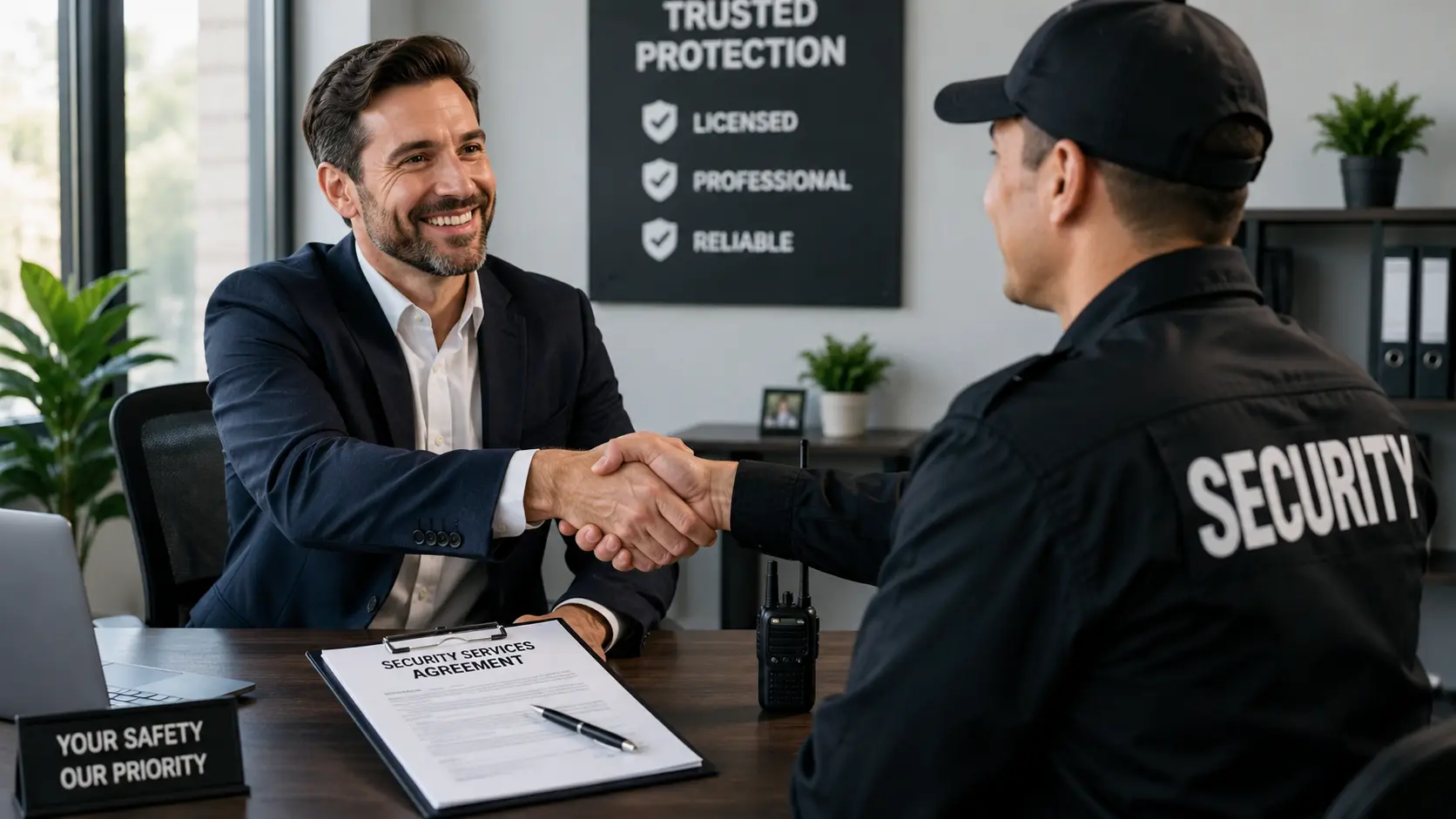
Every business owner reaches a moment when security stops being an abstract concern and becomes a real one: a break-in over the weekend, a shoplifting spree that eats into margins, an angry customer who won’t leave, or a delivery driver who wanders into a restricted area. Theft, vandalism, workplace violence, and unauthorised access aren’t rare events reserved for “other” businesses. They happen to warehouses, retail stores, office buildings, hospitals, schools, and construction sites every single day.
The good news is that most of these incidents are preventable. A well-built business security checklist gives you a repeatable way to spot weaknesses before someone else finds them first. In this guide, you’ll learn exactly what a business security checklist should cover, why it matters more in 2026 than ever before, and how to build one that fits your property, your industry, and your budget. You’ll also get a full breakdown of when it makes sense to bring in No.1 security guard company, mobile patrol, or armed security, along with the mistakes that leave even well-intentioned businesses exposed.
What Is a Business Security Checklist?
A business security checklist is a structured list of security measures covering physical security, access control, surveillance, emergency planning, and employee safety that a business reviews and implements to reduce the risk of theft, violence, property damage, and liability.
Think of it as a diagnostic tool. Instead of guessing whether your property is protected, you walk through a defined set of criteria and confirm, item by item, that each layer of protection is actually in place and working.
A good checklist serves several purposes at once:
- It identifies gaps before an incident exposes them.
- It creates consistency across multiple locations or shifts.
- It gives insurance carriers and auditors documented proof of due diligence.
- It becomes a training tool for new managers and staff.
Every type of organisation benefits from one: retail stores worried about loss prevention, warehouses managing high-value inventory, hospitals balancing open access with patient safety, schools protecting students, and office buildings juggling tenant security across shared spaces.
Why Every Business Needs a Security Checklist in 2026
Security isn’t static, and neither are the risks businesses face. A checklist built five years ago probably doesn’t account for how commercial crime, staffing pressures, and liability exposure have shifted.
- Rising crime risks: Retail theft, catalytic converter theft, and organised retail crime rings have pushed many business owners to reassess their exterior and parking lot security. Commercial burglary tends to spike during economic uncertainty, and criminals increasingly target properties with visible security gaps, unlit corners, broken cameras, and unsecured loading docks.
- Employee safety: Workplace violence remains one of the leading causes of occupational injury in the United States. Employees who don’t feel safe are more likely to disengage, take leave, or leave the company altogether. A visible security presence and clear protocols reduce that risk and reassure staff that their safety is a priority, not an afterthought.
- Customer confidence: Shoppers, patients, and visitors notice security or the lack of it. A well-lit parking lot, a staffed front desk, and visible cameras signal that a business takes safety seriously, which directly affects foot traffic and customer retention.
- Insurance considerations: Insurance carriers increasingly ask about documented security measures during underwriting and claims review. A business that can show a completed security assessment and active protocols often qualifies for better terms and has a much easier time during a claim dispute.
- Legal responsibilities: Businesses have a duty of care to employees, customers, and visitors under premises liability law. Failing to address foreseeable security risks can expose a company to negligent security lawsuits, particularly if a prior incident on the property went unaddressed.
- Business continuity: A single serious security incident a break-in, a violent altercation, a fire can shut down operations for days. Recovery costs, reputational damage, and lost revenue often outweigh the cost of prevention many times over.
- Financial impact: Shrinkage from theft alone costs U.S. retailers tens of billions of dollars annually, and that figure doesn’t include vandalism, liability settlements, or the operational cost of responding to incidents after the fact.
The Ultimate Business Security Checklist
This is the core of the guide: a comprehensive, section-by-section checklist you can walk through at your own property. Use it as a working document, not a one-time exercise.
1. Exterior Security
- Fencing and gates are intact, locked, and free of gaps.
- Perimeter security signage is visible and current.
- Landscaping doesn’t create hiding spots near entrances or windows.
- Dumpster and loading areas are secured after hours.
- Roof access points and utility areas are locked.
Why it matters: Most intrusions start at the perimeter. Strong perimeter security discourages casual trespassing and buys time to detect and respond to anyone attempting unauthorised entry.
Implementation tip: Walk your property’s perimeter at night once a quarter. What looks secure during the day often reveals blind spots after dark.
2. Entry & Exit Security
- All exterior doors have commercial-grade locks.
- Emergency exits are alarmed and monitored, not just for compliance but for real-time awareness.
- Delivery entrances have a separate protocol from public entrances.
- Door propping is prohibited and enforced.
Why it matters: Entry points are the most common failure point in commercial property security. A single propped door can undo every other layer of protection.
3. Access Control
- Key cards, fobs, or biometric access replace shared physical keys wherever possible.
- Access levels are role-based; not everyone needs access to every area.
- Terminated employees are removed from access systems immediately.
- Access logs are reviewed periodically for anomalies.
Why it matters: Access control is one of the highest-return investments in commercial security because it limits exposure without requiring constant human monitoring.
Pro Tip: Audit your access control list every quarter. It’s common for former employees, vendors, and contractors to retain active credentials long after they should.
4. Visitor Management
- All visitors sign in and receive a visible badge.
- Front desk or reception staff are trained to verify identity and purpose of visit.
- Visitor management extends to vendors, delivery drivers, and contractors.
- Sensitive areas require escort for non-employees.
Why it matters: Visitor management closes one of the most commonly exploited gaps: an unfamiliar face walking freely through a facility because no one thought to ask a question.
5. Parking Lot Security
- Parking areas have adequate, consistent lighting.
- Cameras cover entry points, aisles, and pedestrian walkways.
- Mobile patrol or periodic drive-through checks occur during high-risk hours.
- Emergency call boxes or signage are present in large lots.
Why it matters: Parking lot security incidents vehicle break-ins, assaults, and vandalism are among the most common commercial security claims because lots are often the least monitored part of a property.
6. Surveillance Cameras (CCTV)
- Cameras cover all entrances, exits, cash handling areas, and blind spots.
- Footage is stored for a minimum retention period aligned with insurance and legal requirements.
- Cameras are tested monthly to confirm functionality and image clarity.
- Signage indicates active surveillance monitoring.
Why it matters: CCTV serves two functions: deterrence and evidence. A visible, functioning camera system reduces incidents before they happen and strengthens your position if legal action follows one.
7. Alarm Systems
- Intrusion alarms cover all exterior doors, windows, and high-value areas.
- Alarm systems are monitored 24/7 by a certified monitoring centre.
- Response protocols are documented and shared with on-site staff.
- Alarm codes are updated after any personnel changes.
8. Lighting
- All entrances, exits, and walkways are well-lit.
- Motion-activated lighting covers less-trafficked areas.
- Lighting is inspected and maintained on a routine schedule.
Did You Know? Improved exterior lighting is consistently cited by crime prevention researchers as one of the simplest, lowest-cost deterrents against property crime.
9. Employee Security
- Staff receive training on emergency procedures, de-escalation, and reporting protocols.
- Employees have a clear, confidential way to report safety concerns.
- Closing procedures require at least two employees present.
- ID badges are required and checked.
10. Cyber + Physical Security
- Server rooms and network closets are physically locked and access-controlled.
- Security camera systems and access control platforms use strong, unique credentials.
- IT and physical security teams coordinate on incident response.
Why it matters: Physical security failures increasingly create cybersecurity exposure. An unlocked server room is as much a data breach risk as a phishing email.
11. Inventory Protection
- High-value inventory is stored in a locked, access-controlled area.
- Regular inventory audits are compared against sales and shipping records.
- Loss prevention protocols apply consistently across shifts.
12. Warehouse Security
- Loading docks are monitored and access-controlled during and after operating hours.
- Inventory zones are separated from general employee and visitor traffic.
- Mobile patrol checks cover exterior storage and yard areas overnight.
Why it matters: Warehouse security carries unique risk because of large footprints, multiple access points, and high-value goods concentrated in one place, making a single lapse costly.
13. Retail Security
- Point-of-sale areas are monitored by camera and, where appropriate, staff.
- Loss prevention staff or security guards are visible during peak hours.
- Employees are trained to recognise and safely report shoplifting patterns without escalating confrontation.
14. Emergency Response Planning
- Written emergency response plans cover fire, medical emergencies, active threats, and severe weather.
- Staff complete regular emergency response drills.
- Emergency contact lists are current and accessible.
15. Fire Safety
- Fire extinguishers, alarms, and sprinkler systems are inspected on the schedule required by NFPA and local code.
- Fire watch procedures are in place during any period when fire suppression systems are impaired.
- Evacuation routes are posted and unobstructed.
16. Construction Site Protection
- Site perimeter is fenced and clearly marked.
- Equipment and materials are secured overnight, ideally with mobile patrol coverage.
- Site access is logged, and OSHA-required signage is posted.
Why it matters: Construction site protection addresses a unique combination of high-value equipment, materials theft, and liability exposure from unauthorised site access a common target for organised theft.
Business Security Risk Assessment
A checklist tells you what to look for. A security risk assessment tells you how exposed you actually are.
- Step 1: Identify vulnerabilities. Walk the entire property interior and exterior and document every weak point: broken locks, dead camera zones, unsecured access points, poor lighting.
- Step 2: Evaluate threats. Not every vulnerability carries equal risk. A loading dock with high-value inventory and no camera coverage is a higher priority than a rarely used side door.
- Step 3: Prioritise improvements. Rank fixes by risk level and cost. Some, like removing former employees from access systems, cost nothing and should happen immediately. Others, like a full camera system upgrade, require budgeting.
- Step 4: Review regularly. A security assessment isn’t a one-time project. Businesses that reassess annually or after any incident, renovation, or staffing change catch new gaps before they’re exploited.
When Should Businesses Hire Professional Security Guards?
Not every business needs a security guard on-site around the clock, but many reach a point where security guard services become the most effective layer of protection.
| Business Type | Common Trigger for Hiring Security | Typical Service |
| Warehouses | High-value inventory, large perimeter, overnight risk | Mobile patrol, unarmed guards |
| Construction sites | Equipment theft, unauthorised access, liability | Mobile patrol, fire watch |
| Corporate offices | After-hours access, visitor volume | Unarmed guards, access control support |
| Retail stores | Shoplifting, loss prevention, customer altercations | Unarmed or armed guards |
| Hotels | 24/7 public access, guest safety | Unarmed guards, patrol |
| Schools | Student safety, controlled access | Unarmed guards |
| Hospitals | Patient and staff safety, controlled visitor flow | Unarmed guards, armed security in select areas |
| Industrial facilities | Hazardous materials, high-value assets | Mobile patrol, armed security in select cases |
- Mobile patrol works well for properties that don’t need a fixed guard presence but benefit from randomised, documented drive-through checks of parking lots, warehouses, construction sites, and multi-tenant properties.
- Armed security is appropriate in a narrower set of circumstances, typically high-risk environments where the threat level and asset value justify it, such as certain retail, industrial, or high-value transport situations. It should never be treated as a default option; the right call depends on a documented risk assessment, not assumption.
Common Mistake: Assuming armed security is automatically “more protection” than unarmed guards. In many environments, a visible, well-trained unarmed guard combined with strong access control and camera coverage provides more effective, lower-liability protection.
Event Security Checklist
Temporary events introduce risks a standard security plan doesn’t cover: large crowds, unfamiliar layouts, and compressed timelines.
- Crowd management: Plan capacity limits and flow patterns before the event, not during it.
- Entry screening: Define what gets checked at entry points and staff them consistently.
- Emergency exits: Confirm exits are clearly marked, unlocked, and unobstructed throughout the event.
- Parking management: Coordinate traffic flow and lighting for arrival and departure surges.
- Communication: Equip event security staff with radios or a direct line to on-site management.
- Emergency planning: Build a specific response plan for medical emergencies, severe weather, and evacuation; event security should never rely on the venue’s general plan alone.
Event security works best when it’s planned weeks in advance, not the day before doors open.
Common Business Security Mistakes
- Treating security as a one-time setup. Systems degrade, staff turn over, and threats evolve; annual reviews are non-negotiable.
- Ignoring access control audits. Former employees and vendors often retain credentials long after they should.
- Underinvesting in lighting. It’s inexpensive and consistently effective, yet frequently overlooked.
- Assuming cameras alone deter crime. Non-functional or unmonitored cameras offer far less protection than businesses assume.
- Skipping employee training. Staff are your first line of defence; untrained staff can’t respond effectively.
- No documented emergency plan. Verbal plans fall apart under pressure; written, practised plans don’t.
- Overlooking parking lot security. It’s often the least monitored, highest-incident area of a property.
- Choosing armed security by default. The wrong fit raises liability without necessarily raising protection.
- Failing to secure the cyber-physical overlap. An unlocked server closet undermines every other security investment.
- Delaying a professional risk assessment. Many businesses wait until after an incident to evaluate their vulnerabilities; by then, the cost has already been paid.
How Security Base Group Helps Protect Businesses
Security Base Group works with business owners, property managers, and facility teams to close the exact gaps outlined in this checklist. Rather than offering a one-size-fits-all package, the team builds customised security plans based on each property’s layout, industry, and risk profile.
Services include commercial security for offices, retail, and industrial properties; mobile patrol for warehouses, construction sites, and multi-tenant properties; armed security for higher-risk environments where it’s genuinely warranted; fire watch coverage when suppression systems are impaired; and event security for temporary, high-traffic situations.
Every security guard assigned by Security Base Group is a licensed security guard who meets California’s BSIS state requirements for training and certification. Every plan starts with an honest conversation about what a property actually needs, not what sounds impressive. The goal is straightforward: reduce risk, support your team, and give you a documented, defensible security posture.
Frequently Asked Questions
What should be included in a business security checklist?
A complete checklist covers exterior security, access control, visitor management, surveillance, alarm systems, lighting, employee safety protocols, and emergency response planning, reviewed and updated on a regular schedule.
How often should a business review its security checklist?
Most businesses should conduct a full review annually, with additional reviews after any security incident, renovation, staffing change, or expansion.
What’s the difference between mobile patrol and on-site security guards?
On-site guards remain at a fixed location continuously, while mobile patrol conducts scheduled, randomised checks across one or multiple properties, often at lower cost for lower-risk sites.
Do small businesses need a security risk assessment?
Yes. Small businesses are frequently targeted precisely because they’re assumed to have weaker security than larger companies with dedicated security teams.
When is armed security actually necessary?
Armed security fits high-risk environments where a documented threat and asset value justify it; it should follow a formal risk assessment, not a default assumption.
How much does commercial security cost?
Costs vary widely based on property size, coverage hours, and service type; mobile patrol tends to cost less than fixed guard coverage, while armed security typically carries a premium.
What is the biggest security mistake businesses make?
Treating security as a one-time setup rather than an ongoing process; systems, staffing, and threats all change over time.
Does having a security guard reduce insurance costs?
Documented security measures, including guard coverage, often support better underwriting terms and stronger claims outcomes, though specific savings depend on the carrier.
What should a visitor management policy include?
Sign-in procedures, visible badges, identity verification, and escort requirements for sensitive areas.
How does fire watch differ from standard fire safety measures?
Fire watch involves trained personnel actively monitoring a property when fire suppression or alarm systems are impaired or offline, providing coverage that automated systems temporarily can’t.
Conclusion
A safe, well-protected business doesn’t happen by accident; it happens because someone took the time to walk the property, ask hard questions, and close the gaps before they became incidents. Use this checklist as a starting point, revisit it regularly, and treat it as a living part of how you run your business, not a one-time task to file away.
If you’re ready to move from Business Security Checklist to action, get a free quote from Security Base Group, which offers professional security assessments tailored to your property and industry. Reach out today to discuss where your business stands and what it would take to close the gaps.


