
Protective Security Officer in San Diego: Guide With 8 Hiring Checklist
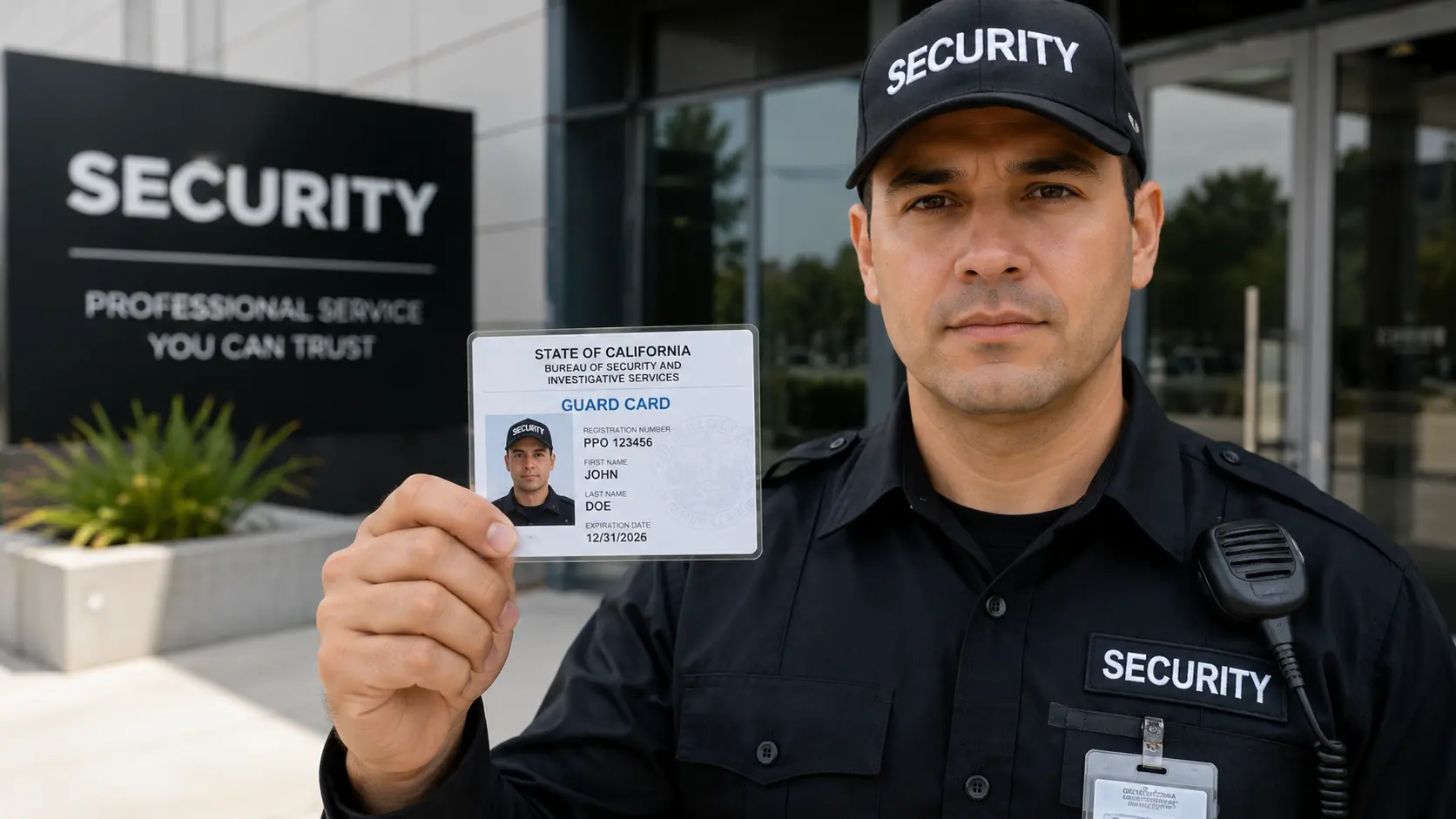
If your business has ever dealt with a break-in, a trespasser, or a customer incident that got out of hand, you already know why a business hires a security guard company in San Diego for security help. A protective security officer in San Diego is trained to stop those situations before they escalate, not just write a report after the fact.
This guide covers what the job involves, what California law requires, which industries need it most, and how to pick a provider you can trust.
What Is a Protective Security Officer?
A protective security officer is a licensed, trained guard who actively prevents harm to people and property, rather than simply observing and reporting. The role blends patrol work, access control, risk assessment, and emergency response into one position.
Quick answer for search: A protective security officer is a state-licensed guard professional who monitors, patrols, and protects a property by preventing incidents before they happen and responding quickly when they do.
They’re common at commercial buildings, hospitals, hotels, and construction sites across San Diego, anywhere a business needs more than a camera system to feel secure.
What Does a Protective Security Officer in San Diego Do?
Daily duties shift depending on the site, but most assignments share a common core.
- Access control and visitor management: Verifying IDs, checking visitor logs, and keeping unauthorised people out of restricted areas are critical for offices, hospitals, and apartment communities.
- Patrols: Scheduled walking or vehicle patrols through parking structures, hallways, and perimeters to catch propped-open doors or broken lighting.
- Risk assessment: Spotting vulnerabilities, such as an unmonitored loading dock or a camera blind spot, before someone exploits them.
- CCTV monitoring: Watching live camera feeds and flagging suspicious activity in real time.
- Emergency response: Acting as first responder to medical emergencies, fires, or security threats until paramedics or police arrive.
- Incident documentation: Writing accurate reports that hold up if there’s a legal or insurance dispute later.
- Crime prevention: A visible, alert officer deters a large share of opportunistic theft and vandalism.
Business Tips Box
- Ask providers whether they are trained guards for your specific industry, not just generalist duties.
- Request sample incident reports so you know the documentation quality upfront.
- Confirm patrol frequency in writing; “regular patrols” should mean a defined schedule, not a vague promise.
Why Businesses in San Diego Hire Them
San Diego’s mix of tourism, military installations, biotech campuses, and a booming construction market creates a wide range of security needs. A hotel near the Gaslamp Quarter faces different risks than a warehouse in Otay Mesa or a manufacturing facility in Kearny Mesa.
Common triggers include rising theft or vandalism, insurance requirements tied to foot traffic or valuable assets, a past incident involving trespassing or workplace violence, and large seasonal crowds around downtown events. It’s rarely one dramatic event; more often, it’s a pattern of smaller warning signs that finally pushes an owner to act.
California BSIS Licensing & Qualifications
California has some of the strictest security licensing rules in the country. The California Bureau of Security and Investigative Services (BSIS) regulates every registered guard in the state, and businesses should understand the basics before hiring.
To legally work as a security guard in California, an individual must:
- Be at least 18 years old
- Pass a Live Scan fingerprint background check through the California DOJ and FBI.
- Complete BSIS-approved training in Power to Arrest and Appropriate Use of Force
- Register with BSIS and hold a valid Guard Card.
Under Senate Bill 652, effective 2026, California tightened these rules. Pre-application training must now be completed within six months of applying, and it must be delivered by a single certified training provider rather than a mix of sources. BSIS also increased registration and renewal fees for guards and private patrol operators around the same time.
Officers who carry firearms need an additional Firearms Permit beyond their Guard Card, including separate training, a shooting qualification, and psychological screening relevant if you’re weighing armed guards in San Diego for a higher-risk environment.
Before any guard starts work, verify their license status through the BSIS License Verification portal. A reputable company handles this automatically, but it’s worth confirming yourself.
Protective Security Officer vs Security Guard
These terms get used interchangeably, but there’s a real operational difference.
|
Factor |
Security Guard | Protective Security Officer |
|
Primary role |
Monitor and report | Prevent and actively respond |
| Typical assignment | Static post (lobby, gate) |
Patrol, risk assessment, response |
|
Training focus |
Basic observation | Emergency response, de-escalation, risk mitigation |
| Decision-making | Limited, escalates to others |
Trained to act within legal limits |
Quick answer for search: A security guard typically monitors and reports, while a protective security officer is trained to actively prevent and respond to incidents, often with broader risk-assessment responsibilities.
Every protective security officer can perform a standard guard’s duties, but not every guard is trained for the higher-responsibility work a protective role demands.
Armed vs Unarmed: Which Does Your Business Need?
Most San Diego businesses are well-served by unarmed officers combined with strong access control and cameras. Unarmed guards handle the vast majority of situations: theft prevention, visitor management, patrols, and de-escalation.
Armed guards in San Diego make sense for specific high-risk environments: cash-handling operations, jewellery stores, certain healthcare settings, or properties with a documented history of violent incidents. This should be a deliberate decision based on documented risk, not a default choice made for appearances.
Industries That Rely on Protective Security Officers
- Retail and shopping centres deal with shoplifting, parking lot incidents, and after-hours break-ins, particularly in high-traffic areas like Fashion Valley and North Park.
- Hospitals and healthcare facilities need trained guards to de-escalate agitated patients, manage visitor access, and support staff during emergencies.
- Hotels in tourist-heavy zones like the Gaslamp Quarter and Mission Beach need officers who can handle everything from noise complaints to trespassing.
- Construction projects across San Diego County face equipment theft and liability exposure, especially overnight and on weekends.
- Warehouses and manufacturing facilities, common near the border and along I-15, need consistent overnight coverage to protect inventory.
- Corporate campuses and office buildings need controlled entry points and visitor management, especially for companies handling sensitive data.
- Schools increasingly hire protective officers for daily campus safety, not just special events.
- Apartment communities use patrol officers for parking violations, noise complaints, and unauthorised visitors.
- Government contractors often have compliance requirements around site access and personnel vetting that licensed Guards help satisfy.
Security Technologies That Support the Role
Protective security officers work best alongside technology, not instead of it. CCTV monitoring extends visibility beyond what one person can physically cover. Access control systems key cards, visitor logs, gate systems reduce the burden of manual checks. Alarm integration lets officers respond immediately rather than discovering a breach on the next patrol round.
When Should Your Business Hire One?
A few clear signals usually point toward yes. If you’ve had a theft, break-in, or violent incident in the past year, that’s a strong indicator. If your property holds high-value assets sitting unattended overnight, that’s another.
If your insurance provider is asking about security measures, or offering premium discounts for on-site guards, take the conversation seriously. Businesses hosting public events, managing large crowds, or operating in areas with higher reported crime should also plan rather than react after an incident.
How to Choose the Right Security Provider
Not all security companies operate the same way. The wrong choice can leave you with unlicensed staff, high turnover, or slow response times. Look for a provider that:
- Verifies every guard’s BSIS license and keeps documentation current
- Trains staff specifically for your industry, not a generic template
- Offers both armed and unarmed options depending on assessed risk
- Has real San Diego experience and understands neighbourhood-specific risks
- Provides clear, timely incident reporting
- Carries proper liability insurance and can show proof on request
Ask for references from businesses similar to yours in size and industry. A company that’s protected hotels for years may not fit a manufacturing facility, and vice versa.
Common Mistakes Businesses Make
- Hiring on price alone: The cheapest quote often means undertrained or unlicensed staff, which raises liability rather than reducing it.
- Skipping license verification: Some businesses trust a provider’s word instead of checking the BSIS portal directly.
- Treating security as a one-time setup: Risk changes over time; a plan built five years ago may not fit today’s property or crime trends.
- Overestimating the need for armed guards: Armed presence isn’t automatically “more secure;” it should match a documented risk level, not general caution.
Event Security in San Diego
San Diego hosts a packed calendar of public events: Comic-Con, concerts at Petco Park, festivals along the bay, and corporate gatherings. Event security guards in San Diego handle a different challenge than static site security: managing crowds, controlling entry points, and responding fast in a packed space.
Good event planning starts weeks in advance, including mapped entry/exit points, medical emergency planning, and coordination with venue staff and, when needed, the San Diego Police Department. For events with more than a few hundred attendees, bring in a team experienced specifically in crowd management.
8 Hiring Checklist:
- Confirm the provider verifies BSIS Guard Card status for every officer
- Ask whether armed options are available and when they’re recommended
- Request references from businesses in your industry
- Clarify patrol frequency, shift coverage, and reporting format
- Confirm liability insurance coverage
- Ask for trained guards for your property type
- Review the incident escalation process
- Get a written site assessment before signing
Frequently Asked Questions
What is a Protective Security Officer?
A licensed, trained guard to actively prevent incidents through patrols, access control, and risk assessment, not just observe and report after something happens.
What qualifications are required?
Officers must be at least 18, pass a Live Scan background check, complete BSIS-approved training, and hold a valid Guard Card registered with the state.
Are Protective Security Officers armed?
Not usually. Most officers are unarmed. Armed roles require an additional BSIS Firearms Permit and are reserved for higher-risk assignments.
Do businesses need licensed guards?
Yes. California law requires all working security guards to hold a valid BSIS registration, and hiring unlicensed staff increases your business’s liability.
What industries hire Protective Security Officers?
Retail, healthcare, hospitality, construction, manufacturing, corporate offices, schools, and event venues are among the most common in San Diego.
What’s the difference between a security guard and a Protective Security Officer?
A security guard typically monitors and reports, while a protective security officer is trained to actively prevent and respond to threats with broader risk-assessment duties.
When should businesses hire Event Security Guards in San Diego?
For any event expecting large crowds, alcohol service, or public access, planning should start weeks ahead with a team experienced in crowd management.
How do businesses choose the right security company?
Look for verified licensing, industry-specific training, local experience, transparent reporting, and proper liability insurance.
Why does BSIS licensing matter?
It ensures guards have passed background checks and completed state-mandated training, giving businesses a documented standard of care that matters for liability and insurance.
Can Protective Security Officers respond to emergencies?
Yes. They’re trained guards to act as first responders for medical emergencies, fires, and security threats until police or paramedics arrive on scene.
Conclusion
Hiring a protective security officer in San Diego comes down to reducing real risk to your people, property, and liability, not just placing someone in a uniform by the door. From BSIS licensing to choosing between armed and unarmed guards, the details determine whether your security investment pays off.
Whether you manage a retail centre, a hospital, a construction site, or a large public event, the right partner should combine state-compliant licensing with real San Diego experience.
Ready to build a security plan that fits your property? Contact Security Base Group for a free site assessment and a custom protection plan designed around your industry, location, and budget.


