
Why Should You Hire a Security Guard? 10 Reasons You Need Security
A break-in happens at 2 a.m. at a warehouse with a full alarm system and four cameras covering the loading dock. The alarm goes off. The cameras record everything in perfect detail. By the time anyone reviews the footage, the thieves are gone with several pallets of inventory.
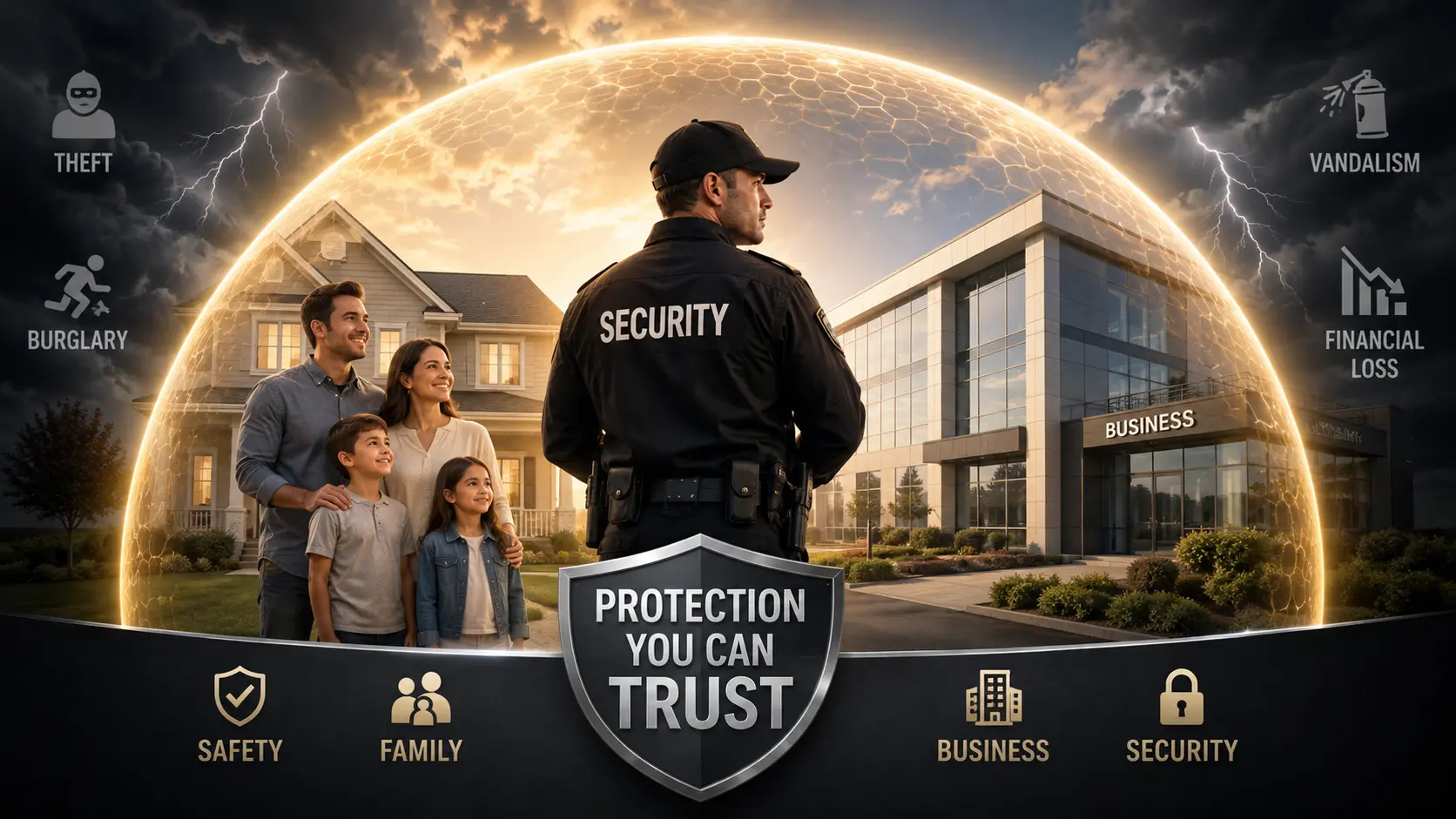
That’s the gap cameras, alarms, and access-control systems can’t close on their own. They’re good at recording and alerting, not at intervening or being present when something is happening. That’s the real answer to why hire a security guard: technology tells you what happened, while a trained professional can help prevent it or respond while it’s still in progress.
If you’re a business owner, property manager, or event organiser weighing whether security is worth the cost, this article covers the practical reasons properties hire security, who actually needs it, and how to think about staffing and cost before requesting a quote.
Why Should You Hire a Security Guard?
A security guard does more than stand near an entrance in a uniform. A trained guard observes patterns, checks credentials, monitors activity, documents incidents, and responds according to the post orders set for that property. That combination of presence, judgment, and accountability is something a camera system can’t replicate.
Here are ten reasons businesses and property owners commonly bring on professional security.
1. Deter Theft and Criminal Activity
A visible, trained security presence can discourage theft, trespassing, vandalism, and other unwanted activity before it starts. Someone considering shoplifting, breaking into a vehicle, or wandering into a restricted area is less likely to attempt it with a uniformed guard actively patrolling nearby.
This isn’t about claiming a guard can stop every incident. No security measure can guarantee that. But a visible deterrent, combined with a guard’s ability to recognise suspicious behaviour early, can reduce opportunities for crime in a way a camera lens mounted on a wall cannot.
2. Protect Employees, Customers, Residents, and Visitors
People feel and behave differently when they know a property takes their safety seriously. A retail employee closing up alone at night, a resident walking to their car in a garage, or a customer in a busy parking lot all benefit from knowing someone trained is nearby.
Guards also help in everyday ways: walking an employee to their car after a late shift, directing a lost visitor, or calming a dispute between customers before it escalates. These small moments add up to a property that feels genuinely managed, not just monitored.
3. Provide a Human Response When Something Goes Wrong
Camera records, Alarms alert, Access-control systems restrict entry. None can walk over, assess a situation, and decide what to do next. That’s where trained personnel come in.
A security guard can observe an unfolding situation, communicate with staff or emergency services, document what occurred, and respond according to the scope of their assignment. Not every guard is authorised to physically intervene in every scenario; their role depends on the property and the post orders in place. But having someone capable of assessing a live situation, rather than reviewing it afterwards, is a meaningful difference between technology and trained personnel.
4. Control Access to Your Property
Access control is one of the most practical reasons businesses hire security. A guard stationed at an entrance can manage visitor sign-ins, verify identification when appropriate, monitor who enters and exits, and keep unauthorised individuals out of restricted areas.
This matters for office buildings with sensitive records, warehouses storing valuable inventory, apartment communities keeping non-residents out of common areas, and construction sites where unauthorised entry creates liability concerns. A guard adds judgment a keycard reader can’t, since a badge doesn’t ask questions when something looks off.
5. Reduce the Risk of Vandalism and Property Damage
Vacant properties, construction sites, and commercial buildings after hours are common targets for vandalism and break-ins. Nobody is around to notice damage as it happens, so it often isn’t discovered until the next morning.
After-hours patrols can help close that gap. A guard conducting scheduled rounds through a parking area, warehouse yard, or construction site is more likely to catch a broken fence or suspicious vehicle before real damage occurs. For owners managing multiple sites or seasonal vacancies, this coverage is often an overlooked reason to hire security.
6. Protect Business Operations and Valuable Assets
Theft, vandalism, and unauthorised access don’t just cost money in the moment. They can disrupt daily operations and create downtime that ripples through a business for weeks. A construction site missing tools can lose days of scheduled work. A warehouse breach may need to pause shipments while inventory is recounted.
Security guards can’t guarantee losses never happen. What they can do is add monitoring and response that reduces how often incidents occur and how much they escalate. For businesses that depend on consistent operations, that risk reduction supports continuity in a way that’s hard to put a price on.
7. Improve Security at Events and Large Gatherings
Weddings, corporate events, concerts, festivals, private parties, and sporting events bring large numbers of people into a defined space, often with alcohol, high emotion, or both. Event security guards help manage entrances and exits, monitor restricted areas, assist guests who need help, and watch crowd behaviour so problems get addressed early rather than after they’ve already grown.
One of the most common questions organisers ask is how many guards they actually need. That depends on guest count, venue layout, alcohol service, entrances and exits, and the nature of the event itself. Security Base Group’s Security Guard Calculator can give you an initial estimate based on those factors, which is a useful starting point before requesting a professional quote. It’s worth being clear that a calculator provides a planning estimate, not a guaranteed staffing requirement.
8. Customise Security to Your Property’s Specific Risks
There’s no single security plan that fits every property. A five-story office building has different needs than a single-story retail store, and a large apartment community differs from a two-acre construction site.
The right staffing plan generally accounts for:
- Property size, layout, and number of entrances
- Number of employees, residents, or attendees
- Operating hours, including overnight coverage
- Location and any previous incidents on the property
- Overall risk level and required patrol coverage
Security Base Group offers different security options built around these variables, rather than a one-size-fits-all package, since a single front desk and a sprawling warehouse complex don’t need the same coverage.
9. Work Alongside Cameras, Alarms, and Security Technology
None of this means technology isn’t useful. Cameras, alarms, and access-control systems play an important role in any modern security plan. They work best paired with trained personnel, not as a replacement for them.
Technology is generally strong at detection, recording, and remote monitoring. It can flag motion in a restricted area or capture footage as an incident happens. What it can’t do is verify whether that motion is a genuine threat or physically address the situation. A guard can confirm what a camera picks up, investigate an alert, document the details, and act according to procedure. The strongest plans combine both: technology to detect and record, and trained personnel to verify and respond.
10. Provide Peace of Mind
For a business owner or property manager, peace of mind isn’t abstract. It’s the practical result of knowing a trained professional handles security responsibilities so you don’t have to monitor every entrance and late-night alarm notification yourself.
That doesn’t mean security guards eliminate every concern. It means responsibilities are clearly assigned, incidents get documented consistently, and management can focus on running the business instead of splitting attention between operations and security.
Who Should Consider Hiring a Security Guard?
Security guards aren’t necessary for every business or property. Whether you need one depends on your risk level, property type, and security goals.
That said, security guards are commonly used across settings including:
- Commercial properties and office buildings
- Retail stores, especially with high foot traffic or high-value merchandise
- Construction sites, particularly for after-hours and equipment protection
- Warehouses and distribution centers
- Apartment communities and other residential properties
- Events of all sizes, from private gatherings to large public events
- Parking facilities and structures
- Educational and healthcare facilities
- Any high-value or high-traffic location where risk is elevated
If your property falls into one of these categories, or you’ve had incidents in the past, it’s worth having a professional evaluate your situation rather than guessing.
Armed vs. Unarmed Security Guards: Which One Do You Need?
This is one of the most common questions property owners have, and the honest answer is that it depends on your risk profile, not a blanket rule.
Unarmed security guards are commonly used for access control, patrols, visitor assistance, general monitoring, and incident reporting. Many commercial properties, retail locations, apartment communities, and events operate well with unarmed guards handling these day-to-day responsibilities.
Armed security may be considered for higher-risk environments, where the property, the assets involved, or past incidents point to a greater need. This decision should factor in your risk level, applicable state and local laws, and a professional security assessment. It’s not a decision to make based on assumptions.
How Many Security Guards Do You Need?
There’s no universal guard-to-person ratio that works for every business or event. Staffing needs depend on several factors working together, including:
- Number of employees, residents, or attendees
- Property size, number of buildings, and entrances
- Operating hours and shift coverage
- Overall risk level and required patrol areas
- Expected crowd size and event conditions, if applicable
Because these variables interact differently for every property, Security Base Group built a Security Guard Calculator to help you get a starting estimate based on your specific details. Think of it as an initial planning tool rather than a final answer, since a professional assessment can account for nuances a calculator isn’t designed to catch.
How Much Does It Cost to Hire a Security Guard?
Security pricing varies based on several factors, including:
- Number of guards needed and hours of coverage
- Armed versus unarmed staffing
- Location and local market conditions
- Type of assignment, such as a static post versus roaming patrols
- Contract length, whether short-term or ongoing
- Property size and any event-specific requirements
There isn’t a single hourly rate that applies across the industry, and any source claiming otherwise is generalising more than the numbers allow. What’s worth keeping in mind is that the cheapest quote isn’t always the best value. Lower rates sometimes reflect less experienced guards or reduced supervision, which can end up costing more if it leads to gaps in coverage. It’s usually worth comparing quotes based on qualifications and service quality, not price alone.
What Should You Look for in a Security Guard Company?
Choosing a provider affects your property’s safety, so it’s worth asking a few direct questions before signing a contract:
- Are the guards properly BSIS licensed and trained for the role?
- Does the company carry appropriate liability insurance?
- Does it have experience with properties or events similar to yours?
- Can staffing levels be customised, with both armed and unarmed options?
- Is there supervision or management oversight of guards on-site?
- How are incidents documented and reported to you?
- Can it provide both temporary and long-term coverage in your area?
- Will it evaluate your property before recommending a staffing plan?
A company willing to walk through these questions honestly, rather than pushing you toward the largest possible contract, is usually one worth working with.
Frequently Asked Questions
1. Why Should You Hire a Security Guard?
A security guard adds protection that technology alone can’t provide. Guards can deter criminal activity, monitor access, respond to incidents in real time, and support employees, customers, or guests. Cameras and alarms record and alert, but they don’t assess and respond to situations as they happen.
2. Is hiring a security guard worth it?
It depends on your property’s risk level, size, and operations. Businesses with high foot traffic, valuable inventory, past incidents, or overnight vacancy often get meaningful value from professional security. Lower-risk properties may do fine with cameras or alarms alone. A risk assessment can help you decide.
3. When should a business hire a security guard?
Common triggers include a history of theft or vandalism, high-value inventory, large events, construction projects, or vacant properties. There’s no single rule; it comes down to your specific risk factors and how much you want to address them proactively.
4. Do small businesses need security guards?
Not always. A small shop in a low-crime area with strong locks and alarms may not need daily coverage. A small business with high-value merchandise, a history of break-ins, or late-night operations might benefit from even part-time security.
5. Should I hire an armed or unarmed security guard?
This depends on your risk profile, applicable laws, and a professional assessment. Unarmed guards handle most day-to-day needs, including patrols, access control, and monitoring. Armed security is generally reserved for higher-risk environments based on specific circumstances, not assumption.
6. How many security guards does my business need?
There’s no universal ratio. Staffing depends on property size, number of people, entrances, hours, and overall risk. The Security Guard Calculator can give an initial estimate, but a professional assessment provides a more accurate recommendation.
Final Thoughts: Why Should You Hire a Security Guard?
Why Should You Hire a Security Guard? At its core, professional security fills the gap between what technology can detect and what a trained person can do about it. Cameras and alarms are valuable, but they don’t exercise judgment, verify a threat in real time, or respond as a situation unfolds. A trained security guard can.
The right security solution isn’t the same for every property. It depends on your risk level, operations, the people who rely on your space, and what you’re trying to protect, whether you’re running a retail store, managing an apartment community, or planning a large event.
If you’re evaluating security for a business, property, or event, Security Base Group can help you determine what type of coverage fits your needs. You can also use the Security Guard Calculator for an initial staffing estimate before requesting a professional quote.


