
What Do Armed Security Guards Do in San Francisco? (2026 Guide)
If you run a business in San Francisco, you’ve probably noticed the shift. Break-ins that used to be rare are now a Tuesday afternoon problem. Retail theft rings hit multiple stores in a day. Warehouses along the waterfront get targeted overnight, and property managers field more calls about trespassing and unwanted visitors than ever before.
This is exactly why so many business owners are asking the same question: what do armed security guards do in San Francisco, and is it time to hire one?
The short answer is that armed security guards do a lot more than stand at a door looking intimidating. They’re trained professionals who prevent crime before it happens, respond to threats when they do, and give business owners peace of mind that someone qualified is watching over their people and property around the clock.
In this guide, we’ll walk through exactly what an armed security guard company in San Francisco does, which industries rely on them most, what California requires of these officers, and how to choose a company you can trust.
What Do Armed Security Guards Do in San Francisco?
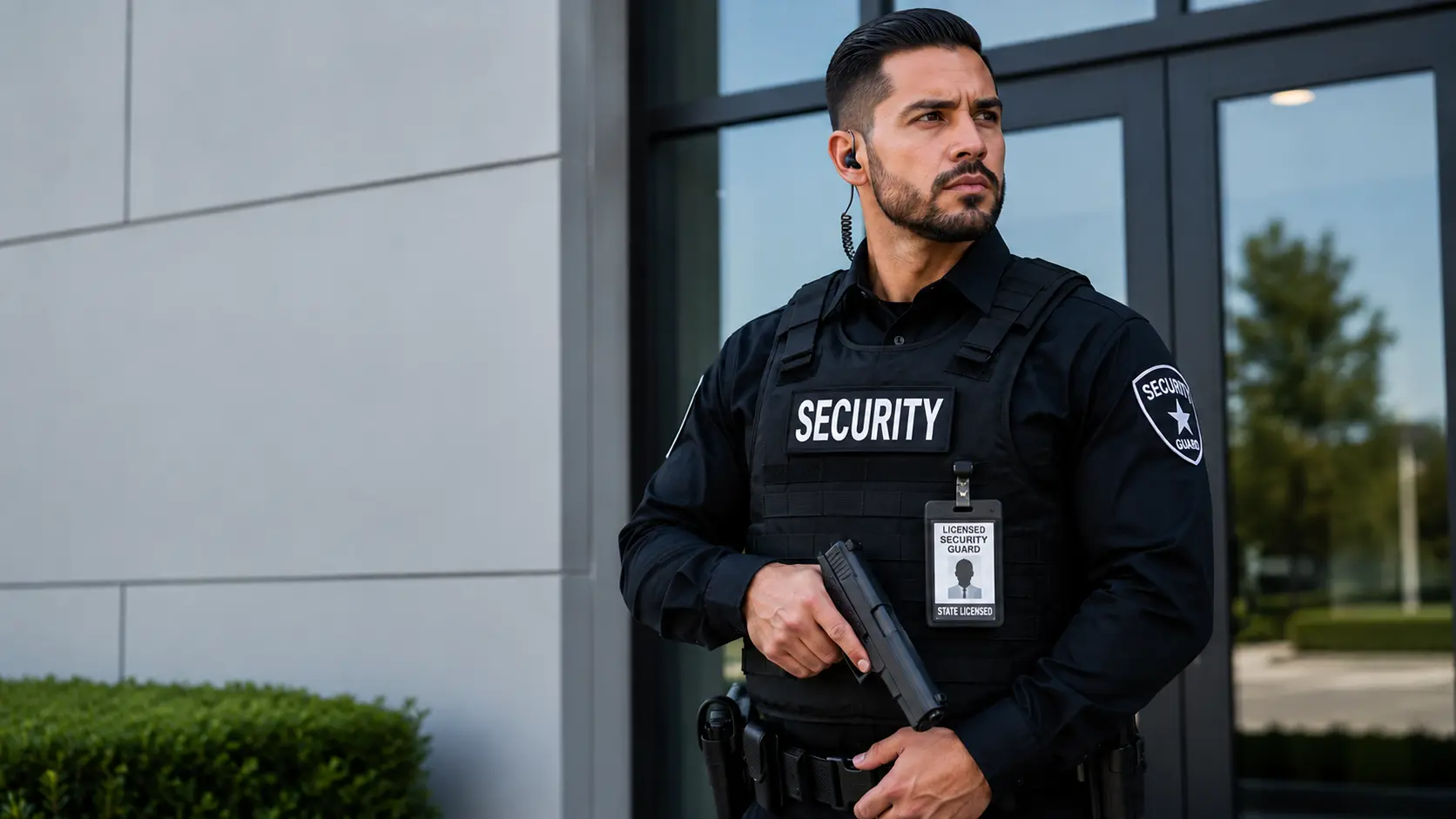
Armed security guards are licensed professionals authorised to carry a firearm while performing protective duties for a business, property, or individual. In California, they’re not just anyone who bought a gun and a uniform; they’ve gone through background checks, firearm training, and state certification before they’re ever allowed on a job site with a weapon.
Their authority comes from the property owner who hires them, combined with state licensing through the Bureau of Security and Investigative Services, commonly known as BSIS. An armed guard can act to protect life and property on the premises they’re assigned to, but they aren’t police officers. They can detain someone in certain situations, but they work within strict legal boundaries they’re trained to know precisely.
The primary mission of an armed security guard is deterrence first, response second. A visible, well-trained armed officer stops most problems before they start, since criminals target soft, unprotected locations and usually move on when they see a professional armed presence.
The difference between armed and unarmed guards comes down to training level and the type of risk they’re equipped to handle. Unarmed guards work well for lower-risk environments like office lobbies. Armed guards get brought in when the risk of violence or serious property loss is higher, such as construction sites, cannabis dispensaries, or late-night warehouse operations.
Core Roles & Responsibilities of Armed Security Guards
Protecting People
The number one job of any armed security guard is keeping people safe, including employees, customers, tenants, and visitors. An officer at a Financial District office, for example, watches for anyone who seems out of place or agitated and steps in before a situation escalates. This matters because a single violent incident can cost a business far more than years of security services combined.
Protecting Property
Armed guards also protect physical assets, from inventory to the building itself. Guards patrol storage areas, check for tampering, and make sure doors, gates, and loading docks stay secure. This is especially valuable for warehouses and industrial sites, where a single break-in can cause tens of thousands of dollars in losses.
Crime Prevention
Prevention is where armed security earns its value. Rather than reacting after a crime happens, trained officers watch for early warning signs- someone casing a building or loitering near an entrance- and intervene before anything happens. A retail store in Union Square, for instance, benefits from a guard who recognises shoplifting patterns and addresses them calmly before merchandise walks out the door.
Visible Deterrence
There’s a reason companies place guards at entrances instead of hiding them in back offices. A visible, uniformed, armed presence changes behaviour, since most offenders are looking for an easy target, not a confrontation. For a shopping centre or corporate campus, this alone can justify the cost of armed security.
Monitoring Entrances
Every building has a front door, and every front door is a decision point. Armed guards stationed at entrances control who comes in, question anyone who doesn’t belong, and stop unauthorised access before it becomes a bigger problem. This matters most for hospitals and financial institutions, where controlling entry points protects both people and sensitive areas.
Identity Verification
Checking IDs might sound simple, but it’s one of the most important daily tasks a guard performs. Confirming that a delivery driver, contractor, or visitor is who they claim to be prevents impersonation and unauthorised entry into restricted areas, which matters most at corporate campuses with multiple tenants.
Access Control
Beyond checking IDs, armed guards manage who gets access to which areas of a facility, whether that’s operating key card systems or keeping unauthorised personnel out of server rooms and storage areas. Manufacturing plants rely heavily on this since certain zones require specialised safety clearance.
Patrolling Facilities
Static posts matter, but so does movement. Guards conduct scheduled and randomised patrols to check for unlocked doors, broken windows, or anything out of the ordinary. Varying the timing is intentional; a predictable route is easy for intruders to plan around.
Responding to Emergencies
Whether it’s a medical emergency, a fire alarm, or a security breach, armed guards are trained to respond immediately and calmly. They assess a situation fast, communicate clearly, and take the right first steps until additional help arrives, which matters enormously for hotels or event venues with hundreds of guests on site.
Handling Active Threats
This is where armed training becomes critical. If a guard encounters an active threat, they’re trained to assess the situation and respond appropriately, whether that means intervention, evacuation, or coordinating with law enforcement. This preparedness is a major reason financial institutions and healthcare facilities choose armed over unarmed security guards.
Incident Reporting
Every incident, no matter how small, gets documented. Guards write detailed reports covering what happened, when, and what action was taken. These reports matter for insurance claims, legal proceedings, and identifying patterns, such as a property manager building a case around repeated trespassing.
Working with Law Enforcement
Armed guards aren’t a replacement for police; they’re a bridge to them. When a situation requires police involvement, guards act as the first point of contact, providing accurate information and preserving the scene, which is especially valuable in San Francisco where response times vary by neighbourhood.
Monitoring Surveillance Systems
Many armed security roles include monitoring camera feeds and alarm systems in real time, cross-referencing what’s on screen with what’s happening physically and responding immediately when something looks wrong. This is common in retail environments and corporate offices with a central monitoring station.
Protecting Valuable Assets
Certain businesses, like jewellery stores, cannabis dispensaries, and cash-handling operations, carry assets that make them prime targets. Armed guards provide protection that matches the actual risk these businesses face, rather than relying on locks and cameras alone.
Crowd Management
At events, retail sales, or high-traffic properties, armed guards help manage crowd flow and step in quickly if tensions rise between individuals in a large group.
Conflict De-escalation
Not every situation calls for force, and most don’t. Armed guards are trained in verbal de-escalation to calm tense situations before they turn physical, whether that’s an angry customer or a dispute between tenants.
Emergency Evacuations
During fires, gas leaks, or other emergencies, guards help coordinate safe, orderly evacuations, guiding people to exits and keeping panic to a minimum.
Customer Assistance
Security guards often become the first friendly face people interact with, from giving directions to assisting an elderly visitor. This builds trust and makes a property feel welcoming, not just protected.
Security Documentation
Beyond incident reports, guards maintain daily logs of activity, visitor records, and patrol checkpoints, giving business owners a clear record of what’s happening on their property.
After-Hours Protection
Many businesses face their highest risk when no one else is around. Armed guards providing overnight coverage protect properties during the exact window when most break-ins and vandalism occur.
Industries That Need Armed Security Guards in San Francisco
Different industries face different threats, which is why armed security needs to be tailored to the environment.
Commercial offices benefit from controlled entry and after-hours protection. Retail stores and shopping centres deal with theft and occasional aggressive customers. Warehouses and distribution centres hold high-value inventory that makes them targets for organised theft. Construction sites are frequently hit for copper wiring, tools, and heavy equipment overnight.
Hospitals and medical facilities need guards trained to handle combative patients and restrict access to sensitive areas. Financial institutions require armed protection given the nature of the assets on site. Cannabis businesses, still largely cash-based, are among the highest-risk retail categories in the state.
Manufacturing plants, hotels, luxury apartments, and corporate campuses all need a blend of access control and visible deterrence. Government facilities, educational institutions, industrial sites, and event venues each carry their own compliance, safety, and crowd-management needs.
Skills Every Professional Armed Security Guard Should Have
A firearm alone doesn’t make someone qualified. The best armed guards combine several skills:
- Communication to de-escalate situations and coordinate with staff or police
- Observation to catch warning signs before they become incidents
- Decision-making under pressure, often with incomplete information
- Situational awareness to notice what doesn’t belong
- Report writing that’s clear and accurate
- Firearm safety and consistent proficiency, not a one-time certification
- Conflict resolution to handle disputes without force
- Legal knowledge of what they can and cannot do on duty
- Professional appearance that reflects well on the business
- Customer service, since guards interact with the public constantly
California Requirements for Armed Security Guards
California takes armed security licensing seriously. To legally carry a firearm while working, a guard must hold a valid BSIS Guard Card and a separate Firearm Permit, often called an Exposed Firearm Permit.
Getting there requires state-mandated training in firearm safety, use of force laws, and situational judgment, along with a thorough background check including fingerprinting through the DOJ and FBI. Firearm qualification isn’t one-and-done, either; guards must requalify periodically to keep their permits active.
Armed guards also carry real legal responsibilities for how and when they use force, and licensed companies carry insurance and internal policies to keep officers operating within the law. This isn’t legal advice, just context for why licensing and training matter so much when choosing a provider.
Benefits of Hiring Armed Security Guards
The value of armed security shows up in ways that are easy to overlook until something goes wrong. Businesses that invest in trained armed officers typically see fewer break-ins, faster incident response, and lower employee turnover tied to safety concerns.
Consider a retail chain that experienced repeated after-hours break-ins before hiring armed overnight security. Incidents dropped to nearly zero once a visible armed presence was in place, simply because the property stopped looking like an easy target.
Beyond reducing risk, armed security improves how customers and employees feel about a location. People shop longer and trust a business more when they see professional security taking their safety seriously.
Armed Security vs Unarmed Security
| Factor | Armed Security | Unarmed Security |
| Training | Extensive, includes firearm certification | Standard guard training |
| Equipment | Firearm, plus standard gear | Radio, flashlight, basic gear |
| Risk Level | Suited for high-risk environments | Suited for low to moderate risk |
| Best Use Cases | Banks, warehouses, cannabis retail, construction | Offices, events, retail lobbies |
| Cost | Higher hourly rate | Lower hourly rate |
| Response Capability | Can respond to serious threats directly | Focused on observation and reporting |
| Industries Served | Financial, industrial, healthcare, high-value retail | Corporate, hospitality, general retail |
How to Choose the Right Armed Security Company in San Francisco
Not every security company is equal, and this is one area where cutting corners backfires quickly.
Start with licensing, confirming the company and its officers are properly certified through BSIS with active firearm permits. Look at experience with businesses similar to yours, since a company that’s protected warehouses for a decade understands that environment differently than one that mostly covers office lobbies.
Ask about industry expertise, training standards, and how often officers requalify. Verify the company carries proper insurance, and ask what technology they use for reporting and communication between guards and management.
Good communication matters too; you want a responsive provider, not one you have to chase down. Check customer reviews from other local businesses, and ask directly about their emergency response process and how fast they can get an additional officer on site.
Why Businesses Trust Security Base Group
Security Base Group has built its reputation in San Francisco by pairing licensed, firearm-certified professionals with security plans built around each client’s actual risks, not a generic template. Every officer goes through rigorous vetting and ongoing training, and the company works with commercial clients across retail, warehousing, construction, and healthcare.
What sets a provider like this apart is availability. Threats don’t follow business hours, so 24/7 coverage and rapid response matter as much as initial training. Businesses that choose experienced, commercial-focused armed security get more than protection; they get a partner who understands their industry and adjusts as risks change.
Frequently Asked Questions
1. What do armed security guards do in San Francisco on a typical shift?
A typical shift includes monitoring entrances, patrolling the property, checking IDs, watching surveillance systems, and documenting activity. Guards also respond to any incidents, from suspicious behaviour to medical emergencies, and coordinate with law enforcement when necessary. The exact duties shift based on the business type and specific risks at that location.
2. Are armed security guards legal in California?
Yes, armed security guards are legal in California as long as they hold a valid BSIS Guard Card and a Firearm Permit issued by the state. These licenses require background checks, training, and periodic requalification to remain active and compliant.
3. How much does armed security cost in San Francisco?
Costs vary based on coverage hours, location risk level, and specific duties required. Businesses typically pay more for armed guards than unarmed guards due to the additional training and certification involved. A security company can provide an accurate quote after assessing your specific property and needs.
4. What’s the difference between armed and unarmed security guards?
Armed guards complete additional firearm training and certification, making them suited for higher-risk environments like banks, warehouses, and cannabis retail. Unarmed guards handle lower-risk situations like office buildings or general retail, focusing on observation, access control, and customer service.
5. Can armed guards detain someone?
Armed guards can detain individuals in limited circumstances, generally when they witness a crime occurring on the property they’re protecting. This authority is narrow, and guards are trained to understand exactly when and how it applies to avoid legal issues.
6. Do armed guards work at construction sites?
Yes, construction sites are a common placement for armed guards, especially overnight when equipment theft and vandalism are most likely. Sites with expensive machinery or materials benefit significantly from visible armed patrols during non-working hours.
7. How do I know if my business needs armed security?
Consider factors like the value of assets on site, past incidents, neighbourhood crime rates, and whether your business handles cash or high-value inventory. A security consultation can help assess your specific risk level and recommend armed versus unarmed coverage.
8. What training do armed security guards receive in California?
Armed guards complete firearm safety training, use-of-force education, and situational judgment courses required by BSIS before receiving their Firearm Permit. Many companies also provide additional training in de-escalation, emergency response, and industry-specific protocols.
9. Do armed guards carry firearms visibly or concealed?
Most armed security guards carry firearms visibly, known as open carry, as part of their licensed permit. Visible firearms serve as a deterrent, reinforcing the guard’s role and discouraging criminal activity before it starts.
10. How quickly can an armed security company respond to an incident?
Response times depend on the provider, but reputable companies offering 24/7 coverage can typically dispatch additional officers or respond to alarms within minutes. Ask any potential provider about their specific emergency response protocols before signing a contract.
Final Thoughts
Professional armed security is about more than just having a visible presence; it’s about protecting people, property, and business operations. Whether you manage a retail store, warehouse, construction site, healthcare facility, or commercial property in San Francisco, the right security team can help reduce risks and respond quickly when it matters most.
At Security Base Group, we provide customised, BSIS-licensed armed security services designed to meet your business’s unique security needs. If you’re looking for a trusted armed security company in San Francisco, we’re here to help. Learn more or request a free security consultation


