
San Diego Construction Site Security: Stop Theft & Vandalism
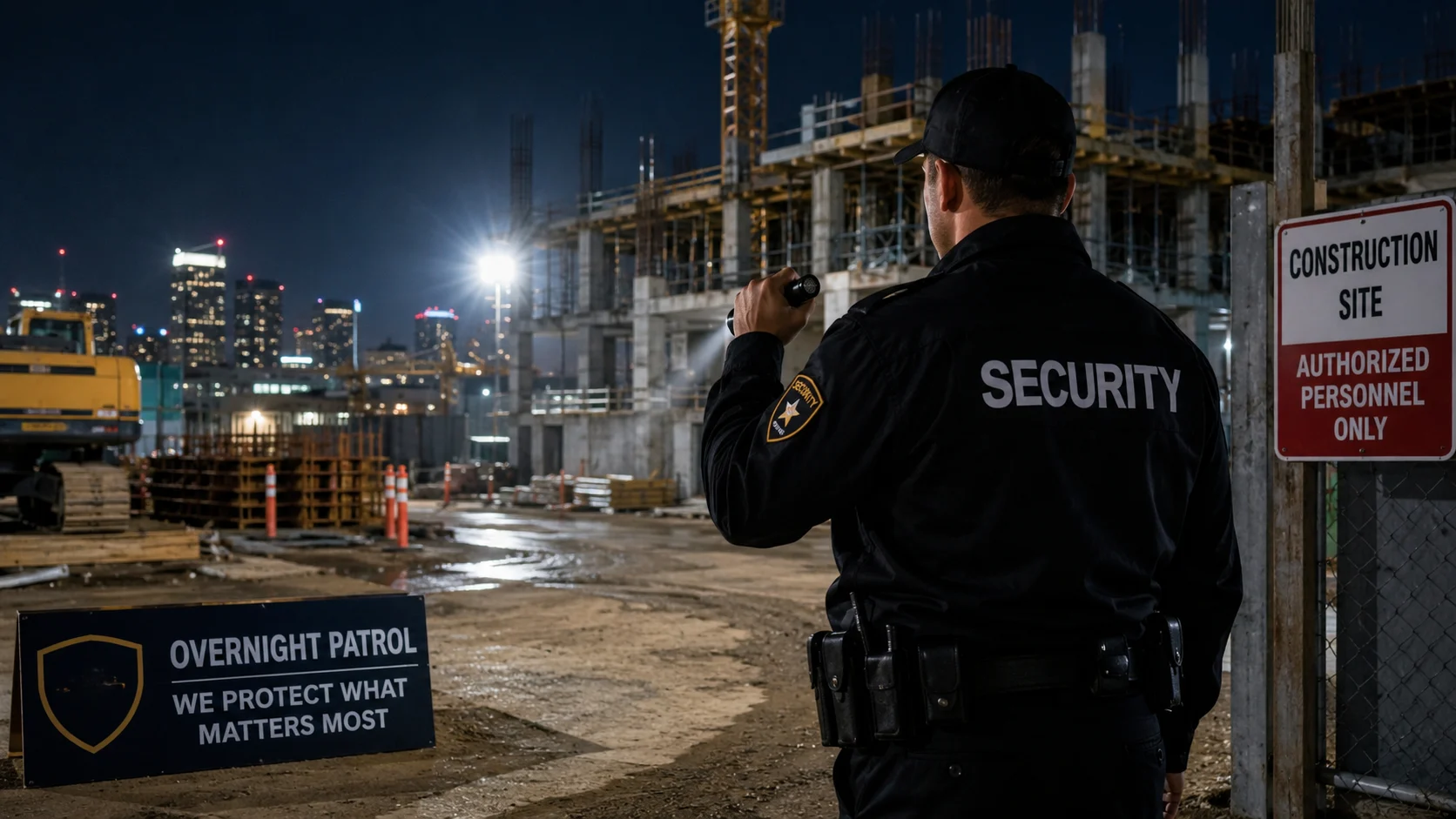
A construction site is essentially an outdoor warehouse with no walls. Generators, copper wiring, power tools, lumber, and heavy equipment often sit out in the open for weeks at a time, and once the crew clocks out, that inventory is left largely unattended until someone shows up the next morning.
When theft, vandalism, or trespassing happens on a jobsite, the damage rarely stops at the price tag of what was taken or broken. Missing equipment delays trades that depend on it. Vandalized framing or wiring means rework. Break-ins can trigger insurance claims, safety inspections, and hours of paperwork that pull a project manager away from the actual job. San Diego Construction Site Security is one of the more direct ways contractors and developers can reduce these risks before they turn into a bigger problem.
Why Construction Sites in San Diego Are Vulnerable to Theft and Vandalism
Every jobsite has a few built-in weaknesses that make it a more attractive target than a typical commercial property.
Valuable equipment and materials are the obvious draw: generators, compressors, power tools, scaffolding, copper wiring, HVAC units, and pallets of lumber or fixtures, much of it portable enough to be carried off just as easily as it was carried in. Limited after-hours supervision compounds the problem: a busy site with foremen, subcontractors, and delivery drivers all watching it during the day can feel completely abandoned by 9 p.m., which is exactly the window opportunistic thieves and vandals look for.
Multiple entry points are another factor. Temporary fencing, construction gates, staging areas, and partially built structures rarely create a fully sealed perimeter; a site near a busy commercial corridor might have a main gate for deliveries, a side opening for equipment, and gaps where a wall hasn’t gone up yet. And site conditions keep changing: early excavation carries different risks than framing, and what worked as a security setup during the foundation phase may not be enough once expensive fixtures and finish materials arrive.
Common Threats Facing San Diego Construction Sites
Equipment and tool theft is the most obvious one; stolen generators, saws, and compressors mean lost productivity until replacements arrive, plus the cost of the replacement itself. Copper and metal theft targets wiring, pipes, and HVAC components, often causing damage far beyond the value of the metal itself, since walls or ceilings sometimes have to be reopened to fix it. Material theft covers lumber, fixtures, appliances, and finish materials items that are easy to resell and easy to load into a pickup truck under cover of darkness.
Vandalism and graffiti can damage freshly completed work, from spray paint on new stucco to broken windows, and often require cleanup before the next trade can even start. Trespassing and unauthorized vehicles create liability concerns, especially on sites with open excavation or exposed rebar where someone could get hurt, and illegal dumping happens more often on sites that appear unmonitored.
Arson and fire-related risks, while less common, are serious; unsecured fuel and building materials can turn an act of vandalism into something far more dangerous. Unauthorized after-hours activity, including squatting, can also become a liability issue that goes beyond simple property loss.
How San Diego Construction Site Security Helps Prevent Theft
A professional security guard company in San Diego doesn’t eliminate every risk, but they change the calculation for anyone considering targeting a site.
Visible Security Presence
A trained guard walking the perimeter or stationed at the entrance is a deterrent in itself. Most theft and vandalism is opportunistic, people looking for an easy, unwatched target. A visible presence, marked vehicle, or lit guard post signals the site is being actively monitored, and that alone pushes many would-be intruders elsewhere. A guard on-site also gives workers and neighbors a point of contact if something looks wrong.
Access Control
Controlling who comes and goes is one of the most practical things security can do for a jobsite. That includes verifying workers at the gate, checking in subcontractors and vendors, logging visitors, monitoring deliveries against a schedule, and keeping unauthorized vehicles off the property. On a site with several trades rotating through in a single day, this kind of gatekeeping keeps the site organized as much as it keeps it secure.
Perimeter Checks and Incident Reporting
Regular walk-throughs of the fence line, gates, locks, storage containers, and equipment staging areas catch small problems before they become big ones: a cut section of fencing, a propped-open gate, a lock that’s been tampered with. Guards also pay attention to the dark or isolated corners of a site that don’t get much foot traffic during the day but are exactly where someone might try to gain entry at night. Documenting what they find matters more than most people expect until they need it: a log of suspicious vehicles, unauthorized entry attempts, or property damage becomes useful for insurance claims, police reports, and spotting patterns, like repeated attempts at the same weak point in the fence.
On-site Security vs. Mobile Patrol for Construction Sites
This is one of the more common questions contractors ask, and the right answer depends heavily on the specific project.
When On-site Security Makes Sense
A stationed guard tends to make the most sense for larger sites, projects with high-value equipment left overnight, sites with multiple contractors and heavy daytime traffic, or locations that have already experienced theft or vandalism. Continuous presence is also useful anywhere access needs to be actively controlled throughout the day, not just checked periodically.
When Mobile Patrol Is a Better Fit
Mobile Patrol often works well for lower-risk sites, smaller budgets, or projects spread across multiple locations. A patrol officer who checks a site several times during a shift, verifying the perimeter, confirming gates are locked, and looking for anything out of place can be cost-effective for sites that don’t need someone stationed around the clock, and it’s a good fit for larger properties where scheduled or randomized drive-throughs cover more ground than a single fixed post would.
Can On-site Security and Mobile Patrol Work Together?
For many projects, yes: On-site Security during high-traffic hours or high-risk phases, paired with Mobile Patrol overnight or on weekends, supported by cameras, lighting, and access control at the gate. The right mix comes down to the site’s size, its risk profile, and what’s actually sitting on it at any given phase of construction.
Why Overnight Security Is Critical for Construction Sites
The hours after the crew leaves are when a site is most exposed. Equipment sits unattended, materials are staged for the next day’s work, and there’s little natural activity to discourage someone from wandering in. Weekends and holidays extend that exposure further; a site monitored Monday through Friday can go unchecked for two or three days straight without a plan in place.
Overnight Security with a stationed guard makes sense for sites carrying significant equipment value or those in areas with higher foot traffic after dark, like sites near commercial corridors or residential neighborhoods. Overnight Mobile Patrol, on the other hand, can be a practical option for sites where a scheduled check-in confirming the gate is secure, equipment hasn’t moved, and nothing looks disturbed is enough to catch a problem early without the cost of a stationed guard through the night.
Other Security Measures That Support Construction Site Protection
Guards are one piece of a larger system, not the whole plan.
Security lighting around entrances, equipment storage, and staging areas removes the cover of darkness that makes a site attractive to intruders, and blind spots in the back corner of a lot, an area behind a dumpster, deserve particular attention. Cameras and remote monitoring don’t stop someone in the moment, but they document activity and deter people who notice them, and paired with a guard or patrol who can physically respond, they add a layer a purely passive system can’t provide alone.
Fencing and locked gates only work if they’re maintained; a gap left open after a delivery or a gate that doesn’t latch properly can undo the rest of the plan, so regular checks of fencing integrity should be routine. And simple habits around securing equipment and materials go a long way: locking tools in a container overnight, parking larger equipment near the guard post or a well-lit area, and avoiding leaving finish materials exposed longer than necessary before installation.
Building a Construction Site Security Plan for Your San Diego Project
A workable plan doesn’t need to be complicated, but it should be deliberate. Start with a site risk assessment: size, location, previous incidents, equipment value, access points, and lighting. From there, identify high-value assets, since not everything needs the same level of protection, and prioritize what would cause the most disruption if it were stolen or damaged.
Next, establish access procedures for employees, subcontractors, vendors, and deliveries, then select the appropriate coverage: on-site security, mobile patrol, overnight coverage, or a hybrid- based on what the risk assessment turned up. Round out the plan with emergency procedures for theft, vandalism, or fire, and revisit it periodically to adjust as the construction industry progresses, since a setup built for the foundation phase won’t fit once electrical and finish work begin.
How Security Needs Change During Different Construction Phases
Site preparation is mostly about the perimeter, securing access points, fencing the boundary, and protecting excavation equipment left on-site overnight. Structural construction shifts the focus to heavy equipment, building materials, and tools, along with keeping unauthorized people away from active work areas and partially built structures. Electrical and MEP work brings copper wiring and installed systems into play, which tend to draw more attention from metal thieves than raw lumber does.
Interior and finishing stages introduce appliances, fixtures, cabinetry, and specialty tools, often higher-value, easier-to-resell items than what was on-site earlier. And the final stage carries its own risk: newly installed fixtures and completed work are vulnerable to theft or vandalism right before the property changes hands, a frustrating time for damage to occur after months of work.
How to Choose a Construction Security Company in San Diego
A few questions separate a company that understands construction sites from one simply assigning generic guard coverage: Do they have direct experience with construction-specific security, not just retail or event security? Are personnel properly BSIS licensed, with armed and unarmed options depending on the site? Can they provide 24/7 availability, mobile patrol as well as stationed guards, and clear incident reporting? Can post orders be customized to the site and construction phase, do they carry proper insurance, and can coverage scale up or down as the project changes?
Why Choose Security Base Group for San Diego Construction Site Security?
Security Base Group builds construction security around the actual site, its size, its risk level, and where it is in the build. That can mean on-site security, mobile patrol, overnight coverage, or a combination of the three, along with armed or unarmed officers depending on what the project calls for, plus access control, site monitoring, and detailed incident reporting that gives project managers a clear record of what happened and when.
No security company can promise theft or vandalism will never happen. What a properly matched plan can do is reduce the opportunity, respond quickly when something does occur, and give contractors a documented, professional presence on-site instead of an empty lot after hours.
Need to protect a construction project in San Diego? Contact Security Base Group to discuss a customized security plan for your site.
Frequently Asked Questions About San Diego Construction Site Security
1. Why do construction sites in San Diego need security?
They hold valuable, portable equipment with limited supervision after hours, multiple access points, and changing conditions as the build progresses, all of which make them a more attractive target than a typical commercial property.
2. Is overnight security necessary for a construction site?
It depends on the site’s risk level. Sites with significant equipment value or those near high-traffic areas often benefit from overnight coverage, whether that’s a stationed guard or scheduled patrol checks.
3. Is mobile patrol enough for a construction site?
For lower-risk sites or tighter budgets, mobile patrol can provide solid protection through regular checks. Larger sites or those with high-value equipment may need a stationed guard or a combination of both.
4. What is the difference between on-site security and mobile patrol?
On-site security means a guard is stationed at the property continuously, while mobile patrol involves scheduled or randomized visits throughout a shift. Each has a different cost and coverage level.
5. Can security guards monitor construction site entrances?
Yes. Guards commonly handle access control at entrances, including verifying workers, checking in vendors, and monitoring deliveries against the day’s schedule.
6. Can Security Base Group provide construction security in San Diego?
Yes. Security Base Group offers on-site security, mobile patrol, and overnight coverage for construction projects throughout San Diego, customized to the site’s size, risk level, and phase of construction.
Conclusion
Theft and vandalism on a construction site rarely end with just the cost of what was taken or damaged. Delays, replacement expenses, and extra administrative work tend to follow close behind. A solid security plan doesn’t rely on one measure; it combines a visible presence, controlled access, regular perimeter checks, and the right mix of mobile patrol, overnight coverage, lighting, and surveillance for the site’s actual risk level. Top 8 Construction Security Guard Companies in San Diego. Paired with proper site procedures, that layered approach gives a project a realistic shot at getting through construction without losing time or money to something preventable.
Need to protect a construction project in San Diego? Contact Security Base Group to discuss a customized security plan for your site.


