
Private Estate Party Security in Los Angeles: Protecting Events (2026 Guide)
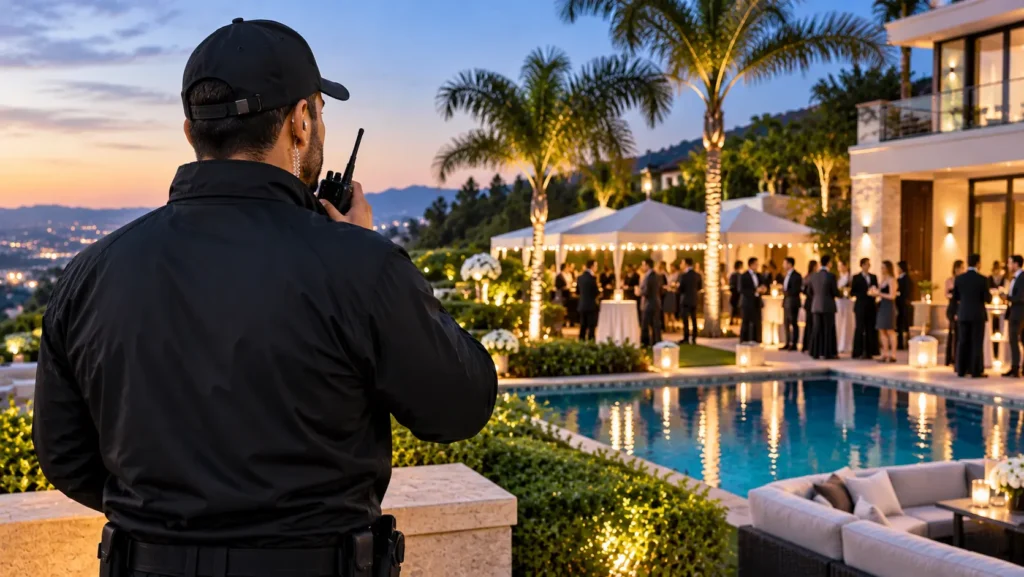
Hosting a party at a luxury residence is nothing like booking a ballroom. An estate may have a main gate, a service entrance, a pedestrian path, and a long driveway, all open to guests you may not know personally. Add pools, terraces, valuable belongings, restricted rooms, and a host who wants privacy, and the details multiply quickly.
A tailored security plan keeps those details manageable without spoiling the evening. Whether the property sits in the Hollywood Hills, Bel Air, or Malibu, its terrain, access routes, and neighbors shape what the plan needs. This Private Estate Party Security in Los Angeles guide covers the risks, safeguards, staffing choices, and timing behind private estate and celebrity home party security in Los Angeles. Security Base Group, a Los Angeles event security provider, offers private party coverage for hosts in this position.
Why Private Estate Parties in Los Angeles Require Specialized Security
A hotel ballroom or convention center comes with controlled entrances, house staff, and established procedures. A private estate has none of that by default. The host, the planner, and the security team have to build the structure themselves, around one specific property.
That means planning for guest access, privacy, vendor coordination, and the hours before and after the party, when trucks arrive and equipment leaves. It also means discretion: guards at a home party should be present without making guests feel screened. Staffing should come from the event’s actual requirements, not a generic package. Two parties with the same guest count can need very different coverage depending on the grounds, the entrances, and who is attending.
Common Security Risks at Hollywood Hills, Bel Air & Malibu Estate Events
Not every estate event faces every risk, and no two properties are alike. These are the issues worth assessing before the guest list goes out:
- Unauthorized guests and unapproved plus-ones, especially when invitations are forwarded.
- Uncontrolled gates and secondary entrances that bypass the main check-in.
- Theft of personal belongings, gifts, or event equipment.
- Unwanted photography and privacy breaches from guests or outsiders.
- Guest disputes and disruptive behavior, often as the evening goes on.
- Traffic congestion and unauthorized parking on narrow streets.
- Access to pools, terraces, private rooms, and restricted areas.
- Gaps during late-night departures and vendor breakdown, when attention drops.
Each risk is easier to address before the event than during it. A checklist, a walkthrough, and clear assignments turn most of these from surprises into manageable tasks.
Key Challenges Unique to Private Estate Venues
Multiple Access Points and Long Driveways
Long driveways, vehicle gates, pedestrian entrances, and service doors each need an owner. Decide which entrances will be used, which will be closed, and who verifies visitors at each. A single guest-facing entry point with a second person watching the secondary routes is often more effective than scattered coverage.
Limited Street Parking and Neighbor Concerns
Narrow residential streets fill quickly, and rideshare vehicles can clog them in minutes. Plan guest drop-off arrangements, direct parking away from neighbors’ driveways, and keep emergency access clear. Check applicable parking restrictions and any permit requirements for your street before the event.
Outdoor Spaces, Pools, and Perimeter Vulnerabilities
Pools, gardens, terraces, balconies, guesthouses, and boundary areas all need attention, particularly after dark. A walkthrough before the event identifies poorly lit spots and areas that should be off-limits. Lighting, signage, and positioned personnel then cover what the plan flags.
High-Value Guests and Discreet Protection Needs
Guest privacy depends on discreet arrivals, controlled restricted areas, and careful handling of confidential details like schedules and guest names. General event security is different from a dedicated executive or close-protection assignment, which focuses on one individual. Not every high-profile guest needs armed personnel or an individual bodyguard.
Essential Security Measures for Private Estate Parties
Effective protection is layered: people, procedures, communication, and suitable technology working together. No single measure carries the plan.
Guest List Verification and Access Control
Start with a confirmed guest list and a clear rule for additions, such as approval from the host or a designated representative. Staff at the entry compare names against the list and politely redirect anyone who isn’t on it. Restricted rooms should have a named person responsible for them. Entry disputes go to a supervisor or host contact, not a debate at the gate. Guest information should be shared only with those who need it and handled responsibly.
Parking and Arrival Management
Set designated drop-off points and give chauffeurs and rideshare drivers clear instructions in advance. Keep vehicle flow moving in one direction where possible, and never let parked cars block emergency routes. Event parking management also makes departures smoother, since guests leave in waves rather than all at once.
Perimeter and Gate Security
Identify every usable entrance, then decide how each will be managed: staffed, monitored, or secured. Assign responsibilities for gates and vulnerable access points, and agree on escalation steps if someone is found where they shouldn’t be. That might mean notifying a supervisor first and contacting law enforcement when the situation calls for it.
Indoor and Outdoor Monitoring
Personnel positioned near gathering areas and restricted zones can spot developing issues early. Existing cameras and alarm systems can support the team, but monitoring should remain lawful and unobtrusive, never intrusive. Establish communication protocols so staff can respond quickly to medical incidents, disputes, or an evacuation.
Vendor and Staff Credentialing
Confirm caterers, entertainers, photographers, decorators, delivery crews, and household staff against an approved list. Give each group authorized areas, arrival windows, and loading zones. Vendors should also have a departure procedure so equipment leaves with the right people. The right mix of these measures depends on the property’s layout, guest count, and event risk assessment.
Recommended Security Staffing for Estate Events
Different roles cover different needs:
- Entry security: verifies guests and handles list questions.
- Gate and perimeter security: watches entrances and boundary areas.
- Parking and arrival personnel: manage vehicle flow and drop-offs.
- Event-floor security: observes guests, restricted areas, and developing issues.
- Dedicated executive protection, when appropriate: assigned to a specific individual.
- A security supervisor: coordinates the team on assignments that need oversight.
Staffing depends on guest numbers, property size, entrances, event duration, outdoor areas, risk factors, and the desired level of protection. There is no universal guest-to-guard ratio, and no number guarantees sufficiency.
Consider a hypothetical contrast. A private dinner for twenty at a single-gate home might need one person handling arrivals and general oversight. A larger celebration with a long driveway, a pool deck, valet parking, and multiple vendors could call for separate entry, perimeter, parking, and floor personnel under a supervisor. The second event isn’t just bigger; it has more moving parts. Our event security guards in Los Angeles can be arranged around either scenario.
Armed vs Unarmed Security for Private Estate Parties
Unarmed personnel handle most private party duties: access control, observation, de-escalation, and communication. Their presence is typically low-key, which suits many guest lists. Armed security adds firearm-related responsibilities, stricter qualification requirements, and a more noticeable presence that some hosts and guests may not want.
California regulates both. Armed assignments require applicable BSIS credentials and firearms authorizations, so confirm the provider’s qualifications in writing before you book. Training in de-escalation and professional conduct matters for either option.
Armed security is not automatically the best choice. The decision should follow a documented risk assessment, applicable legal requirements, and a realistic view of the event, including who is attending and what concerns exist. A good provider will help you weigh those factors rather than push one answer.
How Professional Security Protects Both Guests and the Property
Professional planning gives hosts controlled entry, fewer opportunities for unauthorized access, and protection for designated private areas. Trained staff can notice a developing dispute early, organize guest departures, and coordinate better when something goes wrong.
Property and belongings benefit too. Setup and breakdown are often the most vulnerable windows, with equipment, rentals, and vendors moving through the grounds. A security presence during those periods helps keep track of who comes and goes. No security plan can promise that incidents will never occur, but preparation reduces avoidable risk.
Planning Timeline: When to Book Estate Security in Los Angeles
These are suggested windows, not mandatory rules. Availability and requirements vary by event.
- Four to six weeks before: define your requirements, guest count, schedule, and concerns, and start conversations with providers.
- Two to four weeks before: complete a property assessment and coordinate staffing, entrances, and parking.
- About one week before: finalize the guest list, vendor list, communication plan, and emergency procedures.
- Event day: hold a team briefing, deploy staff, monitor, and follow the agreed closing procedures.
Common Mistakes Hosts Make When Securing Private Estates
- Hiring guards without a property walkthrough: Insist on one before staffing is set.
- Underestimating entrances: Walk the boundary and count every gate, door, and path.
- Failing to verify guest additions: Route every plus-one through one approver.
- Ignoring parking and emergency access: Map vehicle flow in advance.
- Not briefing vendors and household staff: Share the plan with everyone on site.
- Choosing armed security without assessing risks: Let the assessment decide.
- Having no escalation process: Agree on who calls whom before the event.
- Ending coverage before breakdown: Schedule staff through load-out.
- Sharing sensitive details too widely: Limit schedules and guest names to those who need them.
- Skipping due diligence on the provider: Verify licensing, insurance, qualifications, and written terms.
How to Choose the Right Security Partner for Your Estate Event
Ask prospective providers clear questions before hiring.
Look for:
- Relevant experience with private-party and residential events.
- California BSIS licensing and, for armed assignments, firearms authorizations.
- Property-specific assessments, not one-size-fits-all packages.
- Discretion and confidentiality practices for guest and host information.
- Defined staffing roles and supervision.
- Emergency procedures and communication plans.
- Written pricing, including minimum shifts, overtime, and additional charges.
- Coverage for setup, the event, departures, and breakdown.
Security Base Group is one option for discussing event security requirements in Los Angeles.
Frequently Asked Questions:
1. How much does Private Estate Party Security in Los Angeles cost?
Cost depends on staffing levels, hours, property size, entrances, risk assessment, armed or unarmed coverage, and additional charges like overtime. Request a tailored written quote. Our guide to event security costs in Los Angeles explains the variables.
2. How many security guards do I need for a private estate party?
There is no fixed number. Property size, entrances, guest count, event duration, outdoor areas, and risk factors all shape deployment. A provider should recommend staffing after learning about your event, ideally after a property walkthrough.
3. Should I hire armed or unarmed security for a celebrity home party?
Base the decision on a documented risk assessment, not assumptions about guest profiles. Confirm the provider’s qualifications and applicable California requirements, and consider the guest experience. Many events are well served by unarmed personnel.
4. Can security guards manage guest lists, gates, and parking?
Yes, these duties can be included in an agreed deployment, depending on staffing levels and the event plan. Define responsibilities in writing so each entrance, list, and parking area has a named person.
5. When should I book private security for an estate event in Los Angeles?
Plan as far in advance as possible, ideally 4 to 6 weeks out for a complex estate, so you have time for a walkthrough and staffing coordination. Shorter-notice availability varies, so confirm it directly with the provider before relying on it.
6. Can security personnel protect guest privacy at a private estate party?
Controlled access, discreet conduct, restricted-area monitoring, and responsible information handling all help protect privacy. No provider can guarantee that all photography or information sharing will be prevented.
Conclusion
Successful private estate party security in Los Angeles starts with the property: its entrances, grounds, guests, privacy needs, and schedule. A layered plan, staffed by qualified personnel and confirmed in writing, helps protect people and belongings while keeping the evening comfortable. Whether you need private security for events in Los Angeles at a hillside home or a coastal estate, early planning gives you the most options.
 Previous Post


