
How to Choose the Best Construction Security Guards in Corona
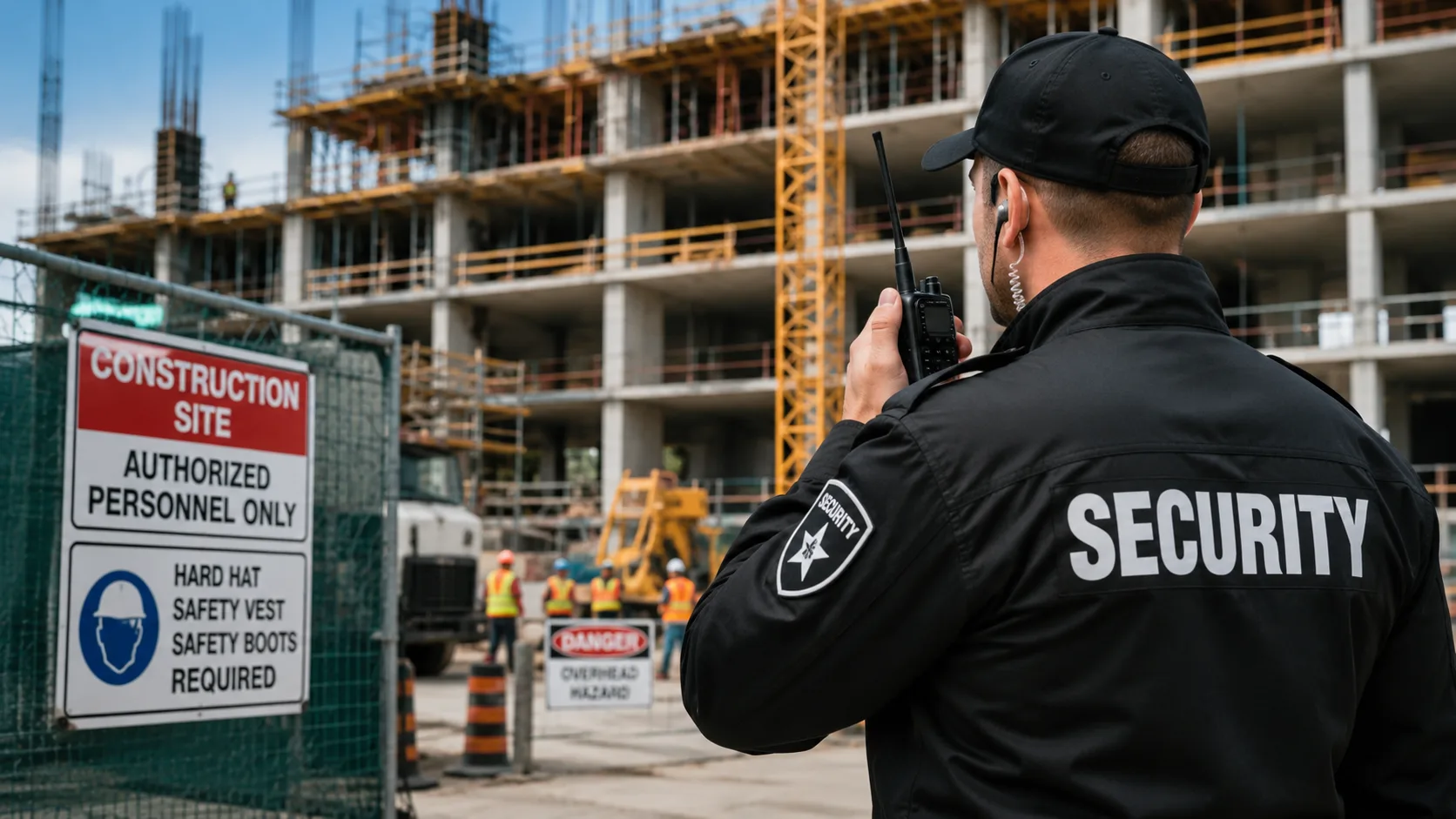
A construction site is one of the easiest targets on any property owner’s radar. Expensive tools sit out in the open. Copper wiring, lumber, and appliances wait in unlocked trailers. Heavy machinery is parked overnight with nothing but a chain-link fence between it and anyone determined enough to get inside. Add multiple access points, changing crews, and hours when no one is around to notice a problem, and it’s easy to see why so many contractors and developers eventually look into hiring Construction Security Guards in Corona.
The challenge isn’t deciding whether to add security. It’s figuring out what kind actually fits the project. A small, single-building site with a locked gate has different needs than a multi-acre development with several access roads and equipment yards. The right choice depends on the site’s real risks, its hours of operation, its size, and how many entry points need to be watched, not on which company quotes the lowest hourly rate. This guide walks through what to look for before you sign a contract.
Why Construction Sites in Corona Need Professional Security
Construction sites are attractive targets for a simple reason: they’re full of valuable, portable items and rarely staffed around the clock. Once the crew leaves for the day, a site can sit unattended for twelve hours or more, giving anyone with bad intentions plenty of time to work without interruption.
Common Construction Site Security Risks
Sites across Corona and the wider Inland Empire commonly deal with:
- Theft of power tools, generators, and hand equipment
- Missing building materials, from lumber to fixtures
- Trespassing by people looking for shelter or a place to wander through
- Vandalism to partially finished structures
- Unauthorized vehicles entering equipment yards or parking areas
- After-hours entry through gaps in temporary fencing
- Theft of copper wiring, pipes, and other valuable metals
- Unauthorized access to restricted zones like electrical rooms or rooftop equipment areas
None of this requires a dramatic crime wave to be a real concern. A single unlocked gate or a missed check on a Saturday night is often all it takes.
Why Fencing and Cameras May Not Be Enough
Temporary fencing, lighting, and cameras all play an important role, and no contractor should skip them. But these tools are passive: a camera records an incident rather than stopping it, and footage rarely helps if equipment is already gone by morning.
This is where an on-site security guard adds something cameras and fencing can’t: a person who can respond in real time, check credentials at the gate, and intervene before a problem becomes a loss. The strongest plans usually combine physical deterrents with trained personnel rather than relying on one or the other.
7 Things to Look for When Choosing Construction Security Guards in Corona
Not every security company approaches construction sites the same way. Here’s what separates a provider who understands the job from one that’s simply filling a shift.
1. Verify California Security Guard Licensing
Every security guard working in California must hold a valid registration, commonly called a “guard card” issued by the California Bureau of Security and Investigative Services (BSIS). According to BSIS, applicants must be at least 18, pass a criminal history background check through the California DOJ and FBI, and complete required training before they can legally work.
Rather than taking a company’s word for it, ask how you can confirm that both the guards assigned to your site and the company itself are properly registered. BSIS maintains a “Verify a License” tool on its website for exactly this purpose. This isn’t about being suspicious of every provider; it’s a basic due-diligence step. This article is for general information only, not legal advice; for specific licensing questions, BSIS is the authoritative source.
2. Look for Construction-Site Experience
Guarding a construction site is a different job than guarding a retail store or an office lobby. A guard on a Corona project needs to understand contractor and subcontractor access, how to log delivery vehicles, how equipment yards and material storage need to be monitored, how temporary fencing typically works and where it tends to fail, and how to manage a site with several entrances instead of one controlled lobby door. Conditions on an active job site also change week to week, so a guard has to keep up with what’s currently restricted.
An on-site security guard who has worked construction sites before will spot problems that someone without that background might miss entirely: a service gate propped open, equipment left unlocked, or a vehicle that doesn’t match anyone on the day’s access list.
3. Decide Whether You Need an Armed or Unarmed Guard
One of the first questions a provider should ask is whether your project calls for an armed or unarmed guard. These aren’t interchangeable, and an armed guard is not automatically the better or safer option for every site.
Unarmed guards handle most construction security needs: access control, patrols, monitoring, and incident reporting. Armed guards may be appropriate for sites with a documented history of serious incidents, higher-value equipment, or specific client requirements, and this decision should rest on the site’s actual risk level, any requirements set by your client or insurer, and a proper security assessment rather than a guess. Armed personnel also require additional California licensing beyond a standard guard card.
A company that pushes an armed guard on every job without asking about your specific risks is worth a second look. The right answer depends on the project, not on what’s easiest to sell.
4. Ask About Overnight, Weekend, and Holiday Coverage
Construction sites are often at their most vulnerable when no one is working nights, weekends, and holidays, when a property can sit unattended for extended stretches. Before hiring a provider, ask about overnight and weekend scheduling, holiday coverage, how shift changes are handled, what happens if a guard calls out, and whether a supervisor is available to respond to escalations. A provider that can only offer daytime coverage may not be the right fit if your biggest exposure is actually overnight.
5. Consider a Mobile Patrol Service
Not every site needs or can justify the cost of a guard stationed there 24/7. For some properties, a mobile patrol service makes more practical sense: a guard drives to the site at scheduled or randomized intervals to check the perimeter and confirm nothing looks out of place, rather than remaining on-site continuously.
This approach tends to fit larger properties, projects with several buildings under construction at once, sites with multiple access points that would be hard for one stationary guard to monitor, and after-hours spot checks where full-time staffing isn’t practical. It doesn’t have to replace an on-site guard, either; many projects use both, with a stationed guard during the highest-risk hours and patrol checks filling in the rest of the schedule.
6. Evaluate Reporting and Communication
Security is only as useful as the information that comes out of it. A professional provider should be able to show you, not just tell you, how they document activity: incident reports, daily activity logs, patrol records, visitor and access records, and how guards communicate with an on-call supervisor. Even minor, unusual activity should get documented, not just the incidents that turn into something bigger; that’s what turns security from a guess into something you can actually verify.
7. Compare the Overall Value, Not Just the Hourly Rate
It’s tempting to choose whichever quote has the lowest number attached to it, but hourly rate alone doesn’t tell you much about what you’re actually getting. Before deciding, compare guard qualifications, total coverage hours against what your site actually needs, relevant construction experience, whether supervisor support is included or an add-on, the quality of reporting, patrol frequency if patrol is part of the plan, what happens if a guard needs to be replaced mid-contract, and how flexible the contract is as your project moves through different phases.
A slightly higher rate that includes real supervision, reliable reporting, and guards who understand construction sites often ends up being the better value over the life of a project.
Which Type of Construction Security Is Right for Your Corona Site?
There’s no single right answer here; the best setup depends on your site’s layout, schedule, and risk factors.
- Choose an on-site security guard if your project has continuous activity, valuable equipment stored overnight, multiple entry points that need active management, or a history of attempted break-ins. A physical presence is generally the strongest option when a site needs someone available to respond immediately.
- Consider an armed guard if a security assessment has identified a level of risk that supports it, your client or insurer requires it, or the property has characteristics such as high-value materials or a documented pattern of serious incidents that warrant that level of response. This should be a deliberate decision, not a default.
- Consider patrol coverage if your site is large but doesn’t require a guard stationed there at all times, you’re mainly concerned about after-hours checks, or the property doesn’t have the kind of continuous risk that justifies full-time staffing.
- Can you combine services? Yes, and many projects do. It’s common to pair an on-site guard during the highest-risk hours with patrol coverage for the rest of the schedule, alongside cameras, access control, lighting, and temporary fencing. The goal is to match the plan to the site’s actual risk profile, which usually means layering a few measures together rather than relying on just one.
Questions to Ask Before Hiring Construction Security Guards in Corona
Use this checklist when comparing providers:
- Are your guards currently registered with BSIS, and can I verify it?
- What construction-site experience do your guards have?
- Do you offer armed and unarmed guards, and how do you decide which fits a project?
- What overnight, weekend, and holiday coverage do you offer?
- Do you offer mobile patrol, and how does it work?
- How are incidents reported, and how quickly will I be notified?
- Is a supervisor available if a guard needs support?
- What’s your process if a guard needs to be replaced mid-shift?
- Can you build a plan specific to my site, or is this a standard package?
Asking these questions upfront saves you from discovering coverage gaps after something has already gone wrong.
Why Choose Security Base Group for Construction Security in Corona?
Security Base Group provides construction-site security services for contractors, developers, and property owners in Corona and the surrounding area, including on-site guards (armed and unarmed), mobile patrol service for sites that need periodic checks, access and perimeter monitoring, incident reporting, and flexible scheduling that adjusts as a project moves from groundbreaking to completion.
Every construction site is different, which is why a one-size-fits-all package rarely makes sense. If you’re weighing options for a project in Corona, it’s worth talking through what your site actually needs: access points, hours of highest risk, and the coverage that fits your budget. Reach out to Security Base Group’s construction security services or contact us to discuss your project.
Frequently Asked Questions
1. What do construction security guards do in Corona?
They monitor site access, patrol the property, check credentials for workers and deliveries, watch for trespassing or unauthorized vehicles, and document activity through incident and patrol reports. Exact duties vary by site and service plan.
2. Do construction sites need an armed guard?
Not always. Whether an armed guard makes sense depends on the site’s risk level, client or insurer requirements, and a proper assessment. Many sites are adequately covered by unarmed guards.
3. What is an on-site security guard?
A guard stationed at the property, either continuously or during specific shifts, providing a physical presence that can respond to issues in real time rather than only recording them after the fact.
4. When should a construction site use mobile patrol service?
It tends to fit large properties, sites with multiple buildings or access points, or projects where risk exists but doesn’t justify staffing a guard around the clock, often alongside other security measures rather than as a standalone solution.
5. How can I verify a California security guard’s registration?
BSIS provides a public “Verify a License” tool where you can look up whether a guard’s registration is active, a reasonable step to take before signing a contract.
6. How much do construction security guards cost in Corona?
Costs vary based on the number of guards needed, hours of coverage, armed versus unarmed requirements, site size and risk level, whether patrol is included, and contract length. Because these factors differ from project to project, request a quote based on your site’s specifics rather than relying on a general estimate.
Construction Security Guards in Corona: Final Checklist
Before signing with Security guards in Corona, confirm they can show you proper BSIS credentials, real construction-site experience, clear guidance on armed versus unarmed coverage, hours that actually match your site’s risk (including nights and weekends), patrol availability where it makes sense, consistent reporting, reliable supervisor communication, and a plan built around your site rather than a generic package.
Choosing Construction Security Guards in Corona comes down to matching real coverage to real risk. Take the time to ask the right questions before you sign, and you’ll end up with a plan that actually protects the project instead of just checking a box.


