
How Security Guards Handle Emergencies Step by Step (Complete Emergency Response Guide)
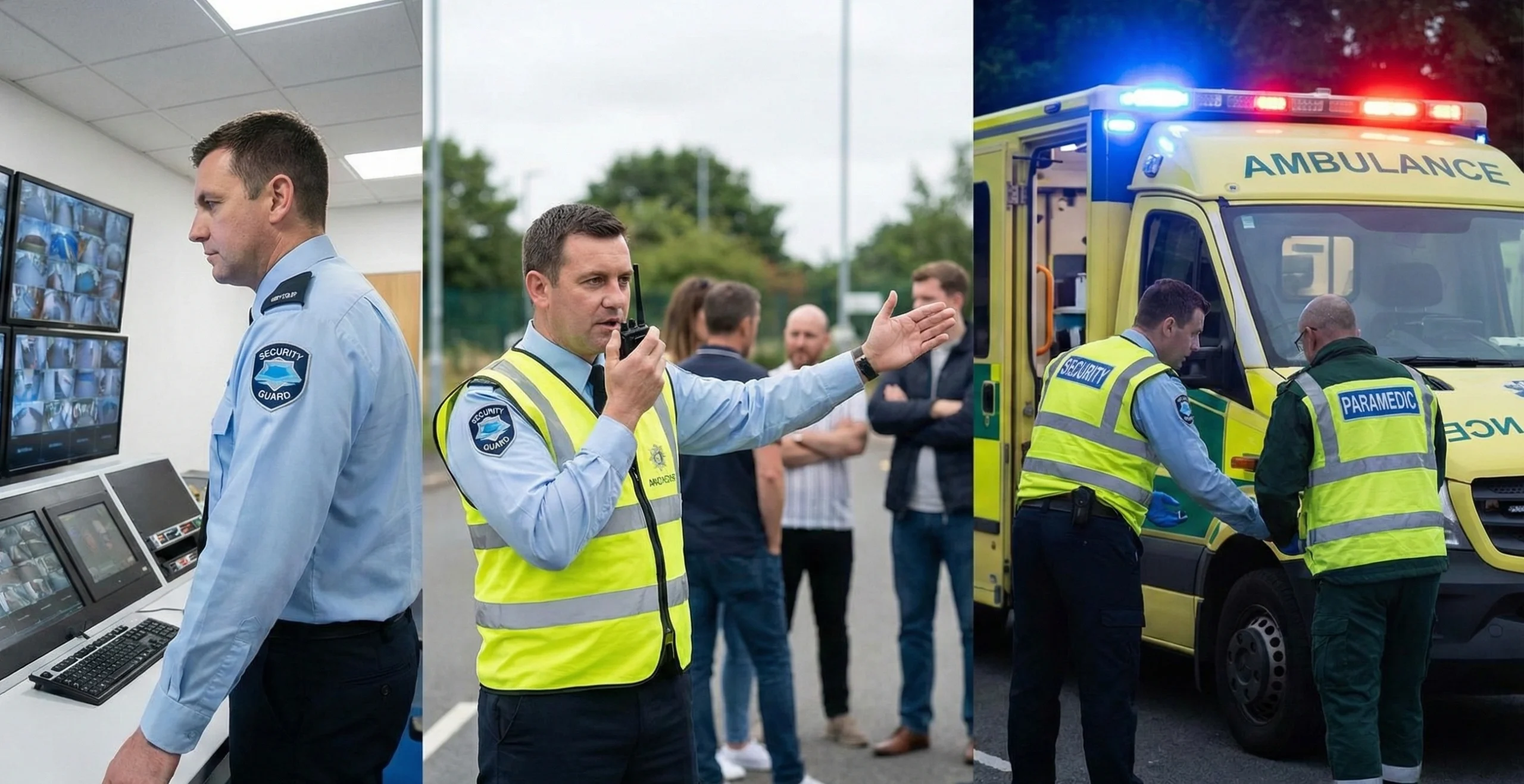
Security guards are trained to act quickly and carefully during emergencies. Their main responsibility is to protect people and property while keeping risks under control. Emergencies can happen at any moment, including fires, medical problems, or security breaches. Security guards are usually the first responders at the scene, which makes their role extremely important.
They have to remain alert and ready at all times. The most common emergencies they handle include:
- Medical situations such as heart attacks or serious injuries
- Fires or smoke problems
- Theft, break-ins, or violent events
- Natural disasters like earthquakes or floods
- Crowds or other public safety emergencies
By understanding their duties, security guards help ensure that everyone in the area stays safe. Security guard services in Los Angeles emphasize that having trained guards prevents accidents and keeps the environment under control.
Types of Emergencies Security Guards Are Trained to Handle
Medical Emergencies in Commercial and Residential Properties
Security guards receive training in first aid and CPR to help during medical emergencies. They can provide basic care, assist injured individuals, and contact emergency medical services.
Fire and Smoke Incidents
During fire emergencies, guards are trained to activate alarms, guide evacuations, and use fire extinguishers to handle small fires if it is safe. Acting promptly can save lives.
Security Breaches, Theft, and Violent Situations
Guards monitor for suspicious actions and respond to security threats. They contact authorities, secure the area, and protect people until help arrives.
Natural Disasters and Evacuation Scenarios
In events like earthquakes or floods, guards follow established evacuation routes, assist individuals, and maintain safety until the situation is under control.
Crowd Control and Public Safety Emergencies
Guards manage crowds during emergencies, maintain order, and ensure that evacuations happen smoothly.
Emergency Preparedness Training for Security Guards
Emergency Response Training Programs for Security Personnel
Training programs teach guards how to assess situations, act safely, and follow proper procedures. Security guard companies in Los Angeles focus on these programs to keep people safe.
First Aid, CPR, and Life-Saving Certifications
All guards are trained to perform first aid, CPR, and use AEDs. This is essential to help during medical emergencies before professional help arrives.
Fire Safety and Evacuation Procedure Training
Training includes learning to recognize fire hazards, use fire safety equipment, and lead safe evacuations. Guards practice staying calm and acting efficiently.
Communication and Incident Reporting Training
Communication is critical. Guards use radios, alarms, and phones to reach supervisors, police, and medical responders.
Scenario-Based Emergency Drills and Simulations
Regular drills simulate real emergencies. Guards practice handling fires, medical emergencies, and security threats, which improves their confidence and efficiency.
Step-by-Step Process Security Guards Follow During Emergencies
Step 1 – Identifying and Assessing the Emergency Situation Quickly
Guards must recognize the type and seriousness of the emergency. They evaluate the risks to people and property and decide on immediate actions.
Step 2 – Alerting Supervisors and Emergency Response Authorities
After evaluating the situation, they notify supervisors and call emergency services such as the police, fire department, or medical teams. Prompt communication is essential.
Step 3 – Securing the Area and Protecting People on Site
Guards prevent unauthorized access and guide people away from danger. Their goal is to keep the area controlled until authorities arrive.
Step 4 – Managing Evacuation and Crowd Control Safely
They assist in evacuating buildings or areas using designated exits, help people who need assistance, and keep everyone calm to prevent panic.
Step 5 – Providing First Aid Until Medical Help Arrives
Guards give basic first aid for injuries, perform CPR or use AEDs if needed, and stay with victims until professional help arrives.
Step 6 – Monitoring and Containing the Situation Until Authorities Take Over
They continue to monitor the situation, prevent further harm, and provide information to emergency responders.
How Security Guards Handle Fire Emergencies in Detail
Detecting Fire Hazards and Smoke Early
Guards are trained to notice fire signs early, such as smoke, unusual heat, or strange smells. Early detection helps prevent the fire from spreading.
Activating Fire Alarms and Emergency Systems
Setting off alarms alerts everyone quickly. This reduces injuries and allows people to evacuate safely.
Guiding Safe Evacuation Procedures
Guards lead people to safe exits and make sure elderly individuals, children, and people with disabilities receive assistance.
Using Fire Extinguishers When Appropriate
If the fire is small and safe to approach, guards use fire extinguishers to manage it until firefighters arrive.
How Security Guards Respond to Medical Emergencies
Assessing Injuries and Medical Conditions
They examine the victim to determine the severity of injuries and decide what treatment is needed first.
Calling Emergency Medical Services Immediately
Calling EMS immediately ensures that the victim receives professional medical attention quickly.
Performing CPR, First Aid, and AED Assistance
Guards perform life-saving actions based on their training until medical professionals take over.
Maintaining Victim Safety Until Help Arrives
They stay with the person, keep them calm, and make sure the surrounding area is safe.
How Security Guards Handle Security Threats and Criminal Incidents
Identifying Suspicious Behavior and Threats
Guards watch for any unusual behavior or signs of theft, vandalism, or violence.
Communicating with Law Enforcement
They inform the police or the appropriate authorities to handle the threat safely.
Preserving Evidence and Securing the Scene
Keeping the scene secure prevents loss of evidence and helps investigations.
Protecting Employees, Visitors, and Property
Their main responsibility is to ensure that everyone is safe while managing the situation.
Communication Protocols Security Guards Use During Emergencies
Internal Communication Between Security Teams
Team members use radios and phones to coordinate their response.
Contacting Police, Fire Department, and Medical Services
Clear and fast communication ensures that authorities can respond without delay.
Using Radios, Alarms, and Emergency Systems Effectively
Correct use of these tools reduces confusion and allows guards to respond efficiently.
Evacuation Procedures Followed by Professional Security Guards
Identifying Emergency Exit Routes
Guards are aware of all exits and safe paths for evacuation.
Assisting the Elderly, Disabled, and Children During Evacuation
They help vulnerable people exit safely and comfortably.
Preventing Panic and Maintaining Order
Guiding people calmly prevents accidents during the evacuation process.
Assembly Points and Headcounts After Evacuation
Guards make sure everyone reaches a safe meeting area and verify that all occupants are accounted for.
Documentation and Incident Reporting After an Emergency
Writing Accurate Emergency Incident Reports
Reports include the time, location, type of emergency, and actions taken.
Recording Timelines and Actions Taken
Keeping detailed notes helps review the effectiveness of the response.
Supporting Investigations and Insurance Claims
Complete documentation is necessary for legal matters and insurance purposes.
Coordination Between Security Guards and Emergency Responders
Providing Site Information to Authorities
Guards provide details about the layout, hazards, and assets to emergency responders.
Assisting Firefighters, Police, and Medical Teams
They help responders move through the site safely and efficiently.
Maintaining Safety Perimeters
Guards make sure the area remains secure until the situation is fully resolved.
Legal Responsibilities and Safety Standards for Security Guards in Emergencies
Understanding Use of Force Laws
Guards follow laws regarding the use of force to prevent legal issues.
Duty of Care and Public Safety Compliance
They ensure all safety procedures follow local regulations and company policies.
Following Company and Government Emergency Protocols
Following official procedures guarantees safe and lawful responses.
Tools and Equipment Security Guards Use During Emergencies
Communication Devices
Radios, phones, and alarm systems are essential for coordinating responses.
First Aid Kits and AED Machines
These tools provide immediate care to people in need.
Fire Safety Equipment
Fire extinguishers, sprinklers, and alarms help control fires safely.
Surveillance and Alarm Systems
CCTV and alarms allow guards to detect issues quickly and respond appropriately.
Common Mistakes to Avoid During Emergency Response
Delayed Communication
Authorities should be notified without waiting to prevent worsening situations.
Poor Crowd Management
Preventing panic and maintaining orderly evacuations is very important.
Ignoring Safety Protocols
Following all procedures ensures everyone remains safe.
Incomplete Incident Documentation
Accurate reports are essential for legal requirements and training purposes.
Why Professional Emergency Response Training Improves Safety Outcomes
- Faster response times can save lives
- Injuries and property damage are minimized
- Security teams can coordinate better
- Clients and employees trust trained guards more
Frequently Asked Questions About Security Guard Emergency Response
Are security guards trained in first aid and CPR?
Yes, most guards are trained in first aid and CPR to handle emergencies effectively. They can provide immediate care and life-saving assistance until professional help arrives.
Can security guards handle violent emergencies?
Guards are trained to observe, contain, and report dangerous situations, but they do not confront dangerous individuals alone. Their role is to protect people while waiting for law enforcement to arrive.
Do security guards work with police and fire departments?
Yes, security guards coordinate closely with police, fire departments, and emergency medical services to ensure that incidents are managed safely and efficiently.
What should people do when a security guard gives emergency instructions?
It is very important to follow the security guard’s instructions calmly and promptly. Doing so helps ensure your safety, allows for smooth evacuations, and enables guards to manage the situation effectively.
How quickly can security guards respond to emergencies?
Trained security guards can assess and respond to emergencies within minutes. Their response time is critical in minimizing damage and protecting lives.
Are security guards equipped to handle all types of emergencies?
While guards are trained for a wide range of emergencies, including medical issues, fires, and security threats, they rely on specialized emergency services for more complex situations.
How do security guards ensure safety during evacuations?
Guards guide people to safe exits, assist those who need help, prevent panic, and make sure everyone reaches assembly points where headcounts are conducted to confirm that no one is missing.
What makes professional security services in Los Angeles reliable during emergencies?
Professional security guard companies in Los Angeles provide trained personnel, proper equipment, and clear emergency protocols. This ensures faster response times, better crowd control, and coordinated support with local authorities, keeping businesses and public spaces safe.
 Previous Post
 Next Post

