
Hospital Security in San Diego: Complete Guide
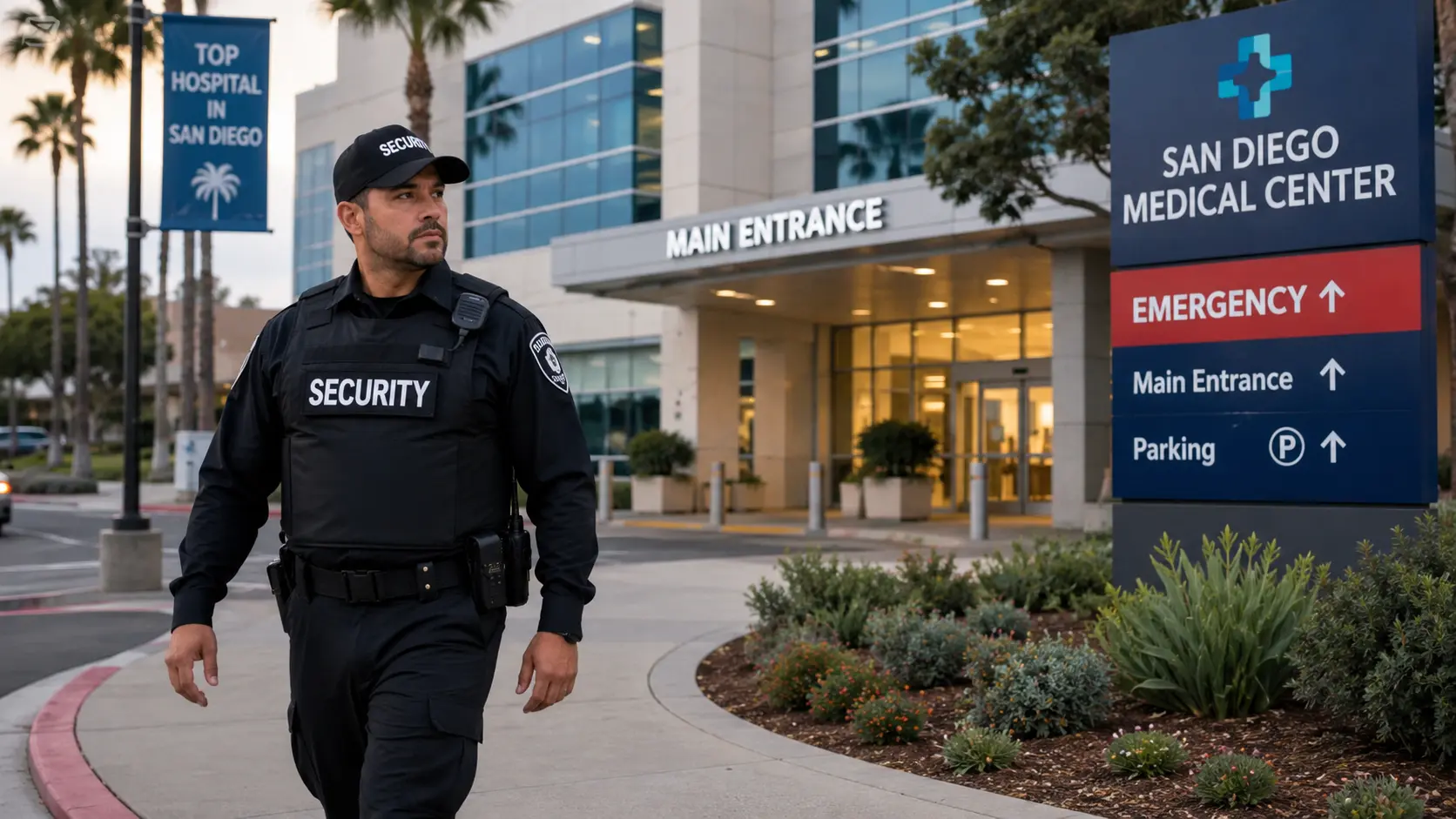
Hospitals are not like office buildings, retail stores, or warehouses. A single facility can have dozens of entrances, round-the-clock foot traffic, physically or emotionally vulnerable patients, and departments that must stay strictly off-limits to the public. That combination creates a challenge a standard commercial security plan isn’t built to handle.
Emergency departments run at all hours. Visitors move in and out at unpredictable times. Staff works overnight shifts in parking structures and back hallways. Medication rooms, records areas, and equipment storage need controlled access. This is why Hospital Security in San Diego looks different from security at a typical business, and why healthcare administrators need a plan built specifically around how a hospital actually operates.
This article breaks down what hospital security guards actually do, what risks hospitals without Medical Security in San Diego face, how access control and patrols work, and what administrators should consider before choosing a security provider.
Why Hospital Security Matters in San Diego
San Diego is home to a wide mix of Medical Security: large hospital campuses, urgent care clinics, behavioral health centers, and medical office buildings. Each operates differently, but most share realities that make security a daily concern rather than an occasional one.
Hospitals generally run 24/7, so there’s no point in the day when a facility is fully “closed.” Emergency departments see a steady, often unpredictable, flow of patients and visitors, and large campuses often have multiple entrances, which makes it harder to control who is coming and going.
A few operational realities that shape hospital security planning in San Diego include:
- Continuous operations: staff, patients, and visitors are present at all hours, including overnight.
- High visitor volume: family members, delivery personnel, and vendors all need some level of access.
- Restricted departments: maternity wards, behavioral health units, pharmacies, and record rooms require limited access.
- Parking structures: often the site of overnight staff arrivals and departures.
- Valuable equipment: medical equipment and supplies represent a real investment that needs protection.
Because of this, hospital security guards in San Diego are trained to approach a facility differently than a guard stationed at a retail property or office building would.
What Do Hospital Security Guards in San Diego Actually Do?
Hospital security guards handle a mix of routine, preventive, and responsive duties. The goal isn’t just to be present; it’s to keep the facility organized, controlled, and safe for the people who rely on it every day.
Monitor Hospital Entrances
Guards stationed at main entrances, emergency department doors, and secondary access points help control who enters the building, checking in visitors, directing people to the correct department, and watching for unusual activity.
Manage Visitor and Access Control
Not every part of a hospital is open to the public. Security personnel manage visitor passes, confirm individuals are heading to the correct area, and support hospital policy around who can access patient floors or restricted departments.
Protect Patients, Visitors and Staff
A visible security presence helps maintain a calmer, more orderly environment, particularly in high-stress areas like emergency departments, where patients and family members may be anxious or upset.
Patrol Hospital Buildings and Grounds
Routine patrols of interior hallways, waiting rooms, stairwells, and exterior grounds help guards spot problems early, whether that’s a propped-open door or a person who shouldn’t be in a particular area.
Monitor Parking Areas
Parking structures and lots are often less populated late at night. Guards patrol these spaces to support staff and visitors walking to and from their vehicles, especially during night shifts.
Respond to Security Incidents
When something happens a disruptive visitor, an unauthorized person in a restricted area, a theft security personnel respond, de-escalate where possible, and coordinate with hospital staff and, when necessary, local law enforcement.
Common Security Risks at San Diego Hospitals
Every hospital faces its own version of these risks depending on size, location, and the population it serves:
- Unauthorized access: A guard posted at key access points, combined with credential checks, helps prevent entry into restricted departments.
- Aggressive or disruptive behavior: Trained security personnel use verbal de-escalation first, keeping a tense situation from escalating further.
- Workplace violence concerns: A visible, trained security presence helps deter incidents and gives staff a resource to call on immediately.
- Theft: Medical equipment, supplies, and personal belongings are potential targets; patrols and monitored access points reduce opportunity.
- Restricted-area intrusion: Pharmacies, records rooms, and behavioral health units need consistent access control, not just a locked door.
- Parking-area incidents: Poorly monitored parking structures can be a vulnerability, particularly overnight.
- After-hours security concerns: With reduced staffing overnight, on-site security helps maintain the same level of oversight as during the day.
- Emergencies: From medical emergencies to evacuations, guards support crowd control and keep areas clear for first responders.
How Hospital Security Protects Patients
Patients are often at their most vulnerable inside a hospital, recovering from surgery, dealing with a medical crisis, or unfamiliar with the building. Security’s role is creating a controlled, predictable environment: managing who has access to patient floors, keeping departments like maternity or behavioral health genuinely restricted, and supporting staff in maintaining an orderly waiting room or hallway.
None of this replaces clinical care. Security personnel don’t make medical decisions; they support the physical environment so doctors and nurses can focus on patient care instead of also managing access control themselves.
How Security Guards Support Doctors, Nurses & Hospital Staff
Hospital staff face their own safety considerations, especially those working night shifts or walking to parking structures after dark.
A dedicated security team gives staff a resource to call on directly rather than managing a situation alone:
- Escorting staff to their vehicles during overnight shifts
- Monitoring staff-only areas and break rooms for unauthorized access
- Responding quickly when a staff member flags a disruptive patient or visitor
- Helping de-escalate tense interactions before they intensify
- Supporting staff during emergencies, such as evacuations
It’s worth being clear about scope: security guards support hospital operations, but they are not a substitute for police or emergency medical responders. Their job is to maintain a safe environment, which often includes coordinating with those professionals rather than replacing them.
Access Control & Visitor Management in San Diego Hospitals
Controlling who enters a hospital and where they’re allowed to go once inside is one of the more practical, day-to-day functions of hospital security.
A typical process looks like this:
Entry → Identification → Authorization → Access → Monitoring
- Entry: A visitor, staff member, or vendor arrives at an entrance.
- Identification: Security confirms who they are through a staff badge, visitor sign-in, or vendor documentation.
- Authorization: The guard checks whether the individual has a legitimate reason to be there and which areas they’re permitted to access.
- Access: The person is issued a visitor pass or directed to their destination.
- Monitoring: Security continues observing common areas to confirm people stay within authorized zones.
This looks different depending on the situation. Staff typically use credentials for quick access. Vendors may need to sign in and be escorted. After-hours access is often more limited, with fewer entrances open. Restricted departments pharmacies, records, behavioral health units usually require an added layer of verification beyond a general visitor pass.
Hospital Security Patrols & Property Monitoring
Hospital Security Services are one of the most consistent parts of a hospital security program. Rather than staying in one spot, guards move through the facility regularly to check for anything out of place.
Interior patrols typically cover hallways, waiting areas, stairwells, and staff corridors. Exterior patrols focus on entrances, loading areas, and the surrounding grounds. Parking structures and lots get particular attention, especially overnight when fewer people are around.
During patrols, guards check restricted areas to confirm doors are secured, look for anything out of place a propped door, an unfamiliar vehicle, unattended equipment and document what they observe. Incident reporting is a routine part of this work, giving administrators a record of activity from each shift.
Emergency Response & De-Escalation in Healthcare Security Facilities
Hospitals deal with high-stress situations more often than most other facility types, which makes de-escalation a core skill for hospital security personnel. Guards are trained to use verbal communication first, calming a frustrated visitor or defusing a tense exchange before it becomes physical.
When a situation does escalate, security’s role includes securing the affected area, keeping bystanders at a safe distance, and communicating clearly with staff. During evacuations, guards can help direct people to exits and keep pathways clear.
Coordination with first responders matters too. Security personnel are often the first point of contact when police, fire, or paramedics arrive, directing them to the right location, but they support this process rather than replace trained emergency responders.
Armed vs. Unarmed Hospital Security in San Diego
This is one of the more nuanced decisions a healthcare security facility has to make, and there’s no single right answer for every hospital.
Unarmed security guards are often well-suited to general access control, visitor management, patrols, and de-escalation the majority of day-to-day hospital security work. Many medical offices, clinics, and smaller facilities operate comfortably with unarmed personnel.
Armed security may be considered for larger campuses, facilities with a history of specific incidents, or environments where a higher level of risk has been identified. This decision should come from a facility-specific risk assessment, not a default assumption that armed guards are always or never necessary.
Any hospital evaluating armed security should also account for internal policy and applicable state BSIS-licensed requirements for armed personnel. A qualified security provider can walk through these considerations when building out a plan.
Different Medical Security in San Diego:
Not every healthcare security facility has the same needs; a large hospital campus and a small medical office require very different approaches.
- Hospitals: typically need the most comprehensive coverage: multiple entrances, 24/7 staffing, emergency department support, and parking patrols.
- Medical centers: Often similar to hospitals in scale, with a strong emphasis on access control across departments.
- Clinics: Usually need lighter coverage focused on entrance monitoring during business hours.
- Urgent care facilities: Benefit from security that can manage higher patient volume and occasional walk-in tension in the evenings.
- Behavioral health facilities: Require personnel trained specifically in de-escalation, given the patient population.
- Medical offices: Generally need a lighter footprint, centered on access control and after-hours protection.
How to Choose the Right Hospital Security Plan in San Diego
A generic security package rarely fits a healthcare security facility well. Before selecting a provider, it helps to walk through a facility-specific checklist:
- Facility size: campus size and how many buildings need coverage
- Number of entrances: how many access points need to be monitored
- Operating hours: whether the facility runs 24/7 or closes overnight
- Emergency department requirements: whether the ED needs dedicated coverage
- Visitor volume: how much foot traffic moves through daily
- Restricted areas: which departments need controlled access
- Parking facilities: structures or lots that need regular patrols
- Previous incidents: any specific security issues in the past
- Patrol requirements: interior patrols, exterior patrols, or both
- Number of guards required: enough personnel to cover shifts adequately
Working through these questions with a provider makes it possible to build a plan around how the facility actually functions, rather than applying a one-size-fits-all approach.
Why Choose Security Base Group for Hospital Security in San Diego?
Security Base Group provides both armed and unarmed security options for healthcare security facilities, letting administrators choose the coverage level that fits their risk profile. Plans are built around each facility’s layout, hours, and access control needs rather than a standardized package.
For facilities that need ongoing oversight, patrol services can be structured around interior hallways, exterior grounds, and parking areas, with coverage arranged flexibly to match a facility’s schedule, including overnight and weekend shifts. Security reporting is also part of the process, giving administrators visibility into daily activity.
Security Base Group provides these services to healthcare security facilities throughout the San Diego area. Administrators can visit the Security Guard Company in San Diego page to learn more.
Frequently Asked Questions About Hospital Security in San Diego
1. What does hospital security in San Diego include?
Hospital Security in San Diego typically includes entrance monitoring, visitor and access control, interior and exterior patrols, parking area coverage, and incident response. The exact scope depends on the facility’s size, hours, and specific risk factors.
2. Do hospitals need armed or unarmed security guards?
It depends on the facility. Many hospitals rely primarily on unarmed guards for day-to-day access control and patrols, while larger campuses or higher-risk environments may also use armed security based on a risk assessment.
3. Can hospital security guards monitor entrances?
Yes. Monitoring entrances is one of the core responsibilities of hospital security guards, including checking visitors, directing foot traffic, and helping enforce restricted access to certain departments or floors.
4. Can security guards patrol hospital parking areas?
Yes. Parking structures and lots are a regular part of hospital security patrols, particularly during overnight hours when these areas tend to be less populated, and staff are arriving or leaving shifts.
5. Can hospital security guards provide 24/7 coverage?
Many hospitals operate around the clock, and security coverage can be arranged to match that schedule, including overnight and weekend shifts, depending on the facility’s specific staffing needs.
6. How do security guards handle disruptive visitors?
Security personnel are trained to use verbal de-escalation first, aiming to calm the situation before it intensifies. If needed, they secure the area and coordinate with hospital staff or local law enforcement.
7. Can security companies protect clinics and medical offices?
Yes. Smaller facilities like clinics and medical offices often need lighter coverage focused on entrance monitoring, visitor management, and after-hours protection, which can be scaled to fit the facility’s size.
8. How can a San Diego medical facility request a security quote?
Facility administrators can reach out through Security Base Group’s San Diego security services page to discuss their facility’s needs and request a customized quote.
Protect Your Medical Facility With the Right Security Plan
Hospitals and medical facilities carry a unique set of responsibilities: protecting patients, supporting staff, managing constant visitor traffic, and controlling access to sensitive areas, all while operating around the clock. A generic security approach isn’t built for that kind of complexity. Hospital Security in San Diego works best when it’s tailored to a facility’s actual layout, hours, and risk factors, from entrance monitoring and patrols to parking coverage and emergency response support.
Need Hospital Security in San Diego? Contact Security Base Group to discuss a customized security plan for your medical facility.


