
Black Friday & Holiday Retail Security Guide for Los Angeles 2026
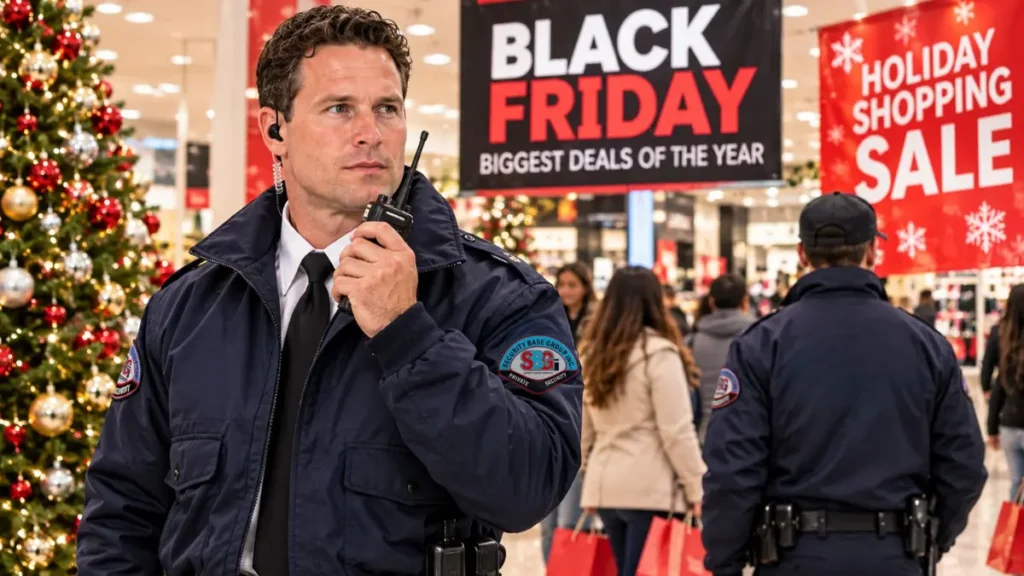
Introduction: Why Holiday Retail Security Needs a Plan Before Black Friday
Black Friday falls on November 27 this year, which leaves Los Angeles retailers only a few weeks to get ready. From that day through New Year’s, stores see heavier foot traffic, longer hours, bigger deliveries, and more temporary staff. Each of those changes creates a gap that can be exploited if nobody has planned for it.
Black Friday & Holiday Retail Security is not about turning your store into a fortress. It is about spotting where the season puts the most pressure on your people, merchandise, and property, and deciding in advance how to handle it. Stores that do this early tend to respond to incidents calmly instead of improvising in the middle of a rush.
This Retail Security Guide for Los Angeles 2026 walks through the main risks, practical prevention steps, guard staffing questions, special considerations for outdoor markets, and what to do when something goes wrong. It ends with a checklist you can adapt for your own location. No guide can promise that incidents will not happen, but good preparation makes them less likely and easier to manage.
Why Holiday Retail Security Hits Differently in Los Angeles
Los Angeles retail is not one environment. A street-front boutique, an enclosed mall tenant, an outlet center unit, a big-box store with a large lot, and a weekend market stall all face different problems. The same city can include all of them within a short drive.
Holiday traffic also arrives in waves. Shopping districts and centers fill up on weekends and during promotions, while some stores extend hours well into the evening. Parking structures, loading docks, and side entrances see more activity than usual, often with less staff attention.
Several property factors shape your security needs:
- Layout: Blind corners, tall fixtures, and crowded aisles reduce sightlines.
- Operating hours: Late closings and early openings raise employee safety questions.
- Delivery schedules: Extra seasonal shipments often arrive at odd hours and pile up in receiving areas.
- Customer volume: Crowds make it harder to notice unusual behavior and slower to respond when something happens.
Because of this, a site-specific risk assessment is more useful than a generic checklist. Look at your own incident history, your own inventory losses, and your own property before copying what a competitor is doing.
The Biggest Risks Retailers Face From Black Friday Through New Year’s
Most holiday security problems fall into a handful of categories. Knowing them helps you decide where to spend limited time and budget.
- Opportunistic shoplifting: Busy floors and distracted staff make casual theft easier.
- Suspected organized retail crime: Coordinated groups may target specific high-demand items repeatedly.
- Customer and employee safety incidents: Disputes over sale items, crowding, and aggressive behavior can escalate quickly.
- Stockroom, inventory, and delivery theft: Extra stock and busy receiving areas create opportunities for loss, internal or external.
- After-hours break-ins and vandalism: Stores holding extra inventory can become more attractive targets once they close.
- Parking lot and exterior concerns: Vehicle break-ins, loitering, and safety issues for staff walking out late.
You do not need to treat every risk equally. Pull your incident reports and shrink data from the past two holiday seasons and see what actually happened at your location. A store that has repeatedly lost electronics from a back room has different priorities than one that mostly deals with fitting room theft or parking lot complaints.
How Organized Retail Crime Shows Up During the Holiday Rush
Opportunistic theft is usually a one-off decision. Someone sees a chance and takes it. Suspected organized retail crime is different because it tends to involve repeat targeting, planning, and coordination, often aimed at the same categories of merchandise.
Warning signs are usually found in patterns, not in how a person looks. Examples include:
- The same product categories disappearing repeatedly, especially in large quantities.
- Inventory counts that do not match sales records, with no clear explanation.
- Multiple incidents across several days or locations with similar methods.
- Tampering with tags, packaging, or display fixtures.
Be careful here. A customer buying several of the same item, or a group shopping together, is not evidence of a crime. Judging people by appearance or ordinary behavior leads to bad decisions and can create legal and reputational problems for your business. Focus on documented patterns and actions, not assumptions.
Good records make the difference. Keep detailed incident logs, save relevant CCTV footage, and encourage staff to report what they saw and when. Escalate suspected coordinated activity to management and, where appropriate, to law enforcement. Trained security personnel can support this process through observation, written documentation, and lawful incident response, but they act within their training, company procedures, and the law. Employees should not chase or physically confront suspects.
Practical Security Steps That Actually Work on the Ground
Most effective holiday security measures are simple. They depend more on consistency than on expensive equipment.
- Improve visibility: Keep aisles clear, lower or reposition tall displays where you can, and avoid blocking windows with promotional signage. If staff can see across the floor, customers and would-be thieves notice it too.
- Position people deliberately: Place employees near entrances, fitting rooms, and high-value displays during peak periods. If you use security guards, brief them on where you want visibility and what your escalation steps are.
- Set clear reporting procedures: Every employee should know who to tell, how to document an incident, and what not to do. Write it down and review it during a pre-season briefing, especially for seasonal hires who may not have seen your procedures before.
- Review your equipment: Check that CCTV cameras cover entrances, registers, stockrooms, and exterior areas, and that footage is recorded and retrievable. Test alarms and confirm access control settings, including who holds keys or codes.
- Tighten daily routines: Opening and closing procedures, cash handling, and delivery checks are where holiday stress causes shortcuts. Use two-person closing where possible, make cash drops on a schedule, and avoid letting staff carry deposits alone late at night.
- Keep everyone talking: Managers, floor staff, and guards should share information throughout the day. A quick note about a suspicious pattern at noon can help the evening shift avoid the same problem.
Procedures and communication support your physical security. Cameras and locks only work if people use them consistently.
Protecting High-Value Merchandise and Stockrooms
Start with your own data. Which products went missing last season? Which items sell fastest and carry the highest resale value? Your loss records are a better guide than general assumptions about what thieves want.
Once you know your vulnerable products, match the protection to the risk:
- Locked cabinets or cases for small, high-value items.
- Protective fixtures or tethers for display units.
- Keeping limited quantities on the floor, with extra stock behind controlled access.
- Moving certain products closer to registers or staffed areas.
Stockrooms and receiving areas need their own controls. Limit access to authorized employees, keep doors closed, and log who enters when stock is especially valuable. Verify every delivery against paperwork before signing, and report discrepancies right away instead of waiting for end-of-season counts.
On-site security guards can help protect vulnerable areas by monitoring stockroom access, observing receiving activity, and maintaining visibility near high-value displays. Overnight security arrangements may also make sense for properties holding large amounts of seasonal inventory, particularly if there have been past after-hours incidents.
Parking Lot and Exterior Security During Peak Hours
Holiday security does not stop at the front door. Entrances, exits, loading zones, pedestrian routes, and parking areas all see more movement during the season, and employees often leave after dark.
Basic measures matter here:
- Lighting: Replace burned-out bulbs and check coverage in corners, loading areas, and employee exits.
- Sightlines: Trim landscaping and avoid stacking pallets or displays where they block views.
- CCTV: Cover entrances, exits, and key parking zones, and confirm footage quality.
- Access management: Control who can enter service areas and consider managed entry points for employee-only paths.
For larger retail properties, mobile patrols may be a sensible option. A patrol vehicle moving through a lot at irregular intervals provides visible presence and can check exteriors, doors, and loading areas without requiring a fixed post. They suit locations where constant on-site coverage is not necessary, but periodic checks are valuable.
Employee opening and closing safety deserves attention. Encourage staff to leave in pairs where possible, have someone watch the door during late closes, and give employees a way to request an escort to their vehicles. In shopping centers, retailers, property managers, and security personnel should share information so that a problem in the lot does not go unreported because everyone assumed someone else saw it.
Staffing Smart: How Many Guards Do You Really Need?
There is no universal guard-to-customer ratio that works for every store. Anyone offering a fixed number without seeing your property is guessing.
The right answer depends on factors such as:
- Property size and layout
- Number of entrances and exits
- Operating hours, including late-night trading
- Value and type of merchandise
- Past incidents and loss patterns
- Expected customer volume on peak days
Dedicated on-site guards and mobile patrols serve different purposes. An on-site guard provides continuous presence, greets customers, observes the floor, and responds quickly to issues inside the property. A mobile patrol offers periodic visits and visible coverage across one or several locations, which can be a good fit for exteriors, closed hours, or larger lots.
Many retailers use temporary holiday coverage to handle peak trading days and late-night operations without committing to year-round staffing. A common approach is to add guards for the busiest weekends and extended hours, then reassess in January.
The best way to decide is a site-specific security assessment. A professional walkthrough of your property, your incident history, and your schedule will show where coverage is actually needed.
Special Considerations for Outdoor Holiday Markets and Pop-Ups
Temporary stalls, seasonal markets, and pop-up shops face different issues than permanent stores. Merchandise is often exposed, structures are temporary, and many vendors share one space with limited shared oversight.
Key areas to plan for:
- Vendor storage: Lock up valuable stock and equipment when the stall is unattended, and avoid leaving inventory in vehicles overnight.
- Merchandise protection: Keep high-value items behind the counter or within reach of staff.
- Access points: Define entrances, exits, and delivery routes, and control after-hours entry.
- Crowd movement: Plan walkways and queue areas so crowds do not block stalls or emergency routes.
- Emergency routes: Keep exits clear and make sure vendors know where they are.
- Communication: Set up a simple way for vendors and organizers to alert each other, such as a shared group message or radio channel.
Event security personnel can help manage crowds, monitor access points, and provide a visible presence during peak hours. Mobile patrols may be useful for overnight checks of market grounds and stored equipment.
Create a short incident-response plan appropriate to the event. It should say who to call, who makes decisions, where first aid is located, and how vendors will be informed if something happens.
What to Do When Something Goes Wrong
Safety comes first. Customers and employees matter more than merchandise, so staff should not chase suspects or physically intervene in theft. If there is a threat to anyone’s safety, an assault, a weapon, or a medical emergency, call 911 immediately.
For other incidents, follow a clear escalation path:
- Move people away from danger and alert a manager.
- Contact security personnel on site, if present.
- Call law enforcement through the appropriate channel for the situation.
- Keep communication calm and clear, so staff and customers know what is happening.
Once the situation is under control, protect the evidence. Preserve CCTV footage promptly, since many systems overwrite recordings. Collect written statements from employees while details are fresh, and note times, locations, and what was observed.
Afterward, review what happened. Where did your procedures hold up, and where did they fail? Update your plan, brief staff, and fix any gaps in coverage or equipment. Remember that security personnel must act within their training, authority, company procedures, and applicable law. Make sure managers understand those limits so expectations stay realistic.
Quick Holiday Security Checklist for LA Businesses
- Complete a pre-season risk assessment using past incident and loss records.
- Decide guard schedules, including peak days and late-night hours.
- Confirm opening and closing procedures, including two-person closing where possible.
- Test CCTV coverage, recording, and footage retrieval.
- Check lighting, alarms, and access controls inside and outside.
- Identify high-value merchandise and secure it appropriately.
- Restrict stockroom and receiving area access.
- Hold employee security briefings, including seasonal hires.
- Review parking lot and exterior coverage, including patrol needs.
- Set up incident reporting procedures and post emergency contacts.
- Verify deliveries against paperwork and report discrepancies immediately.
- Schedule periodic reviews of your security arrangements through the season.
When Should Los Angeles Retailers Hire Professional Security Guards?
Not every store needs professional security, but certain situations make it worth considering. Recurring theft, previous incidents, high-value inventory, extended trading hours, and large or complex properties are common signs that extra support may help.
Different services fit different situations:
- Uniformed security guards provide visible presence, customer-facing support, and on-site observation.
- Mobile patrols offer periodic checks of exteriors, parking lots, and multiple locations.
- After-hours security helps protect closed stores holding valuable seasonal stock.
The right combination depends on your property, your risks, and your operating schedule. Coverage should be built around those factors, not around a standard package.
Security Base Group is a Los Angeles security guard company that offers armed and unarmed guard services for businesses, events, and properties. Retailers who want help planning seasonal coverage can discuss their location, hours, and concerns with the team and work out what level of support makes sense. As with any provider, confirm licensing and ask how guards are trained and supervised before you commit.
Final Thoughts: Staying Ahead Without Overcomplicating Things
Holiday retail security comes down to a few basics: prepare early, keep procedures clear, rely on trained people, and keep communication open. You do not need a complicated plan. You need one your team understands and follows consistently.
Review your security arrangements before Black Friday, then check in again as the season goes on. Incidents, staffing changes, and new patterns may require adjustments.
If you would like a second set of eyes on your property or help covering peak hours, Security Base Group can discuss your holiday security needs and suggest coverage suited to your location.
 Previous Post
 Next Post


