
Armed Security Guards in Jurupa Valley for Warehouses: 2026 Experts’ Guide
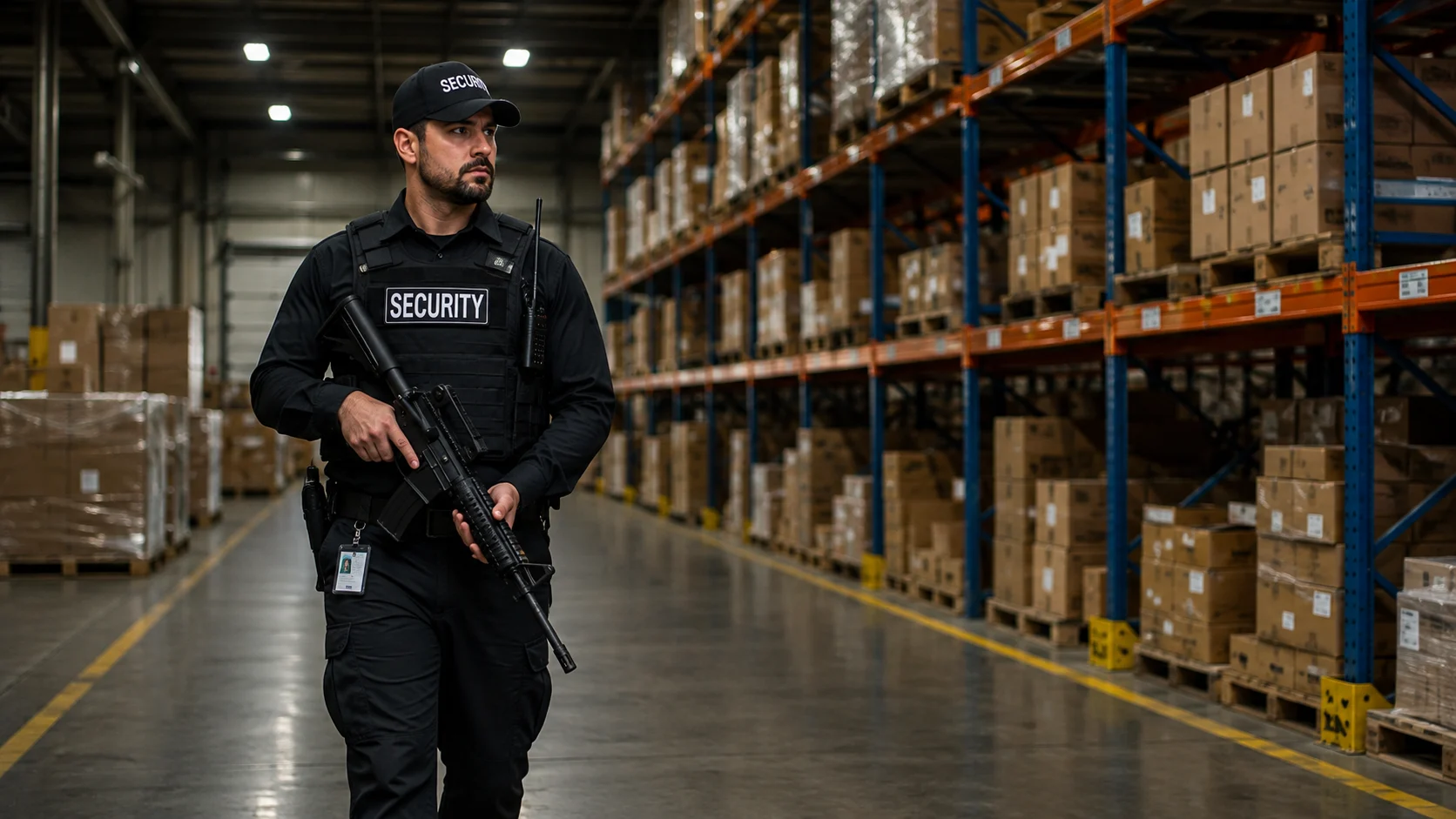
Jurupa Valley has grown into one of the Inland Empire’s busiest logistics corridors, and with that growth comes a real need for stronger protection around warehouses, distribution centers, and industrial yards. Facilities in this area often hold high-value inventory, freight, trucks, trailers, and equipment that sit exposed across large properties with multiple entrances and long overnight hours. That combination creates opportunities for theft, unauthorized access, cargo theft, vandalism, trespassing, after-hours break-ins, and suspicious vehicle activity around loading docks and parking areas.
For many warehouse operators, Armed Security Guards in Jurupa Valley have become part of a broader conversation about how to protect people, property, and product without disrupting daily operations. Armed security isn’t automatically the right fit for every facility, and a responsible security plan starts with understanding the property’s actual risk profile rather than assuming the highest level of coverage is always necessary. This guide walks through what warehouse security involves, how armed guards fit into the picture, and how to evaluate the right coverage for your facility.
Why Warehouses in Jurupa Valley Need Stronger Security in 2026
Warehouse and distribution properties present a different security challenge than a typical retail storefront or office building. Many facilities in Jurupa Valley sit on large parcels with multiple entrances and exits, expansive parking areas, and dedicated truck and trailer yards that extend well beyond the main building. That layout means there are simply more points where someone could gain unauthorized access, and more ground for a security team to be aware of at any given time.
High-value inventory adds another layer to the equation. Whether a facility stores consumer goods, industrial materials, or palletized freight waiting for distribution, the contents of a warehouse are often worth far more than the building itself. Loading docks see a steady flow of drivers, third-party vendors, and delivery personnel throughout the day, which makes verifying who belongs on the property an ongoing task rather than a one-time check.
Overnight operations bring their own set of vulnerabilities. Facilities that run 24/7 or store trucks and trailers on-site after hours often have reduced staffing exactly when the property is least visible to the outside world. Rather than a generic statement that industrial areas face risk, it’s more accurate to say that warehouses face a range of security challenges that vary according to their location, inventory, operating hours, access points, and overall risk profile.
What Does an Armed Security Guard Do at a Warehouse?
An armed security officer assigned to a warehouse typically handles a defined set of responsibilities built around the property’s specific post orders. Access control is usually the foundation of the role, which means checking credentials, verifying visitors and vendors, and making sure only authorized individuals move past entry points. Guards also monitor building entrances and exits throughout their shift, since these are the most common areas where unauthorized access attempts occur.
Patrols make up another core part of the job. Officers conduct scheduled and randomized walks around the interior and exterior of the property, checking loading docks, perimeter fencing, parking lots, and truck or trailer yards for anything out of place. This kind of armed on-site security gives a facility continuous eyes on areas that cameras alone might not fully cover, particularly in blind spots or during equipment downtime.
Beyond patrols, officers are trained to document incidents accurately, note suspicious activity, and respond according to their training, established post orders, and applicable law. It’s worth being clear that armed guards are one layer of a larger security strategy. They work alongside, not in place of, cameras, alarm systems, access-control technology, adequate lighting, and sound warehouse procedures. A guard who understands how to use those tools in combination is far more effective than one operating in isolation.
7 Security Risks Armed Guards Can Help Address in Jurupa Valley Warehouses
Cargo and Inventory Theft
Freight and inventory theft remains one of the more persistent concerns for warehouse operators, particularly at facilities with high shipment volume. A trained officer stationed at loading docks and storage areas can verify shipments against paperwork, monitor for irregular activity during loading and unloading, and reduce the window of opportunity for opportunistic theft.
Unauthorized Access
Large industrial properties with multiple entry points can be difficult to fully secure without a human presence reinforcing electronic access control. Guards help by confirming identification, cross-checking visitor lists, and stopping unauthorized individuals before they reach sensitive areas of the facility.
After-Hours Break-Ins
Warehouses are often quieter and less staffed overnight, which can make them a target during off-hours. Regular patrols and a visible security presence during these windows help deter break-in attempts and allow for a faster response if something does occur.
Truck and Trailer Security
Idle trailers and parked trucks represent significant value sitting outside the main building, sometimes overnight. Officers can monitor truck and trailer yards, confirm that trailers remain secured, and flag any tampering or unusual activity around vehicles.
Employee and Contractor Access
Warehouses regularly rely on contractors, temporary staff, and third-party vendors in addition to full-time employees. A guard managing access control can help confirm that everyone entering the property has legitimate business there, reducing the risk of internal theft or unauthorized entry through less-monitored channels.
Vandalism and Property Damage
Exterior walls, fencing, equipment, and vehicles can all be targets for vandalism, particularly on properties with limited overnight visibility. Consistent patrols and a visible guard presence make a facility a less attractive target for this kind of activity.
Perimeter and Parking Lot Security
Parking areas and property perimeters are often the first point of contact for anyone approaching a warehouse, authorized or not. Guards who regularly check fencing, gates, and parking lots can identify vulnerabilities, such as a damaged gate or a propped-open door, before they become a bigger problem.
It’s worth noting that no security measure, including armed guards, can eliminate crime. What a trained security presence does is reduce risk, improve response time, and create a documented record of activity on the property.
Armed vs. Unarmed Security Guards for Warehouses
Deciding between armed and unarmed coverage depends on a handful of practical factors rather than a blanket rule. Risk level is usually the starting point: a facility with a documented history of theft, break-ins, or trespassing may warrant a higher level of security presence than one with a clean track record. Property type matters too, since a sprawling distribution center with multiple access points has different needs than a smaller, single-entrance warehouse.
Inventory value plays a role as well, since facilities storing high-value electronics, pharmaceuticals, or specialty goods often face different exposure than those storing lower-value bulk materials. Operating hours matter too; a 24/7 facility with overnight truck traffic has different coverage needs than one that closes down each evening. Previous incidents, the number of access points, and any security presence required by insurance or contracts can also factor into the decision.
Armed security isn’t universally the better option for every property. Many facilities operate safely and effectively with unarmed guards paired with strong access control and monitoring systems. The right choice comes down to an honest risk assessment of the specific warehouse in question, not a default assumption that more force equals better protection.
When Should a Jurupa Valley Warehouse Consider Overnight Security?
Overnight security tends to make the most sense for facilities that operate around the clock, store valuable inventory, or keep trucks and trailers on-site after hours. Warehouses with large outdoor areas, limited overnight staffing, or a documented pattern of after-hours activity often benefit from having a dedicated presence during the hours when the property is otherwise unmonitored.
Effective overnight coverage typically combines several elements working together: access control at entry points, scheduled patrols across the property, ongoing observation of loading docks and trailer yards, and prompt incident reporting when something unusual is spotted. The visible presence of a guard on-site during overnight hours also serves as a deterrent on its own, since it signals that the property is actively monitored rather than left unattended until morning.
What Does 24/7 Warehouse Security Look Like?
Security needs shift throughout the day, and a well-run warehouse security plan accounts for that instead of applying the same approach around the clock.
- Day Shift: During business hours, the focus is typically on managing employee traffic, verifying visitors, coordinating with vendors, and monitoring deliveries and loading operations as trucks come and go.
- Evening Shift: As employees begin to leave for the day, attention shifts toward facility checks, monitoring parking areas as they empty, and keeping an eye on the property perimeter as activity slows down.
- Overnight: During overnight hours, coverage generally centers on gate monitoring, regular patrols, observation of the trailer yard, responding to alarm activations, and documenting any suspicious activity for follow-up the next business day.
Breaking coverage down by shift makes it easier for warehouse operators to identify where gaps might exist and to match staffing levels to the actual flow of activity on their property.
How to Choose Armed Security Guards in Jurupa Valley for Your Warehouse
Selecting a security provider is worth approaching methodically rather than defaulting to whichever company quotes the lowest hourly rate.
A few factors deserve close attention:
- Licensing and qualifications: a proper BSIS license and any required firearm permits for armed roles.
- Warehouse and industrial experience: familiarity with loading docks, trailer yards, and large industrial footprints, not just retail or office settings.
- Customized post orders: that reflect your specific property, not a generic template.
- Guard supervision: how the company oversees officers and handles performance issues or coverage gaps.
- Incident reporting: consistent documentation that supports insurance, liability, and pattern recognition over time.
- Communication procedures: clear escalation steps and emergency notification.
- Armed-security requirements: training standards, use-of-force policy, and compliance with state regulations.
- Insurance and professionalism: appropriate liability coverage.
- Ability to scale coverage: flexibility for seasonal volume changes or shifting risk levels.
- Understanding of the property’s unique risks: a willingness to actually assess your facility instead of proposing a one-size-fits-all plan.
Comparing providers on these points, rather than price alone, tends to produce a better long-term outcome.
How Security Base Group Supports Warehouse Security in Jurupa Valley
Security Base Group works with warehouse owners, operators, property managers, and logistics businesses throughout Jurupa Valley and the surrounding Inland Empire to build security coverage around the actual needs of a facility. Services include armed security guards, on-site security personnel, and overnight security coverage designed for properties that operate outside standard business hours.
The approach centers on customized security plans rather than generic packages. That includes access control at entry points, regular security patrols across the property and trailer yards, and consistent incident reporting so operators have a clear record of activity on their site. For facilities juggling employee traffic, vendor deliveries, and after-hours operations, this kind of layered commercial security coverage is designed to work alongside existing cameras and access-control systems rather than replace them.
Need reliable warehouse security in Jurupa Valley? Contact Security Base Group to discuss a customized security solution for your facility.
Frequently Asked Questions About Warehouse Security in Jurupa Valley
Do warehouses in Jurupa Valley need armed security guards?
Not every warehouse requires armed guards. The decision depends on factors like inventory value, operating hours, past incidents, and the number of access points on the property. A proper risk assessment is the best starting point for determining the right level of coverage for a specific facility.
What do armed security guards do at warehouses?
Armed guards typically handle access control, monitor entrances and truck yards, conduct patrols, verify visitors and vendors, and document incidents. Their role works alongside cameras and alarm systems rather than replacing them, forming one part of a broader warehouse security strategy.
Is overnight security necessary for warehouses?
Overnight security is especially valuable for facilities that operate 24/7, store trucks or trailers on-site, or have experienced after-hours activity in the past. It provides monitoring and a visible presence during hours when a property might otherwise be unattended.
Can security guards monitor truck and trailer areas?
Yes. Patrolling trailer yards and truck parking areas is a standard part of warehouse security post orders, since these areas often hold significant value and sit outside the main building where monitoring can otherwise be limited.
Are armed guards better than security cameras for warehouse security?
Neither replaces the other. Cameras provide continuous recorded coverage, while Security guards in Jurupa Valley offer real-time response, verification, and patrols. Most effective warehouse security plans combine both rather than relying on just one.
How much does warehouse security cost in Jurupa Valley?
Costs vary based on factors like coverage hours, armed versus unarmed staffing, property size, number of guards required, and the complexity of post orders. A provider can offer an accurate estimate after assessing the specific facility.
How do I choose a warehouse security company in Jurupa Valley?
Look for proper licensing, relevant industrial or warehouse experience, customized post orders, reliable supervision, and clear incident reporting practices. Comparing providers based on suitability for your property tends to produce better results than choosing based on price alone.
Final Takeaway
Warehouse security decisions in Jurupa Valley come down to a handful of connected factors: the property’s overall risk level, the type and layout of the facility, its operating hours, the number of access points, the value of inventory on-site, and the level of security coverage that actually matches those conditions. There’s no universal answer that applies to every warehouse, which is why a proper risk assessment matters more than defaulting to the highest tier of coverage available.
For operators weighing Armed Security Guards in Jurupa Valley against other options, the goal should be finding coverage that fits the specific property rather than following a generic template. Security Base Group works with warehouse and logistics operators throughout the area to build security plans around those individual needs. Contact us to talk through what coverage makes sense for your facility.


