
Event Security Checklist: 12 Safety Measures Every Event Should Follow
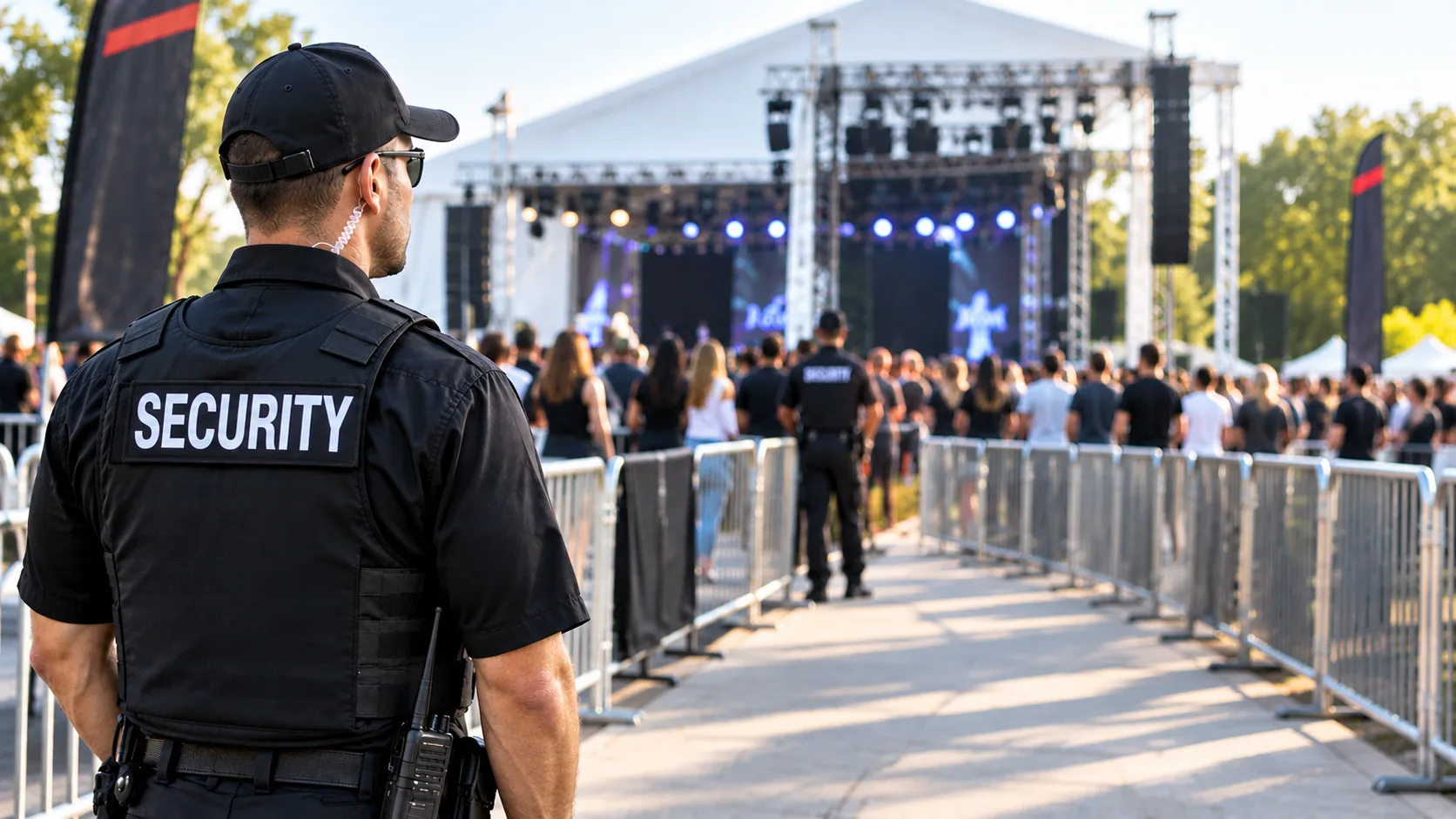
A wedding reception in a rented hall, a corporate product launch, an outdoor concert: each can run smoothly for hours and then unravel in minutes. A single entrance becomes a bottleneck, an unbadged visitor wanders backstage, or a guest collapses in the heat, and nobody knows who to call. These problems rarely come from a lack of goodwill. They come from decisions that were never made before the doors opened.
This event security checklist walks through 12 practical safety measures that organizers can use to plan corporate events, concerts, private parties, festivals, weddings, and other gatherings. Security works best when it is designed alongside the schedule, floor plan, and guest list, not added on the afternoon of the event.
In a region as spread out as Los Angeles, with its mix of hotels, studios, rooftops, outdoor venues, and event spaces, no two sites present the same challenges. Use the checklist as a starting point, then adjust it to your venue, your guests, and your event.
Why Every Event Needs a Security Checklist
A written checklist forces decisions to happen early, when there is still time to act on them. Walking through the venue on paper helps you spot hazards such as a single narrow entrance, a poorly lit parking lot, or a service door that guests can reach. It also shows who is responsible for what, so that responsibilities are not left to assumption.
Planning also makes coordination easier. Security staff, venue managers, caterers, production crews, and medical personnel all work from the same expectations, which reduces confusion when something goes wrong. Everyone on site, including guests, employees, vendors, and performers, benefits from procedures they have rehearsed rather than improvised.
A checklist is a planning tool, not a guarantee. It will not eliminate risk or ensure legal compliance on its own, but it gives you a structured way to find gaps and close them.
Event Security Checklist: 12 Essential Safety Measures
1. Conduct a Complete Event Risk Assessment
Start by examining the venue, the expected attendance, the planned activities, every access point, and the surrounding environment. A rooftop reception raises different concerns than a ballroom, and a ticketed concert differs from an invitation-only dinner.
Ask practical questions.
- Will alcohol be served?
- Are high-profile guests attending?
- Is there valuable equipment on site?
- What happens in the neighborhood around the venue that evening?
Record the answers, rank the risks by likelihood and impact, and build your plan around them. A generic template copied from another event will miss the problems that are specific to yours. For additional guidance, event organizers can consult the CISA Mass Gathering Security Planning Tool to help identify security considerations and plan appropriate protective measures for their event.
2. Verify Venue Capacity and Plan Crowd Movement
Confirm the permitted occupancy for the space and make sure your guest count, staff, vendors, and performers fit within it. Occupancy limits, fire-code rules, and permit conditions vary by venue and jurisdiction, so check the applicable requirements with the relevant local authority rather than relying on assumptions.
Then think about how people will actually move. Map entry and exit routes, queue areas, bars, restrooms, stages, and food lines, and look for places where crowds are likely to bunch up. Assign someone to monitor density during the event so that congestion is addressed before it becomes a hazard.
3. Secure All Entrances and Exit Points
Identify every door, gate, loading dock, and service entrance, then decide which are open to guests, which are for staff or vendors only, and which stay closed. Station someone at each controlled point, or check it on a set schedule if staffing is limited.
Emergency exits deserve particular attention. They must remain unobstructed, unlocked as required, and clearly marked throughout the event. Walk each route before doors open to confirm that decor, equipment cases, and stacked chairs are not blocking the way.
4. Establish Guest Screening and Credential Checks
Decide in advance how you will verify who belongs. Depending on the event, that might mean ticket scanning, a checked guest list, color-coded wristbands, staff badges, or vendor credentials issued in advance. Whatever you choose, apply it consistently so that no entrance becomes the easy way in.
If you plan to restrict certain items, publish the prohibited-item policy before the event so guests are not surprised at the door. Bag checks and other searches must comply with applicable law and the venue’s own policies. Train screening staff to be courteous and consistent, since a respectful tone keeps lines moving and lowers tension.
5. Prepare a Written Emergency Response Plan
Put your emergency procedures in writing and cover the scenarios you can reasonably foresee: fire, medical incidents, suspicious activity, severe weather, power failure, and evacuation or sheltering. For each, spell out who makes the decision, who communicates it, and what guests should be told.
Include a contact sheet with the venue manager, security supervisor, medical providers, and local emergency services, and share it with your key staff. A plan that sits in one person’s inbox is of little use during an incident. Brief everyone on their role before the event begins.
6. Arrange Trained Event Security Personnel
How many security staff you need depends on the size of the event, its risk profile, the layout, the hours of operation, and the activities planned. There is no universal ratio of guards to guests that fits every gathering, so base staffing on your risk assessment rather than a rule of thumb.
Define what each post is responsible for, whether that is door control, roaming patrol, backstage access, or parking. Confirm that personnel hold the qualifications appropriate for the work, hold a pre-event briefing, and agree on escalation procedures so everyone knows when to handle a situation and when to call a supervisor. For larger or more complex gatherings, many organizers work with a provider of Event Security Services in Los Angeles to help plan and staff these positions.
7. Create a Crowd Management and De-escalation Plan
Good crowd management is mostly prevention. Staff who watch crowd flow can redirect guests, open another lane, or pause entry before a crowd packs tight. Well-placed signage, clear queue lines, and visible staff all help guests move without being told twice.
Conflicts will still arise, particularly where alcohol is served. Train staff to speak calmly, give guests space, and offer a way out of the situation rather than a confrontation. Escalate to a supervisor, venue management, or emergency services when a situation exceeds what staff can safely handle. Throughout, keep access routes clear so staff and responders can reach any part of the venue. This is the practical value of proactive crowd management security: it keeps small issues small.
8. Secure Parking Areas and the Event Perimeter
Guests often feel most vulnerable between the car and the door. Review parking layouts, pedestrian walkways, lighting, drop-off zones, and loading areas. Decide which vehicles may enter, where vendors and performers park, and how delivery trucks will stay clear of guest paths.
Walk the perimeter before and during the event, looking for propped doors, gaps in fencing, dark corners, and anything out of place. Give staff a simple way to report suspicious activity.
For larger venues, dispersed facilities, or events using several parking areas, mobile patrol can provide coverage between fixed posts. Patrols should complement any security positions that are required to stay fixed, such as entrance control, rather than replace them automatically.
9. Coordinate Medical Support and First Aid
Estimate your medical needs based on attendance, the type of event, the length of the program, and the weather. Falls, dehydration, alcohol-related illness, and allergic reactions are foreseeable at many gatherings, and larger events may call for on-site medical personnel. Mark first-aid stations, tell staff where they are, and keep a clear lane open so emergency vehicles can reach the venue.
Outdoor events in Los Angeles call for particular attention to heat. Provide shade, easy access to drinking water, and rest areas, and monitor the forecast in the days and hours leading up to the event. Give staff the authority to adjust the schedule or move guests if conditions deteriorate.
10. Establish Reliable Communication and Incident Reporting
When something happens, the speed of communication often matters as much as the response itself. Equip security, event management, and key vendors with radios or another reliable system, and test it in the actual venue, since thick walls and large crowds can disrupt signals. Name a supervisor who is the single point of contact for incidents.
Set escalation rules in advance: what staff handle on their own, what gets reported to the supervisor, and what triggers a call to emergency services. Document every incident with the time, location, people involved, and actions taken. Those records help with insurance, venue follow-up, and improving your next event.
11. Protect Restricted Areas, Equipment, and Valuable Property
Different events hold different assets. A concert has backstage areas, instruments, and production gear. A wedding may have gifts, a cash bar, and personal belongings. A corporate event might involve confidential materials, demonstration equipment, or executives who require controlled access. Decide what needs protection at your event rather than assuming a standard set.
Use credentialed access, locked storage, adequate lighting, and staff presence at sensitive points. Keep cash-handling areas away from public view where possible and limit who can enter them. Where surveillance cameras are appropriate, follow venue policies and applicable law.
12. Conduct Pre-Event, During-Event, and Post-Event Security Checks
Treat security as three phases rather than a single moment.
- Before the event: Inspect the venue, test communications, check every access point, confirm emergency exits are clear, and brief all staff.
- During the event: Monitor crowd movement, respond to incidents, and reassess as conditions change. A sudden weather shift, a larger-than-expected turnout, or a late-arriving VIP can all call for adjustments.
- After the event: Manage guest departures, inspect the premises, document incidents, and secure equipment and property.
Update the checklist whenever circumstances change, whether that is a new venue, a different guest profile, or lessons learned from the last event.
How to Adapt Your Event Security Checklist for Los Angeles
Los Angeles events take place across a patchwork of jurisdictions. Requirements that apply within the City of Los Angeles may differ from those in Los Angeles County or in neighboring cities, and they can also depend on the venue, the type of event, and whether it is held indoors or outdoors. Do not assume that a rule from one location applies in another.
Start with the venue. Ask the venue manager what they require for security, insurance, occupancy, and vendors, and whether they have their own house rules or preferred providers. Then confirm whether your event needs any permits, which may depend on factors such as attendance, street use, amplified sound, alcohol service, or the use of public space. Contact the relevant city or county office, or the local fire authority, directly for current requirements instead of relying on general guidance, including this article.
Local logistics deserve equal attention. Traffic congestion can delay staff, vendors, and guests, so build extra time into the schedule. Parking may be limited or spread across multiple lots. Outdoor venues bring sun, wind, and temperature swings. And emergency responders need clear access to the site, so confirm where they would enter and keep those routes free.
When Should You Consider Professional Event Security Services?
Some gatherings are manageable with trusted staff and volunteers. Others benefit from professional support. Consider it when you expect a large crowd, high-profile guests, or valuable equipment. It is also worth considering when alcohol is served, when access arrangements are complex, when you are using multiple parking areas, or when your risk assessment points to elevated crowd-management concerns.
Depending on the agreed scope of service, qualified personnel can support access control, guest screening, patrols, incident reporting, and emergency coordination. They can also bring an outside perspective to your plan and help you spot gaps you may have overlooked.
If you are exploring this option, Security Base Group offers Event Security Services in Los Angeles. The right level of support depends on your venue, your guests, and your goals, so discuss your requirements and the scope of service with any provider before the event date.
Final Event Security Checklist Before Opening the Doors
Review these items shortly before guests arrive:
- Risk assessment completed.
- Venue capacity and crowd routes checked.
- Entrances, exits, and restricted areas inspected.
- Screening procedures confirmed.
- Emergency and medical plans reviewed.
- Security staff briefed and communication systems tested.
- Parking and perimeter arrangements checked.
- Incident reporting and post-event responsibilities assigned.
Frequently Asked Questions
1. What should be included in an event security checklist?
A solid event security checklist covers a risk assessment, venue capacity and crowd flow, entrance and exit control, guest screening, an emergency response plan, trained personnel, parking and perimeter checks, medical support, communication and incident reporting, protection of restricted areas, and checks before, during, and after the event.
2. How many security guards do I need for my event?
There is no single number that fits every event. The right staffing level depends on attendance, the layout of the venue, the hours of operation, the activities planned, and the risks identified in your assessment. Discussing these details with the venue and a security provider is the most reliable way to set a staffing plan.
3. When should I start planning event security?
Begin as early as possible, ideally when you choose the venue and set the date. Early planning leaves time to check requirements with local authorities, coordinate with vendors, arrange staffing, and brief everyone with a role.
4. Do I need a permit for my event in Los Angeles?
It depends on the type of event, the location, and the activities involved. Requirements can differ between the City of Los Angeles, Los Angeles County, and neighboring cities. Check with your venue and contact the relevant city, county, or fire authority directly for current rules.
5. What is mobile patrol, and when is it useful for events?
Mobile patrol means security personnel who move between locations, often by vehicle, instead of staying at one post. It can be useful for larger venues, spread-out facilities, or events with multiple parking areas. Patrols should complement any fixed security positions your plan requires, not replace them automatically.
6. Can a checklist guarantee my event will be safe?
No. A checklist helps you identify gaps and prepare, but it cannot guarantee complete safety or legal compliance. Treat it as one part of a broader plan that reflects your event’s specific circumstances.
Conclusion
An event security checklist will not remove every risk, but it replaces guesswork with preparation and gives your team a shared plan. The 12 safety measures above, from the initial risk assessment to post-event checks, work best when you start early, tailor them to your venue and guests, and revisit them as conditions change.
Remember that local requirements for occupancy, permits, and emergency access vary, so confirm them with the venue and the relevant authorities. If you would like to talk through the security needs of your event, you can contact Security Base Group to discuss your venue, expected attendance, and the support that fits.


