
Armed or Unarmed Event Security Guards in Los Angeles: Which Is Best for Your Event?
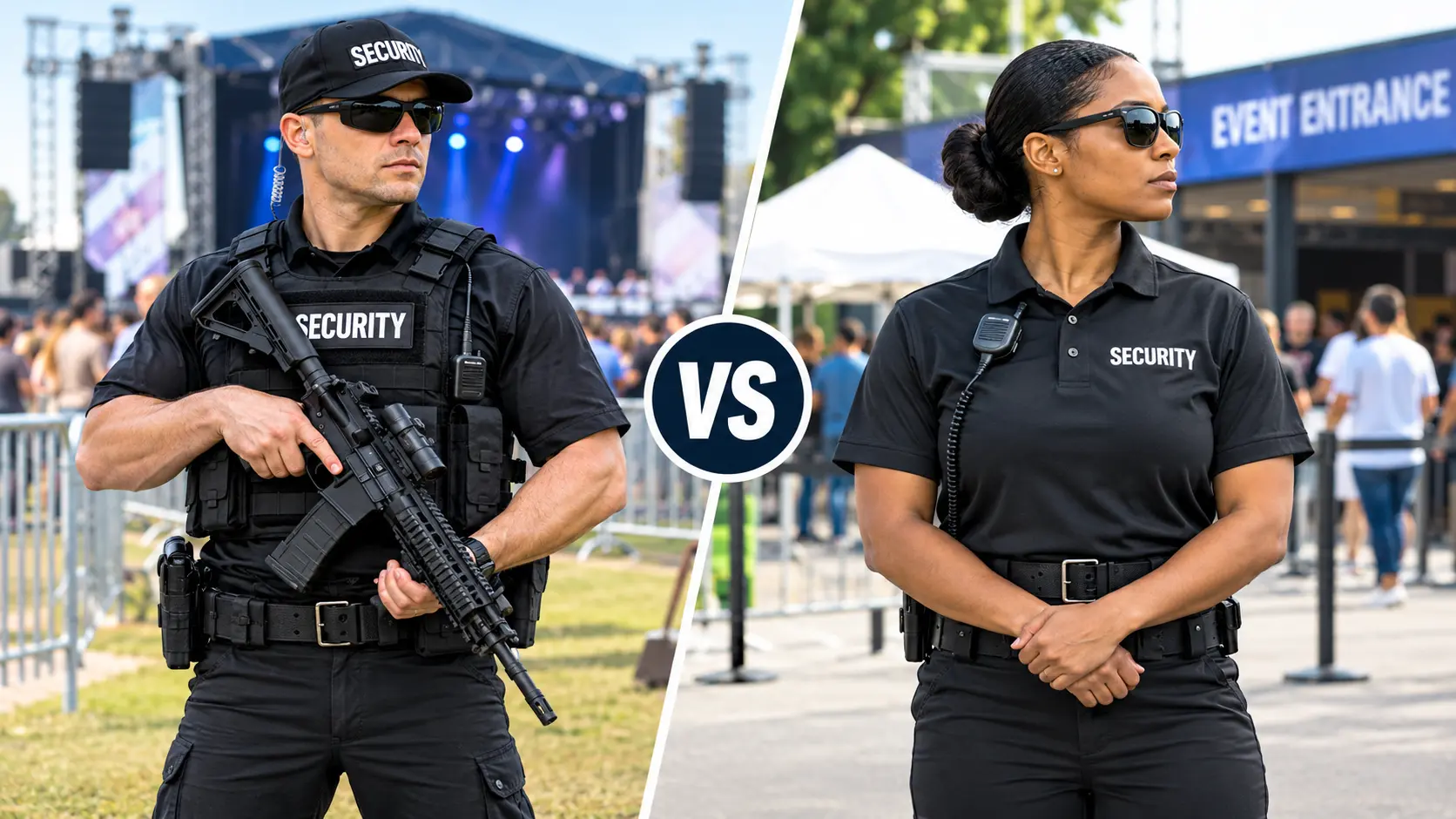
Most Los Angeles events do not need armed guards. A smaller number genuinely do. The right choice depends on your risk assessment, not on the size of the guest list or the budget.
If you are weighing armed or unarmed event security guards in Los Angeles, start with three questions.
- Is there a specific, credible threat?
- Will high-value people or assets be on site?
- Does the venue or situation involve risks that go beyond ordinary crowd and access issues?
If the answer to all three is no, trained unarmed professionals are usually the practical fit.
If any answer is yes, a qualified provider should assess whether armed coverage is justified.
This guide explains how the two roles differ, when each makes sense, and what to ask before you hire a security guard for your event.
What Is the Difference Between Armed and Unarmed Event Security Guards?
Both types of guards are there to protect people, property, and the event schedule. The difference is the level of authorization, training, and responsibility that comes with carrying a firearm.
What Does an Armed Event Security Guard Do?
An armed guard performs the same observation, access control, and incident-reporting duties as an unarmed guard, with the added authorization to carry a firearm on duty. In California, that authorization involves additional state requirements, covered below.
Armed guards are typically considered when there is a documented threat, a high-value asset or individual to protect, or a risk assessment pointing to a serious potential for violence. The added capability brings added responsibility: more training, stricter liability considerations, and a stronger effect on how guests perceive the event.
What Does an Unarmed Event Security Guard Do?
Unarmed guards handle the bulk of event security work. Their daily tools are observation, communication, and presence.
Typical duties include:
- Checking invitations, wristbands, or credentials at entry points
- Monitoring restricted areas such as backstage, VIP sections, or storage rooms
- Managing queues and crowd flow
- Spotting early signs of conflict and de-escalating it
- Coordinating with venue staff, event managers, and emergency services
Key Differences Between Armed and Unarmed Guards
| Factor | Unarmed Event Security | Armed Event Security |
| Responsibilities | Access control, guest screening, crowd supervision, restricted-area monitoring, de-escalation | Same duties, plus protection against elevated threats where a firearm may be justified |
| Typical applications | Weddings, corporate gatherings, private parties, most concerts and festivals | Events with credible threats, high-value assets, or specific protection requirements |
| Risk considerations | Suits low-to-moderate risk environments | Suited to elevated-risk situations identified through assessment |
| Guest experience | Generally approachable and low-key | More visible and serious; may affect atmosphere |
| Planning needs | Staffing plan and post orders | Staffing plan, post orders, firearms authorization checks, and closer venue coordination |
When Should You Hire Armed Event Security Guards in Los Angeles?
Armed security makes sense when the risk justifies it. It should not be a default for large or expensive events.
Situations that may call for armed coverage include:
- A credible, documented threat: A threatening message, a known dispute, or a stalking situation involving a guest or host.
- High-value assets or cash handling: Valuable jewelry, artwork, or large cash movements at a private or commercial event.
- High-profile guests: VIP gatherings where the attendee list itself raises the risk level.
- Specific protection requirements: A client, insurer, or venue may require armed personnel for particular posts.
The key step is a professional risk assessment. A reputable security provider will ask about the venue, guest list, timing, and any known concerns before recommending a staffing level. If a company recommends armed guards without asking these questions, treat that as a red flag. The same applies if it dismisses armed coverage when you have a real concern.
Also consider how armed guards affect the event. At a wedding or a family celebration, visible firearms can change the mood. In some cases, the better approach is a mix: unarmed guards at the front of the event and armed personnel placed discreetly where the risk is concentrated.
When Are Unarmed Event Security Guards the Better Choice?
For most events, unarmed guards cover what actually goes wrong: gate crashers, overcrowding, intoxicated guests, disputes between attendees, and unsecured back-of-house areas.
Unarmed security tends to be the better fit when:
- The main risks are behavioral or logistical: Think crowd flow, uninvited guests, or alcohol-related conflicts.
- Guest comfort matters: Weddings, corporate receptions, and private celebrations benefit from a professional but unobtrusive presence.
- De-escalation is the priority: Most incidents at events are resolved by calm communication and early intervention, not force.
- No specific threat has been identified: Without a documented concern, added armed presence may add cost and tension without adding meaningful protection.
A well-trained, well-briefed unarmed team with clear post orders is far more valuable than an under-briefed armed one.
Which Type of Security Is Right for Different Event Types?
No event type automatically requires one choice or the other. These are starting points, not rules.
- Weddings: Unarmed guards usually fit. Typical tasks include guest-list checks, parking supervision, gift-table monitoring, and keeping uninvited guests out. Armed coverage may be worth discussing if there is a known family conflict or a stalking concern.
- Corporate conferences and gatherings: Unarmed guards handle badge checks, restricted floors, and crowd flow. An executive-level threat may change the plan.
- Concerts: Unarmed guards commonly manage entry screening, barricades, and backstage access. Venue rules and promoter requirements will shape the final plan.
- Festivals: Large footprints mean many posts. Unarmed teams with strong supervision and communication are often the foundation, with armed personnel added only where the assessment supports it.
- VIP gatherings: The guest list drives the plan. A mix of discreet unarmed staff and, where justified, armed protection may be appropriate.
- High-risk private events: Disputes, public controversy, or known threats can justify armed coverage. This is where a professional assessment matters most.
Venue layout also matters. A rooftop in downtown Los Angeles, a hillside estate, a hotel ballroom, and an outdoor park each have different entry points, sightlines, and parking challenges. Visit the site with your security provider before settling on a plan.
How Much Does Event Security Cost in Los Angeles?
Prices vary widely, so be cautious about anyone quoting a flat figure without asking questions first. A quote reflects your event’s specific needs.
The main factors are:
- Guard type: Armed coverage generally costs more than unarmed because of added requirements.
- Number of guards: Attendance, entry points, and restricted areas determine headcount.
- Hours of coverage: Setup, event time, teardown, and any overnight period all count.
- Venue layout: Large or multi-level sites need more posts and better communication.
- Risk level: Higher-risk events may need more experienced staff, extra planning, or both.
- Supervision: Larger teams benefit from an on-site supervisor, which affects the quote.
- Overnight coverage: Equipment or asset protection after the event adds hours and posts.
Ask for a written quote that lists each of these elements. It makes comparing providers fair and avoids surprises on the day.
Do You Need Overnight Monitoring or Mobile Patrol?
The event itself is not always the end of the risk. Staging, sound equipment, rental items, décor, and vendor property are often left on site overnight, sometimes in open or semi-open areas.
- Overnight monitoring means a guard or monitoring arrangement watches over equipment, property, or assets after guests leave. It makes sense for multi-day events, load-in and load-out periods, or any site where valuable items cannot be locked away.
- Mobile patrol supplements a fixed team by having a vehicle-based officer check designated locations on a schedule. It can cover parking areas, perimeters, and secondary entrances, which makes it useful when a site is spread out or when you need periodic checks rather than a guard stationed all night.
Mobile patrol does not replace a fixed post in every case. If valuables are concentrated in one place, or if the venue requires continuous presence, a stationed guard may still be the better option. A good provider will explain which approach fits and why.
How to Choose a Reliable Event Security Company in Los Angeles
Before you sign, confirm the basics. In California, security guard companies and individual guards are regulated by the state’s Bureau of Security and Investigative Services (BSIS). Requirements can change, so verify current rules directly with BSIS or a qualified attorney. This article is not legal advice.
Use this checklist:
- Company licensing: Ask for the company’s state license and confirm it through BSIS.
- Guard credentials: Confirm that guards hold valid registration (a guard card) for the work they will do.
- Firearms authorization: If you need armed guards, ask how the company verifies the required state firearms authorization for each armed guard.
- Insurance: Request proof of coverage and ask what it includes.
- Event experience: Ask about work at events similar to yours, such as weddings, concerts, or corporate gatherings.
- Risk assessment: Look for a provider that asks about your venue, guest list, and concerns before recommending staffing.
- Post orders: Each guard should know their post, duties, and reporting line in writing.
- Communication plan: Confirm how guards, supervisors, venue staff, and you will stay in contact during the event.
- Emergency procedures: Ask how the team handles medical incidents, evacuations, and coordination with police or fire services.
- Clear quote: Insist on a written estimate that explains hours, headcount, and guard type.
Be wary of anyone who promises zero incidents. No provider can guarantee that. A professional will talk about risk reduction and preparation instead.
How Security Base Group Can Help Protect Your Event
Security Base Group provides professional security services in California for organizers who want a clear plan rather than guesswork. If you are an event planner, wedding organizer, corporate event manager, promoter, or venue manager, the team can discuss your venue, expected attendance, timeline, and concerns.
Based on that conversation, you can work toward a security plan that fits your event, whether that means unarmed guest management, armed protection for a specific need, or a combination. You can also ask about supporting services such as overnight monitoring and mobile patrol and whether they suit your site. Exact services and staffing depend on your requirements and should be confirmed with the team directly.
Frequently Asked Questions
1. Are armed security guards necessary for every large event in Los Angeles?
No. Size alone does not make armed coverage necessary. The decision should rest on a risk assessment that considers threats, assets, attendees, and venue conditions. Many large events run safely with well-trained unarmed teams.
2. Are unarmed guards enough for a wedding or private party?
In most cases, yes. Unarmed guards handle guest-list checks, access control, parking supervision, and de-escalation well. If there is a known threat or a specific dispute, talk with your provider about whether additional protection is appropriate.
3. Can an event use both armed and unarmed security guards?
Yes. Some events use unarmed guards for general entry and crowd tasks and place armed personnel at specific posts where the risk is highest. A provider can recommend a layout once it understands your concerns.
4. Should I arrange security for overnight equipment storage?
If valuable equipment, staging, or property will stay on site after the event, it is worth considering. Options include overnight monitoring or scheduled mobile patrol, depending on the site and the value of what is being left behind.
5. How early should I book Armed or Unarmed Event Security Guards in Los Angeles?
As early as practical. Early booking leaves time for a site visit, a risk assessment, and proper staffing. Last-minute requests are sometimes possible, but they limit planning options.
Conclusion: Choose Security Based on Risk, Not Assumptions
The question of armed or unarmed event security guards in Los Angeles comes down to risk. Unarmed guards suit most weddings, corporate events, and private gatherings. Armed guards are best when a documented threat, high-value assets, or an elevated risk assessment supports them. Overnight monitoring and mobile patrols can extend protection beyond the event.
Planning an event in Los Angeles? Contact Security Base Group to discuss your venue, expected attendance, event schedule, and security requirements. Our team can help you explore an appropriate event security plan for your needs and request a tailored quote.


