
How Much Does a Private Security Guard Cost in San Francisco in 2026?
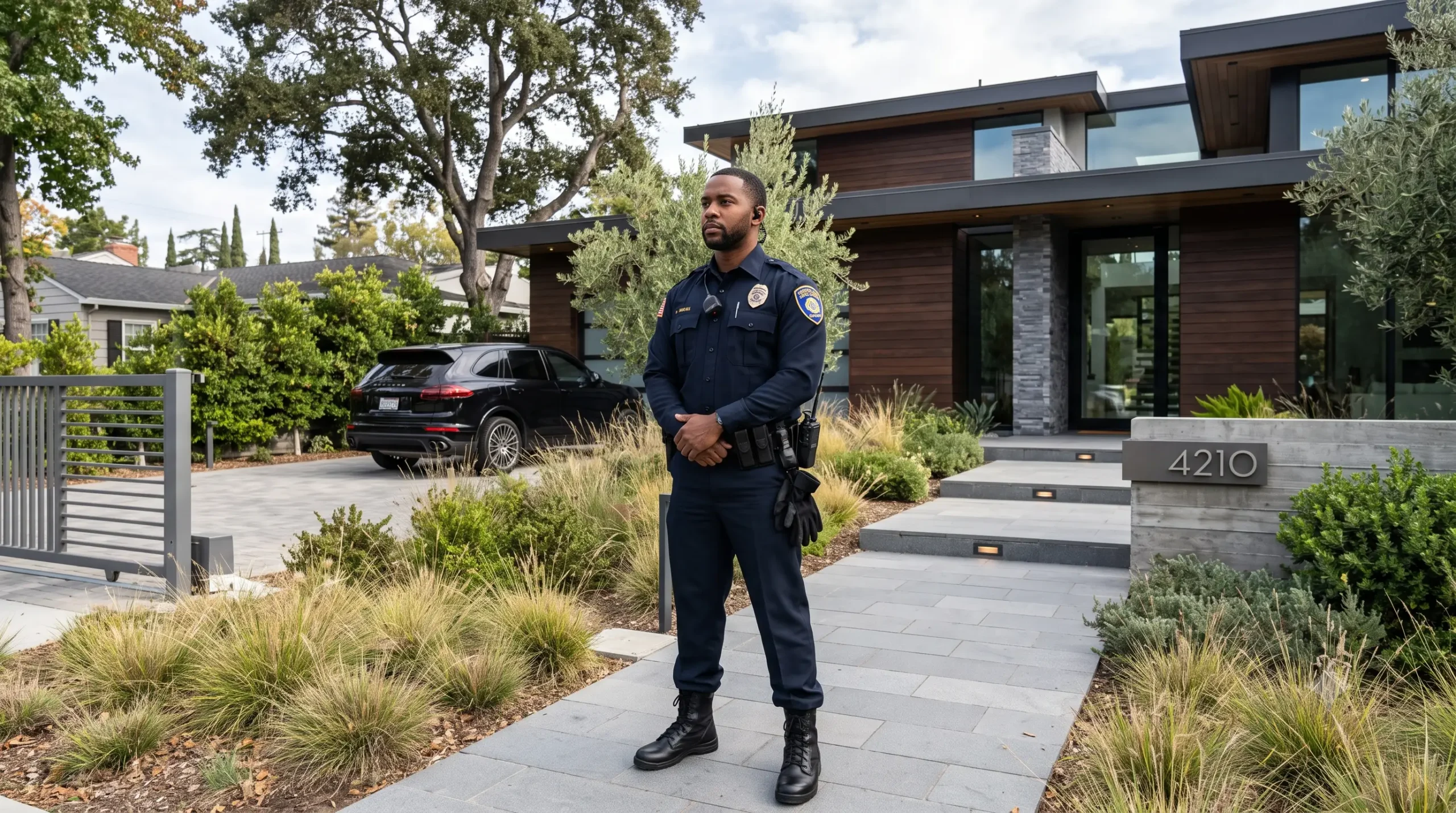
If you’ve compared quotes for guard services, you’ve probably noticed the numbers don’t line up. One company quotes a flat hourly figure over the phone, another asks a dozen questions before saying anything about price, and a third won’t give you a number until someone visits your property. That inconsistency isn’t a sign of hidden rates. It’s a reflection of how private security pricing actually works.
Private Security Guard Cost in San Francisco depends on far more than a single hourly wage. Armed versus unarmed staffing, coverage hours, guard count, property type, and contract length all shift the final number. A single guard watching a quiet lobby overnight and a multi-officer detail covering a busy retail site during the holidays are not the same job, and pricing them identically would shortchange one client or overcharge the other.
This guide walks through what actually drives security guard rates in San Francisco, how residential and commercial pricing differ, when armed protection makes sense, what 24/7 coverage really requires, and how mobile patrol fits in. The goal is a quote that reflects your actual needs, not a number pulled from a generic search.
What Is the Average Private Security Guard Cost in San Francisco?
There isn’t a single citywide average that means much in practice, because two properties with identical square footage can have completely different security requirements. It’s more useful to think of pricing as a combination of variables that each pull the number up or down.
Direct answer: Private Security Guard Cost in San Francisco is built from several factors: guard type, number of officers, coverage hours, risk level, property type, assigned duties, and contract length, not one flat rate that applies everywhere.
|
Factor |
How It Affects Pricing |
| Type of guard |
Armed assignments generally cost more due to licensing and liability |
|
Number of guards |
Larger sites, multiple entrances, or high foot traffic may need more than one officer |
| Coverage hours |
A few hours a week is priced differently than nightly or round-the-clock coverage |
|
Risk level |
Higher-risk environments (cash, valuables, past incidents) can raise pricing |
|
Property type |
Residential, commercial, retail, and construction sites carry different responsibilities |
| Assignment duties |
Access control, patrols, screening, and incident reporting each add scope |
|
Contract duration |
One-time or short-term coverage is often priced differently than ongoing contracts |
None of these factors work in isolation. A small property with a high-value asset might still need an armed guard, while a large office building with one controlled entrance might only need a single unarmed officer. This is why a security company that asks questions before quoting is doing you a favor, not stalling.
What Determines Private Security Guard Pricing in San Francisco?
Here’s a closer look at each factor.
Type of Security Guard
Unarmed guards handle most assignments in San Francisco: monitoring entrances, checking credentials, patrolling grounds, and documenting incidents. Armed guards are BSIS licensed to carry firearms and are typically assigned where the threat profile justifies it. The distinction matters for pricing because armed officers require additional licensing, firearms qualification, and higher liability coverage.
Hours of Coverage
A guard posted for a four-hour event has a very different cost structure than one covering an overnight shift or daily protection. Overnight and weekend hours sometimes carry a premium due to staffing demands, and long-term coverage is usually priced differently than one-time assignments.
Number of Guards Required
A single entrance with moderate traffic might only need one officer. A property with multiple access points, a large perimeter, or a large event may need several guards, sometimes with an on-site supervisor coordinating the team.
Property and Risk Level
A quiet residential street and a busy downtown corridor don’t carry the same security profile, even if both simply want “a guard at the door.” Prior incidents, the value of what’s being protected, and hours of public access all shape how a company scopes and prices the assignment.
Contract Length
Temporary coverage, such as a single event or emergency response, is generally priced differently than a recurring or long-term contract. Providers can often offer better terms on longer commitments, since they allow for stable staffing.
How Much Does a Home Security Guard Cost in San Francisco?
Residential clients often expect security guard pricing to work like a subscription service, but home security guard cost in San Francisco depends heavily on what the property actually needs protected and when.
Consider the range of situations that call for private guards:
- A single-family home needing occasional overnight coverage during travel
- A luxury property with a gated entrance requiring visitor screening
- A vacation home that sits empty for extended periods
- A residential community or HOA needing regular patrol checks
- A property recovering from a break-in that needs interim protection
Each of these calls for a different scope of work. A vacant vacation home might be well served by scheduled patrol checks, while a gated luxury property with frequent visitors may need someone posted at the entrance during specific hours. Overnight protection, alarm response, and perimeter checks are common residential duties, but not every property needs all of them.
This is why residential security pricing should be built around the property’s layout, the household’s schedule, and the specific concerns driving the request, not a flat number copied from a commercial quote. A homeowner requesting a quote should expect a few clarifying questions before receiving a number, and that’s a sign the estimate will reflect the actual work involved.
Armed Security Guard Cost in San Francisco
Armed Security Guard Cost tends to run higher than unarmed pricing, and understanding why helps explain when the added expense is worth it.
Armed officers go through additional state licensing, firearms qualification, and ongoing training beyond what’s required for unarmed roles. Because they’re authorized to carry a firearm on duty, liability and insurance considerations are greater, which is reflected in the rate. Assignments involving higher risk a history of security incidents, properties handling cash or valuables, or a credible threat concern are where armed coverage tends to come up.
That doesn’t mean armed security is the default for every property. Many clients are well protected with trained unarmed officers handling access control, patrols, and incident reporting. The decision to go armed should come from an honest conversation about actual risk, not an assumption that more visible force means better protection.
How Much Does 24/7 Security Guard Service Cost in San Francisco?
It’s tempting to estimate 24/7 Security Guard Service Cost by multiplying an hourly rate by 24, but that math doesn’t reflect how round-the-clock coverage is actually staffed.
No single guard works 24 hours straight. True 24/7 coverage requires multiple officers rotating shifts, so pricing accounts for staffing several people rather than one person working an impossibly long day. Relief coverage is also built in for breaks and shift changes, so the property is never left unmonitored.
Scope matters just as much for round-the-clock coverage as it does for shorter shifts. A single entrance staffed overnight has different requirements than a large commercial site with multiple buildings needing monitoring at every hour. Long-term 24/7 contracts also tend to be priced differently than short-term emergency coverage. A 24/7 quote should always come with a breakdown of how many officers are covering the property and how shifts are structured, not just a single number.
Is Mobile Patrol Security Cheaper Than a Stationary Security Guard?
Mobile Patrol Security is often brought up as a lower-cost alternative to a stationary guard, and in some situations it is. But the comparison depends on what the property actually needs.
|
Feature |
Stationary Guard | Mobile Patrol |
|
Physical presence |
Continuous, on-site | Periodic, scheduled or random visits |
| Property checks | Constant observation |
Interval checks during patrol rounds |
|
Access control |
Real-time monitoring of entry points | Limited; not present at all times |
| After-hours coverage | Requires staffing around the clock |
Efficient for checking multiple properties |
|
Best suited for |
Sites needing constant presence or access control | Larger properties or lower-traffic locations |
Mobile patrol makes practical sense when a property doesn’t need someone stationed at a single point all day but still benefits from regular, documented checks.
That includes:
- Commercial properties with low overnight foot traffic
- Residential communities spread across a larger footprint
- Construction sites during off-hours, when equipment theft is most likely
- Vacant or unoccupied properties awaiting sale or renovation
- Large properties one stationary guard can’t realistically cover
- After-hours monitoring for businesses that close at night
Mobile patrol isn’t automatically cheaper in every case, though. A small property with a single entrance and constant visitor traffic often gets more value from a stationary guard who can manage access in real time. The right choice comes down to whether the property needs continuous presence or periodic verification.
Private Security Guard Cost vs. Cameras and Alarm Systems
Technology and physical security personnel solve different problems, and comparing their cost without acknowledging that difference misses the point.
Cameras and alarms are excellent at recording activity and alerting someone after a triggered event. A guard, by contrast, provides real-time human observation: greeting visitors, verifying credentials, conducting patrols, and documenting incidents as they happen. A camera can show that someone entered a building at 2 a.m., but it can’t ask why they’re there or physically intervene.
That said, guards aren’t automatically superior to technology, and the two work best together. Many San Francisco properties benefit from combining trained personnel with cameras, access control, and alarm monitoring rather than choosing one over the other. A guard can respond to an alarm trigger immediately, while cameras extend visibility to areas one officer can’t watch at every moment.
How to Control Security Costs Without Sacrificing Protection
Getting the right level of protection at a fair price comes down to being specific about what you actually need rather than defaulting to maximum coverage.
A few practical steps:
- Identify the actual problem: Are you addressing a specific incident, a general concern, or a compliance requirement?
- Determine when coverage matters most: Some properties only need protection during specific hours, not around the clock.
- Choose armed or unarmed protection based on the assignment, not on which sounds more impressive.
- Consider patrol options: where continuous presence isn’t necessary, especially for larger properties.
- Use existing technology effectively: Cameras and access control can reduce how many guards or hours you need.
- Clearly define guard responsibilities up front so the scope of work and price reflect the job.
- Ask for a customized assessment rather than accepting a generic quote based on square footage alone.
- Compare scope, not just price: A lower number that skips patrols or incident reporting isn’t a better deal.
These steps won’t always lower your cost, but they’ll ensure the money you spend goes toward coverage you actually need.
Why Choose Security Base Group for Private Security in San Francisco?
Security Base Group builds security plans around the property rather than a one-size-fits-all package. Whether the request involves residential security for a single-family home, armed or unarmed coverage for a commercial site, mobile patrol, or 24/7 coverage for an ongoing operation, each assignment is scoped around the client’s actual risk and responsibilities.
The company works across a range of assignments in San Francisco, including residential security, armed and unarmed guard placement, event security for short-term coverage, and ongoing commercial contracts for consistent, long-term protection. Guards are licensed and trained, and every proposal starts with an assessment of the property rather than a generic rate card.
If you’re evaluating options for your property, the Security guard company in San Francisco page has more detail on coverage available in the city.
How to Get an Accurate Private Security Quote in San Francisco
A generic online price will never reflect your actual situation, because the variables that drive cost guard type, hours, headcount, and risk are specific to your property.
To get a useful quote, be ready to share:
- Property location and layout
- Property type (residential, commercial, retail, construction, event)
- Specific security concerns or past incidents
- Number of guards you anticipate needing
- Desired schedule and coverage hours
- Armed or unarmed requirements
- Start date and how soon coverage is needed
- Expected duration (one-time, short-term, or ongoing)
- Specific responsibilities the guard should handle
The more detail you provide, the more accurate the resulting quote will be. A customized assessment accounts for the realities of your property instead of forcing your situation into a generic pricing tier. If you’re ready to move forward, reach out to Security Base Group for a customized security consultation. A representative can walk through your property’s needs and put together a proposal that reflects the actual scope of protection required.
Frequently Asked Questions
1. How much does a private security guard cost in San Francisco?
There’s no single citywide rate. Cost depends on guard type, hours of coverage, number of officers, property type, and contract length. The most accurate way to get a number is a customized quote based on your specific property.
2. How much does a home security guard cost in San Francisco?
Residential pricing depends on the property’s layout, schedule, and specific concerns, whether that’s overnight protection, visitor screening, alarm response, or perimeter checks. A vacant vacation home and an occupied luxury estate will have very different scopes of work.
3. Is an armed security guard more expensive than an unarmed guard?
Generally, yes. Armed officers require additional licensing, firearms qualification, and higher liability coverage. Whether armed coverage is necessary depends on the property’s actual risk level.
4. How much does 24/7 security guard service cost in San Francisco?
It isn’t calculated by multiplying one hourly rate by 24 hours. Round-the-clock coverage requires multiple officers rotating shifts, relief staffing, and coordination across the full day, all of which factor into the total.
5. Is mobile patrol cheaper than a stationary security guard?
Sometimes, but not always. Mobile patrol can be cost-effective for larger properties, multiple sites, or locations with lower foot traffic. A property needing constant access control usually gets more value from a stationary guard.
6. Can I hire a private security guard for one day?
Yes. Temporary and short-term coverage is common for events, emergencies, or brief periods of increased risk. Pricing for one-time assignments is typically structured differently than ongoing contracts.
How to Get an Accurate Private Security Quote in San Francisco
A generic online price will never reflect your actual situation, because the variables that drive cost guard type, hours, headcount, and risk are specific to your property.
To get a useful quote, be ready to share:
- Property location and layout
- Property type (residential, commercial, retail, construction, event)
- Specific security concerns or past incidents
- Number of guards you anticipate needing
- Desired schedule and coverage hours
- Armed or unarmed requirements
- Start date and how soon coverage is needed
- Expected duration (one-time, short-term, or ongoing)
- Specific responsibilities the guard should handle
The more detail you provide, the more accurate the resulting quote will be. A customized assessment accounts for the realities of your property instead of forcing your situation into a generic pricing tier.
If you’re ready to move forward, reach out to Security Base Group for a customized security consultation. A representative can walk through your property’s needs and put together a proposal that reflects the actual scope of protection required.
Every property’s security needs are different, and the only way to get pricing that reflects yours is through a customized assessment. Contact Security Base Group to discuss your property and get a quote built around what you actually need.


