
Healthcare and Retail Security Guards in Daly City: Why They’re Needed
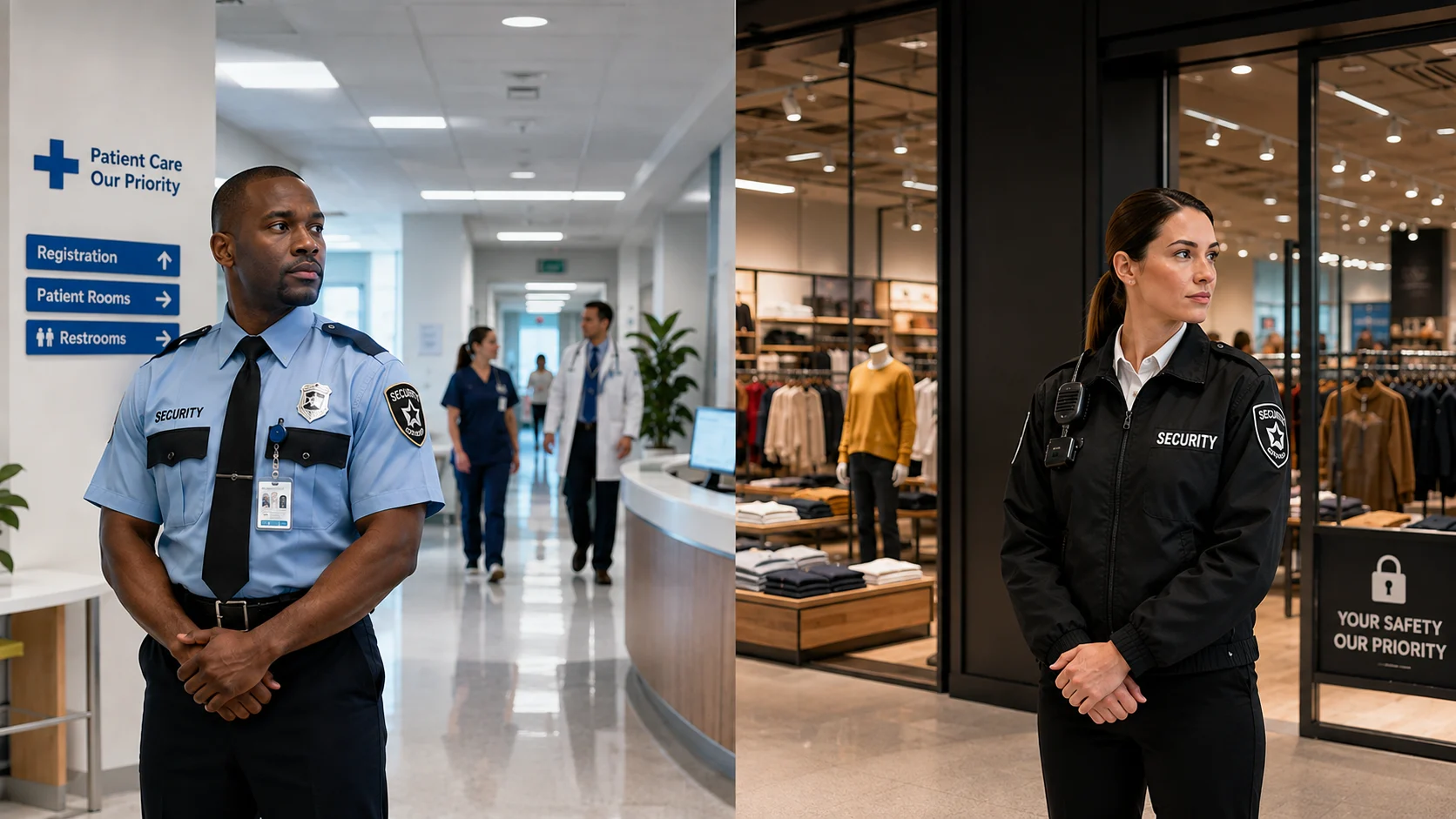
Daly City sits in a unique position along the edge of San Francisco, home to a dense mix of hospitals, medical offices, pharmacies, senior-care facilities, and retail centers that serve both residents and the broader Peninsula community.
That density brings a lot of foot traffic, a lot of vehicles, and a lot of moving parts for property owners and administrators to manage. Cameras, alarms, and access-control systems handle a portion of that workload, but they can only observe and record.
They cannot greet a visitor, calm down an agitated patient, or physically stop someone from walking out with unpaid merchandise. That gap is where healthcare and retail security guards in Daly City come in, offering a human presence that technology alone cannot replicate.
Healthcare properties and retail businesses face very different day-to-day risks, but both share a common need: someone on-site who can recognize a problem as it develops and respond appropriately before it escalates.
This article looks at why professional security matters for these two property types, what services typically apply to each, and how businesses in Daly City can figure out what level of coverage actually fits their situation.
Why Daly City Businesses Need Professional Security Guards
Any business that deals with the public patients, customers, vendors, delivery drivers is exposed to a certain amount of unpredictability. In Daly City specifically, that unpredictability plays out against a backdrop of busy commercial corridors, shared parking structures, and proximity to a major metropolitan area, all of which can affect how often incidents occur and how quickly they need to be addressed.
Common concerns that push healthcare and retail operators toward hiring on-site security include:
- Theft, whether it’s shoplifting at a retail counter or medical equipment going missing from a supply room
- Unauthorized individuals attempting to access restricted areas, from hospital wards to employee-only stockrooms
- Trespassing on the property after hours or in areas that are closed to the public
- Disruptive or aggressive behavior from customers, patients, or visitors
- Safety concerns for employees, especially those working alone or during closing shifts
- Incidents in parking lots and parking structures, including vehicle break-ins and confrontations
- After-hours activity around loading docks, entrances, or exterior areas that aren’t easily monitored by staff
None of these issues are unique to Daly City, but they tend to show up more frequently in areas with high visitor volume and mixed commercial-residential zoning, which describes much of the city. A guard on-site doesn’t just react to these situations; their visible presence often prevents smaller issues from turning into bigger ones in the first place.
Healthcare Security Guard Services in Daly City
Hospitals, clinics, medical offices, and pharmacies operate under a different set of pressures than most other businesses. Patients and their families are often dealing with stress, pain, or fear, which can make ordinary interactions feel tense. At the same time, these facilities have to protect controlled substances, sensitive patient information, and expensive equipment, all while staying open and welcoming to the public.
A healthcare security guard’s role typically includes:
- Entrance and exit monitoring: Keeping track of who enters and leaves a facility helps staff maintain situational awareness, especially in larger buildings with multiple points of access.
- Visitor monitoring: Verifying visitors, directing them to the correct department, and keeping an eye on common areas so staff can focus on patient care instead of managing foot traffic.
- Restricted-area protection: Pharmacies, medication storage rooms, and areas like maternity wards or psychiatric units often require an extra layer of oversight beyond a locked door.
- Parking-area patrols: Hospital and clinic parking lots see constant turnover throughout the day and night, which can make them a target for vehicle theft or break-ins if left unattended.
- Incident reporting: Detailed, timely documentation of any disturbance, theft, or safety concern gives facility administrators a clear record to reference if a situation needs follow-up.
- Disturbance response: Whether it’s a family dispute in a waiting room or a patient becoming agitated, a trained guard can step in and help manage the situation before it disrupts care for others.
- Staff and visitor safety: Late-shift nurses, front-desk staff, and pharmacy technicians often feel more comfortable knowing there’s someone trained to respond nearby.
- Professional de-escalation: Healthcare settings call for a calmer, more measured approach than a typical security response. Guards working in these environments are trained to defuse tense situations without making them worse.
Senior-care facilities share many of these same needs, often with added emphasis on monitoring who comes and goes given the vulnerability of the residents.
Retail Security in Daly City
Retail stores, shopping centers, and grocery or department stores face a different mix of challenges, most of which center on loss prevention, customer experience, and the practical realities of running a store that’s open to anyone who walks in.
Retail security guards typically help with:
- Shoplifting: from opportunistic incidents to more calculated attempts at concealing merchandise
- Organized retail theft: where multiple individuals coordinate to steal large quantities of goods, often targeting specific product categories
- Customer disputes: including conflicts over returns, pricing, or general disagreements that escalate at the register or on the sales floor
- Employee safety: particularly for staff working closing shifts or handling cash at the end of the day
- Parking-lot activity: including car break-ins, loitering, or confrontations that spill outside the store itself
- Unauthorized access to stockrooms: loading docks, or employee-only areas
- Opening and closing procedures: where a guard’s presence adds a layer of protection during the most vulnerable parts of the business day
- Visible security presence: which on its own can influence whether someone decides to attempt theft in the first place
- Incident documentation: giving store management and, when necessary, law enforcement a clear account of what happened
Shopping centers with multiple tenants often benefit from security that patrols common areas, not just a single storefront, since problems in a shared parking lot or walkway can affect every business on the property.
When Does a Business Need an Armed Guard?
This is one of the most common questions property owners ask, and the honest answer is that it depends entirely on the specific risks and requirements of the property. An armed guard is not automatically the right fit just because a business wants a stronger security presence; in fact, most healthcare facilities and retail stores operate perfectly well with unarmed security.
Factors that typically go into this decision include:
- The overall risk level of the property, based on past incidents or the nature of the business
- Whether the location handles high-value assets, cash, or controlled substances
- The hours of operation, particularly for properties that stay open late or overnight
- Client or corporate security requirements, which sometimes specify a particular coverage type
- Local regulations and licensing requirements that govern armed security in California
Unarmed security is generally appropriate for retail stores, medical offices, and healthcare facilities where the primary goals are deterrence, monitoring, customer service, and de-escalation rather than responding to high-risk threats. Armed security may be considered for properties with elevated risk factors, such as facilities storing significant quantities of pharmaceuticals, businesses that have experienced serious incidents in the past, or locations where the client’s own risk assessment calls for it. The right call usually comes out of a conversation between the property owner and a security provider who can evaluate the specifics of the location rather than applying a one-size-fits-all approach.
Healthcare and retail security guards in Daly City: What’s the Difference?
While both healthcare and retail security guards in Daly City properties benefit from professional security, the focus of that security looks different depending on the setting.
Healthcare security tends to center on patient and staff safety, controlling access to restricted or sensitive areas, and de-escalating emotionally charged situations without disrupting the care environment. The guard’s job is as much about maintaining a calm, orderly atmosphere as it is about preventing theft or unauthorized entry.
Retail security, on the other hand, leans more heavily toward theft deterrence, protecting inventory, monitoring entrances and exits, and keeping parking areas safe for customers and employees. Customer safety still matters, but the day-to-day priorities are shaped more by loss prevention and maintaining a positive shopping experience than by clinical or patient-care concerns.
Understanding this distinction matters when choosing a security provider, since a guard trained primarily for retail loss prevention may not be the right fit for a hospital floor, and vice versa.
What to Look for in a Daly City Security Company
Not all security companies operate the same way, and choosing the right one can make a real difference in how effectively a property is protected.
A few things worth checking before signing a contract:
- Licensing: Confirm the company and its guards hold valid California security BSIS licenses, and armed guards carry the appropriate permits.
- Training: Ask about the specific training guards receive for healthcare or retail environments, not just general security basics.
- Experience: A company with a track record in similar settings will be more familiar with the particular challenges of that industry.
- Communication: Clear, responsive communication between guards, supervisors, and the client is essential when issues come up.
- Post orders: Well-documented post orders ensure guards know exactly what’s expected of them at a given property.
- Reporting: Detailed incident reports should be standard practice, not an afterthought.
- Professionalism: Guards should represent the business well, since they’re often one of the first people a visitor or customer interacts with.
- Scheduling flexibility: Healthcare facilities and retail stores often need coverage outside standard business hours, including overnight and weekend shifts.
- Armed and unarmed options: A provider that can offer both gives a property room to adjust coverage as needs change over time.
How Security Base Group Supports Daly City Healthcare & Retail Properties
Security Base Group works with healthcare and retail security guards in Daly City to build coverage around the specific risks and operating conditions of each property, rather than applying a generic template. For a hospital or clinic, that might mean unarmed guards focused on visitor monitoring, restricted-area protection, and de-escalation support during busy shifts.
For a shopping center or grocery store, it might mean a visible presence during peak hours combined with parking patrol and incident documentation.
Services relevant to these property types include on-site security, unarmed and armed security depending on the assessed risk, mobile patrol for larger properties or shopping centers, access monitoring, parking patrol, alarm response, and consistent incident reporting so property managers have a clear record of activity on-site.
The goal is straightforward: match the right type of coverage to the right property, based on an honest look at what that property actually needs, rather than defaulting to the highest level of security regardless of the situation.
Choose the Right Security Coverage for Your Daly City Property
Figuring out the right coverage for a specific property usually comes down to a few practical questions. What industry does the property operate in, and what are the typical risks associated with it? What hours does the business operate, and does that include overnight or after-hours periods when the property is more vulnerable? Has the location experienced security incidents in the past, and if so, what kind? Where is the property located, and do its surroundings busy retail corridor, medical campus, standalone building affect its exposure to certain risks?
Answering these questions honestly, ideally with input from a security provider familiar with Daly City, makes it much easier to land on a coverage plan that fits rather than one that’s either more than necessary or not enough.
Frequently Asked Questions
Do small clinics and pharmacies really need security guards, or is that just for hospitals?
Smaller healthcare properties often deal with the same issues as larger hospitals: controlled substances, agitated patients, and after-hours vulnerability just on a smaller scale. Many pharmacies and independent clinics in Daly City bring in security specifically because they don’t have the staff on hand to manage a disturbance or monitor entrances the way a larger facility can.
What’s the difference between a mobile patrol and an on-site guard?
An on-site guard is stationed at a single property throughout their shift, while a mobile patrol checks in on multiple properties on a set route, usually parking centers, closed retail sites, or smaller businesses that don’t need someone present around the clock. Many Daly City retail and shopping center clients use a mix of both depending on the time of day.
Can a security guard actually stop a shoplifter?
Guards are trained to observe, deter, and document incidents, and in many cases their presence alone discourages theft before it happens. What they can and can’t do physically depends on company policy, local law, and the specific situation, so it’s worth discussing this directly with a provider rather than assuming a guaranteed outcome.
How much security coverage does a typical retail store in Daly City need?
It varies a lot by store size, hours, and past incident history. A smaller boutique with regular daytime hours may only need occasional patrol checks, while a larger department store or one that stays open into the evening might benefit from a dedicated on-site guard during peak and closing hours.
Is armed security legal for healthcare and retail security guards in Daly City?
Yes, as long as the guards and the company hold the appropriate California licensing and permits for armed security. Whether armed coverage makes sense for a specific property is a separate question from legality, and it should be based on an honest risk assessment rather than assumption.
How do I know if my property needs unarmed or armed guards?
This usually comes down to the property’s risk level, what it stores or handles, its hours of operation, and any past incidents. A security provider can walk through these factors with you and recommend coverage that matches your actual situation rather than defaulting to one option.
Conclusion
Healthcare and retail Security guards in Daly City operate in an environment where cameras and alarms are useful but incomplete on their own. A trained security guard adds the human judgment, presence, and responsiveness that technology can’t fully replace, whether that’s calming a tense situation in a hospital waiting room or deterring theft on a busy retail floor. The right approach depends on the specific property, its risks, and how it operates day to day.
If you manage healthcare and retail security guards in Daly City and want to talk through what security coverage might make sense for your property, contact Security Base Group to discuss your specific needs and help put together a plan that fits.


