
Commercial Security Guards in Corona: How to Protect Your Business & Property
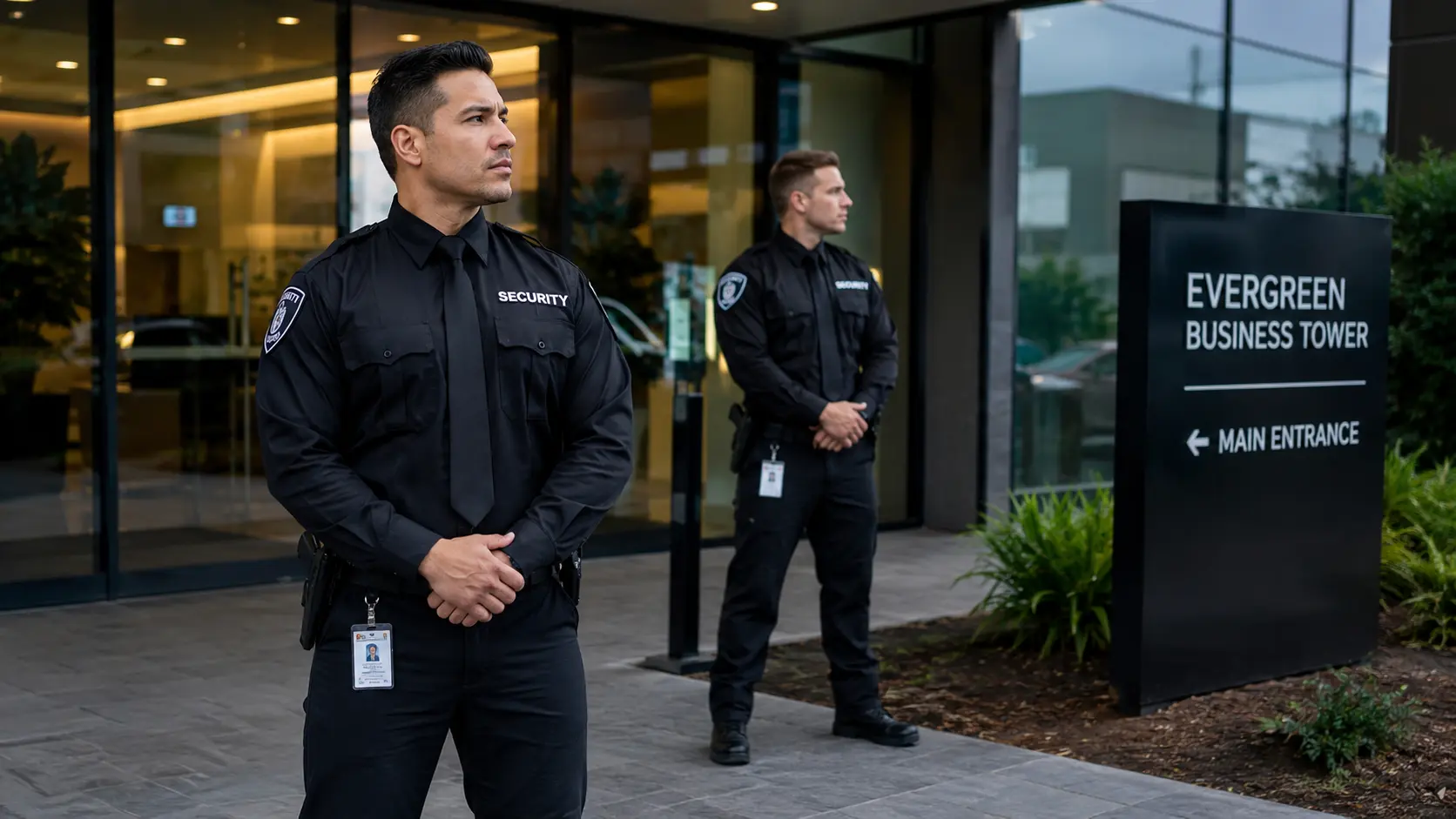
Corona has grown into one of the busier commercial corridors in the Inland Empire, with office parks along Lincoln Avenue, retail centers near the Crossings, and warehouse space stretching toward the 15 and 91 freeway interchange. Every property type carries its own mix of foot traffic, delivery schedules, parking demand, and after-hours exposure, which means no two businesses need the same security setup.
A small retail storefront closing at 9 p.m. has different concerns than a distribution center running overnight shifts, and a multi-tenant office building has different access-control needs than a construction site with temporary fencing.
This is where commercial security guards in Corona come in. Depending on the property, professional security support can help with access control, property monitoring, employee and visitor safety, parking-area monitoring, perimeter checks, after-hours coverage, and incident reporting.
This guide walks through what commercial security guards actually do, which Corona businesses tend to benefit from added security, how on-site guards compare to mobile patrol, the difference between armed and unarmed coverage, and how to build a security plan that fits your property.
What Do Commercial Security Guards in Corona Do?
Day-to-day responsibilities vary from property to property, but most assignments involve some combination of the following:
- Monitoring entrances and exits to keep track of who is coming and going during business hours
- Access control, including checking credentials, verifying appointments, or managing key card and badge systems
- Visitor and vendor management, such as signing in guests, directing deliveries, and confirming that vendors are authorized to be on-site
- Property patrols on a set schedule or as needed, covering interior common areas, hallways, and exterior grounds
- Parking-area monitoring, particularly during opening, closing, and shift-change periods when lots see the most activity
- Perimeter checks, including exterior doors, gates, fencing, and loading areas
- Monitoring restricted areas, such as storage rooms, server rooms, or areas with limited employee access
- Identifying and reporting suspicious activity to property management or, when appropriate, local authorities
- Incident reporting, documenting anything from a maintenance issue to an unauthorized entry attempt
- Communicating regularly with property managers so that concerns are addressed before they escalate
- Supporting emergency procedures, such as evacuation routes or coordination during a fire alarm
It’s worth being clear about what commercial security guards are not: a substitute for police or emergency services. Their role is to monitor, document, deter through visible presence, and communicate, not to take on the responsibilities of law enforcement. A well-run security plan works alongside emergency services, not instead of them.
Which Corona Businesses Can Benefit From Commercial Security?
Not every business needs a dedicated security guard; requirements depend heavily on the property type, layout, and risk factors. Here’s how different commercial spaces in Corona typically approach security.
Office Buildings
Office properties usually deal with employee entrances, visitor access during business hours, parking lot activity, and coverage after standard hours. Front-desk or lobby-based guards are common here, along with periodic patrols of parking structures.
Retail Stores and Shopping Properties
Retail locations along Corona’s commercial corridors deal with customer safety near entrances, parking lot visibility, closing procedures, and a general security presence during peak shopping hours. Shopping centers with multiple stores may also need coordination between tenants and property management.
Warehouses and Industrial Properties
Warehouses and industrial sites near the freight corridors deal with loading dock activity, inventory storage, vehicle access points, restricted areas, and large exterior perimeters. These properties often benefit from a mix of patrol coverage and access control at gates.
Business Parks
Business parks with several buildings sharing parking, walkways, and entry points need security that accounts for multiple access points rather than a single front door.
Multi-Tenant Commercial Properties
Multi-tenant buildings share entrances, parking, and common spaces among several businesses. Property managers here often look for security that serves the whole property rather than one tenant.
Commercial Construction or Remodeling Sites
Active construction and remodeling projects introduce their own exposure: equipment and materials on-site, temporary fencing, changing access points, and after-hours periods when the site sits unattended. Construction security is typically focused on monitoring rather than daily operational duties.
The point isn’t that every business in Corona needs a guard posted at the door; the right level of coverage depends on the property’s layout, hours, foot traffic, and specific vulnerabilities, which is why a walkthrough assessment matters more than a one-size-fits-all package.
How Commercial Security Guards Help Protect Business Property
Once a business decides that added security makes sense, here’s how that coverage typically functions in practice.
Access Control
Guards can monitor who enters and exits a property, verify credentials or appointments, and manage entry points so unauthorized individuals are identified before reaching sensitive areas. This is one of the most common functions of commercial security at office buildings and multi-tenant properties.
Visible Security Presence
A uniformed, professional presence on a property contributes to overall awareness and deterrence simply by being visible near entrances, parking areas, and common spaces. It isn’t a guarantee against every incident, but it’s a factor property managers regularly weigh when building a security plan.
Parking Lot Monitoring
Parking areas see the most activity and the least natural oversight during opening and closing periods. Guards assigned to monitor lots during these windows can help manage traffic flow and keep an eye on vehicles and pedestrians.
Perimeter Checks
Regular checks of exterior doors, gates, fencing, and loading areas confirm that a property’s boundaries remain secure between scheduled patrols.
After-Hours Security
Many commercial properties are most vulnerable once employees and customers have gone home. After-hours coverage through an on-site guard or scheduled patrol rounds extends monitoring into the hours a property would otherwise sit unattended.
Incident Reporting
Accurate, timely incident reports give property managers a record of what happened, when, and where. Over time, that documentation can help identify recurring issues, such as a gate that keeps getting propped open or a parking area with repeated complaints, so procedures can be adjusted early.
On-Site Security vs. Mobile Patrol for Corona Businesses
Two of the most common approaches to commercial security guards in Corona are on-site guards and mobile patrol, and the right choice often comes down to the size and layout of the property.
On-site security may be a better fit when a property needs:
- A continuous, dedicated presence
- Active access-control at a single entrance
- Coverage for busy entrances with steady foot traffic
- Visitor and vendor management
- A fixed security post, such as a front desk or gatehouse
Mobile patrol may be a better fit when a property has:
- A large footprint that’s hard to cover from one fixed post
- Multiple buildings across a business park or shopping center
- Large parking areas that need periodic checks rather than constant monitoring
- Perimeter and gate checks spread across a wide site
- After-hours needs where a scheduled patrol is sufficient without a guard stationed on-site around the clock
Some Corona properties, such as larger business parks, multi-tenant buildings, or sites with both a staffed entrance and a large perimeter, benefit from combining the two: an on-site guard during business hours paired with mobile patrol checks overnight. Neither approach is universally better; the right mix depends on the property’s size, hours, and risk points.
Armed Guard vs. Unarmed Guard
One of the most common questions business owners ask is whether they need an armed guard or an unarmed guard. The honest answer depends on the property, not an assumption that armed security is automatically the stronger option.
Factors that typically influence this decision include:
- The nature of the assignment (a retail lobby has different needs than a high-value asset site)
- The overall property environment and layout
- Specific security concerns identified during a property assessment
- Client and property-manager requirements
- Operating hours, including whether the site is staffed overnight
- Access-control needs and how many entry points require monitoring
- Applicable California licensing and training requirements for armed personnel
An unarmed guard can provide a professional security presence, access monitoring, patrols, visitor management, and incident reporting the core functions most commercial properties need day-to-day. An armed guard may be appropriate when a property’s risk profile calls for that level of security, such as certain high-value sites identified during an assessment. The decision should follow a review of the property’s actual needs, not a default assumption either way.
How to Build a Commercial Security Plan for a Corona Property
A useful security plan starts with the property itself, not a generic checklist.
Step 1: Understand the Property
Identify what type of property you’re securing: office, retail, warehouse, industrial site, business park, or multi-tenant building. Each comes with different traffic patterns and risk points.
Step 2: Identify Vulnerable Areas
Walk the property and note entrances, loading areas, parking lots, rear doors, gates, storage areas, and the exterior perimeter.
Step 3: Review Operating Hours
Consider opening and closing times, overnight periods, weekends, and shift changes. Security needs at 8 a.m. look very different from security needs at 11 p.m.
Step 4: Determine Security Coverage
Decide whether the property needs an on-site guard, mobile patrol, a combination of both, and whether an armed or unarmed guard fits the assignment.
Step 5: Establish Communication and Reporting
Set clear expectations for how guards communicate with property management and how incidents are documented. Consistent communication is often what separates an effective plan from one that just looks good on paper.
Security Considerations for Growing Commercial Properties in Corona
Corona’s commercial and industrial base has continued to expand, particularly around logistics and warehouse space near the freeway corridors, and security needs tend to shift as properties change.
Revisit a security plan when:
- A business expands into additional square footage
- A property undergoes remodeling or renovation
- New tenants move into a multi-tenant building
- Employee headcount increases
- Parking demand changes with growth
- Operating hours expand, including new overnight or weekend shifts
- Construction begins on-site or nearby
- Property layouts change, such as new entrances or reconfigured loading areas
A security plan built for a property five years ago may not reflect its current footprint, tenant mix, or hours of operation. Periodic reassessment helps keep coverage aligned with how the property is actually being used.
Why Choose Security Base Group for Commercial Security in Corona?
Security Base Group provides commercial security services across California, including armed and unarmed guards, on-site coverage, and support for construction and business properties. For Corona businesses evaluating their options, Security Base Group works with property managers and business owners to match coverage to the property’s actual requirements rather than a one-size-fits-all package.
Relevant services include Commercial Security, Armed Security, and Unarmed Security, along with coverage for construction sites and temporary event needs.
For businesses researching broader security options in the area, the security guard services in Corona page covers the full range of coverage available locally, while this guide focuses specifically on commercial and business-property security.
How to Choose a Commercial Security Company in Corona
Whether or not you end up working with Security Base Group, use this checklist to evaluate any commercial security provider:
- Commercial security experience: Has the company worked with properties similar to yours?
- Appropriate licensing and training: Are guards properly BSIS licensed under California requirements?
- Ability to customize coverage: Does the plan reflect your property’s actual layout and hours, not a generic package?
- Range of services: Does the provider offer both on-site and mobile patrol options, along with armed and unarmed guards?
- Communication procedures: How and how often will guards communicate with property management?
- Incident reporting: Is documentation clear, timely, and useful for identifying patterns?
- Supervisor availability: Is there someone to escalate concerns to beyond the guard on duty?
- Scheduling flexibility: Can coverage adjust for seasonal changes, events, or shift changes?
- Clear responsibilities: Are guard duties clearly defined for your specific property?
- Ability to adjust as needs change: Can coverage scale up or down as your business grows or changes?
Working through this list before signing a contract helps ensure the coverage you choose actually matches your property.
FAQs
1. What do commercial security guards do in Corona?
They typically handle access control, property patrols, parking-area monitoring, perimeter checks, visitor management, and incident reporting, based on the property’s security plan.
2. What types of businesses need commercial security?
Office buildings, retail properties, warehouses, industrial sites, business parks, multi-tenant buildings, and active construction sites are common examples, though not every business needs the same level of coverage.
3. Should I hire an armed guard or an unarmed guard?
It depends on the property’s risk factors and operating requirements. Unarmed guards cover most day-to-day needs, while armed guards may fit assignments with a higher risk profile.
4. Is mobile patrol enough for a commercial property?
Often, for larger sites with multiple buildings or extensive parking. Properties with busy, single-entrance access needs may be better served by an on-site guard, or a combination of both.
5. Can commercial security guards work after business hours?
Yes. After-hours and overnight coverage, through an on-site guard or scheduled patrol rounds, is a common part of commercial security plans.
6. Can Security Base Group create a security plan for my Corona business?
Yes. Security Base Group reviews the property, identifies vulnerable areas, and recommends on-site security, mobile patrol, armed guards, unarmed guards, or a combination.
Conclusion
Different commercial properties in Corona require different levels and types of security. An office building’s needs look nothing like a warehouse’s, and a retail storefront’s closing procedures are a different challenge than a business park’s shared parking areas. Depending on the assignment, the right solution may involve on-site security, mobile patrol, armed guards, unarmed guards, or some combination of these matched to the property’s layout, hours, and specific risk points rather than a generic package.
Looking for commercial security guards in Corona? Contact Security Base Group to discuss your property, security requirements, and the type of coverage that best fits your business.


