
High-Rise Building Security in Orange County: Best Property Managers Guide
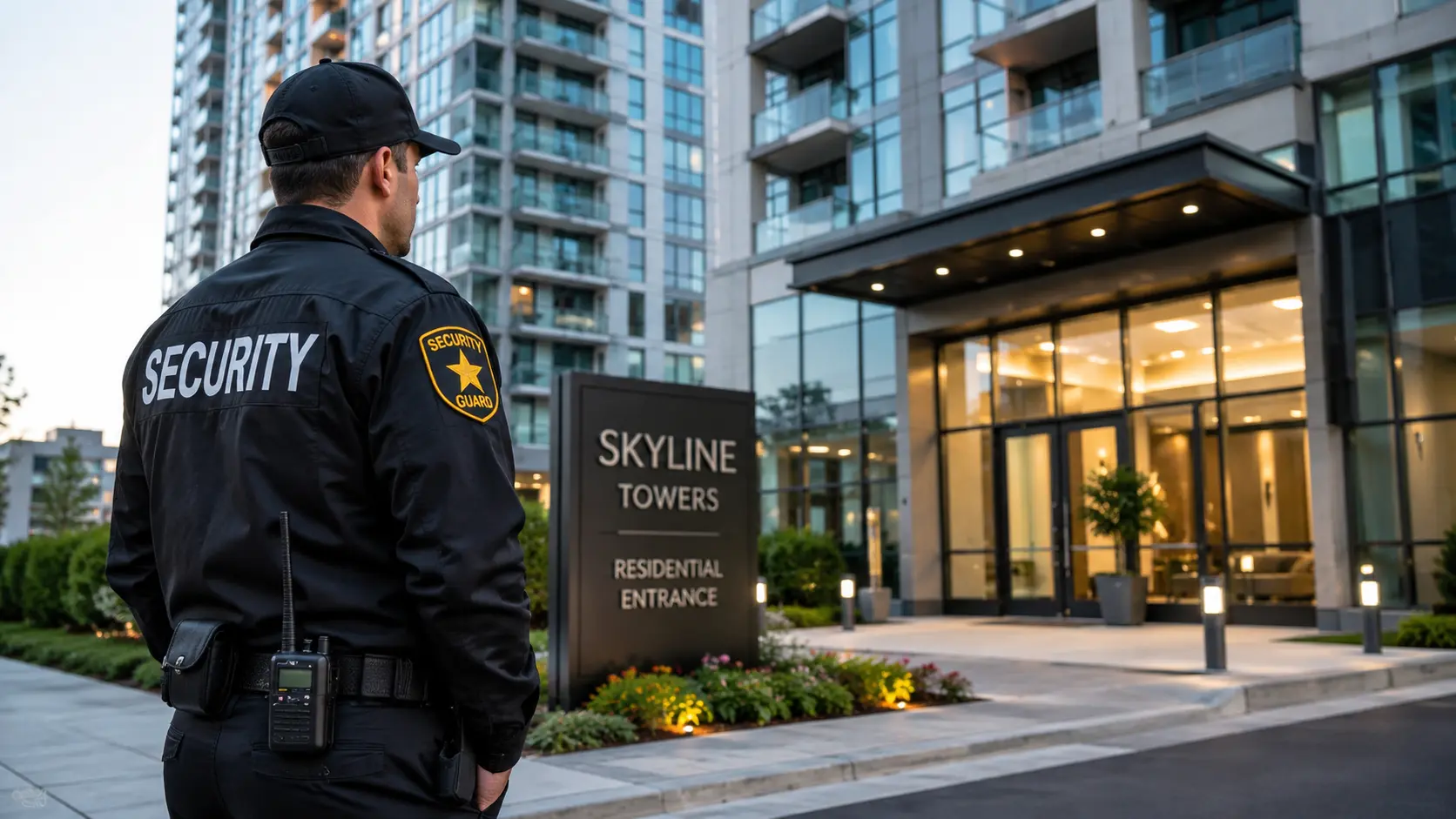
Managing a high-rise building comes with security challenges that a small office or retail property simply doesn’t have. Multiple entrances, hundreds of tenants and visitors, parking structures, elevators, restricted floors, and after-hours activity all create points of vulnerability that property managers have to account for every day. High-rise building security in Orange County isn’t a one-size-fits-all service; it needs to be built around how the building actually operates, who moves through it, and when.
This guide covers what high-rise security involves, the risks property managers commonly face, and how to put together a plan that fits your property. Whether you’re overseeing a downtown office tower, a residential high-rise, or a mixed-use building, the goal is the same: give tenants, residents, and visitors a safe, well-managed environment without disrupting daily operations.
Why High-Rise Buildings in Orange County Need Specialised Security
A ten-story office tower or residential high-rise operates differently than a single-story retail centre. More people are moving through the property, more places for someone to go unnoticed, and more moving parts for a property manager to track.
Several factors make high-rise properties more complex to secure:
- Multiple access points: lobbies, garage entrances, loading docks, and side or rear doors all need monitoring.
- High visitor traffic: a steady flow of employees, clients, delivery drivers, and contractors throughout the day.
- Mixed occupant types: residential and commercial tenants have different access needs and privacy expectations.
- After-hours activity: cleaning crews, maintenance staff, and late-working tenants often need access outside normal hours.
- Parking garages: Multi-level structures create blind spots and additional entry points.
- Elevator access: Elevators can move people to restricted floors in seconds.
- Restricted floors: executive suites, server rooms, and tenant-only areas need to stay off-limits.
- Contractors and deliveries: ongoing maintenance and vendor deliveries require a process for verifying who’s coming in.
- Emergencies: fires and medical emergencies require clear procedures and staff who know the building.
Orange County’s mix of office towers, residential high-rises, and mixed-use developments in cities like Irvine, Newport Beach, Anaheim, and Santa Ana means property managers often balance several of these factors at once. A building with ground-floor retail, mid-level offices, and upper-floor residences has a very different security profile than a single-use office tower of the same height.
What Does High-Rise Building Security in Orange County Include?
A complete security plan typically covers several distinct areas of the property.
Lobby & Entrance Security
The lobby is usually the first and most important checkpoint. Security personnel here monitor who enters and exits, greet visitors, and watch for anyone who doesn’t belong.
Visitor Management
This means having a consistent process for checking in guests, verifying who they’re there to see, and issuing visitor passes where required, keeping an accurate record of who’s in the building.
Access Control
Access control covers how tenants, residents, employees, and approved visitors move through the building, whether by key card, fob, keypad, or guard-verified entry. Security personnel support these systems by watching for tailgating or propped doors.
Building & Floor Patrols
Regular patrols through common areas, stairwells, and shared amenity spaces help identify problems early, from maintenance issues to unauthorised activity.
Parking Garage Monitoring
Parking structures need their own attention: entry and exit points, activity between vehicles, and stairwells connected to the garage.
After-Hours Security
Once regular hours end, fewer people are around, which means unauthorised access is more likely to go unnoticed without dedicated after-hours coverage.
Incident Reporting
Detailed, timely reports give property managers a clear record of what happened, useful for insurance purposes and identifying patterns over time.
Common Security Risks for High-Rise Buildings
High-rise building security in Orange County has to account for a recurring set of risks. Matching the right response to each one is the goal.
- Unauthorised access is addressed through controlled entry points and visitor verification.
- Tailgating and door propping are reduced through security personnel and staff training.
- Package theft or equipment theft is reduced through monitored entrances and consistent patrols.
- Vandalism is addressed through regular patrols and a visible security presence.
- Trespassing is managed through access control and floor-by-floor monitoring.
- Parking garage incidents are addressed through dedicated garage patrols.
- After-hours access issues are managed through stricter after-hours protocols.
- For tenant or visitor disputes, security personnel can help de-escalate and document these situations.
Security guards reduce risk and improve response; they don’t eliminate it, and no security service can guarantee an incident will never occur. The goal is a well-managed property where risks are minimised and handled quickly when they come up.
How Security Guards Protect High-Rise Building Entrances
The entrance is where most security activity happens, since it’s the primary point of control for who comes in and out. At the entrance, security personnel typically handle entrance monitoring, visitor checks, credential verification where the building requires it, delivery and contractor tracking, and identifying activity that looks out of place.
They also keep security logs, a written or digital record of entries, visitors, and notable events, and communicate directly with property management about issues, maintenance needs, or incidents as they arise. This is the practical, day-to-day function of a guard at the entrance: consistent, accurate monitoring of who’s coming and going.
Access Control & Visitor Management for High-Rise Buildings
Most high-rise buildings rely on a similar sequence for managing who gets in: entry, identification, authorisation, access, and monitoring. This looks a little different depending on who’s coming through: employees with regular access, residents, guests being announced, vendors with scheduled appointments, contractors, and after-hours visitors who need extra verification.
Why Visitor Management Matters
Without a consistent process, it’s difficult to know who’s actually in the building at any given time. A clear check-in system gives property managers an accurate record and makes it easier to spot when something doesn’t add up.
Managing Restricted Areas
Server rooms, executive offices, and tenant-only spaces need an extra layer of control beyond general building access, such as separate key card zones or guard verification for anyone requesting entry.
Preventing Unauthorized Entry
Combining access control technology with on-site personnel closes gaps that either one alone might miss. A locked door doesn’t stop tailgating, but a guard watching the entrance will notice it.
Parking Garage & Perimeter Security
Parking structures are one of the more overlooked areas of high-rise building security, even though they’re often the first place residents, employees, and visitors arrive.
A solid approach includes regular patrols through parking levels (not just entry and exit points), monitoring vehicle activity, attention to pedestrian walkways connecting the garage to the building, patrols of exterior entrances and the surrounding perimeter, and reporting broken lighting or damaged gates that could affect security.
Guards in a parking structure can reduce the likelihood of incidents and respond quickly when something happens, but as with any security measure, they can’t guarantee an incident will never occur. Consistent presence and monitoring make the biggest difference.
Elevator & Restricted-Floor Security
Elevators are unique to high-rise buildings and deserve their own consideration. Someone who gets past the lobby can reach a restricted floor in seconds if elevator access isn’t properly controlled.
Key considerations include restricted floors (executive offices, server rooms, mechanical areas), tenant- and employee-only areas, elevator access control tied to key cards or fobs, additional restrictions after hours, and monitoring for repeated attempts to access floors that don’t match a person’s authorisation. Guards support the building’s existing electronic access systems rather than replacing them, stepping in when something doesn’t match the expected pattern.
Security for Different Types of High-Rise Buildings in Orange County
High-Rise Office Buildings
Office towers deal with a steady flow of employees during business hours, client visitors, vendor deliveries, and after-hours access for cleaning and maintenance crews. Security here typically focuses on lobby monitoring, visitor check-in, and controlling access during off-peak hours.
Residential High-Rise Buildings
Residential towers centre on resident safety and privacy. Guest management, package handling, common area patrols, and parking security are usually the priority.
Mixed-Use Buildings
Mixed-use properties combine residential and commercial occupants, which adds complexity. Retail or office tenants need daytime access for customers, while residents need controlled access at all hours; keeping the two groups properly managed takes a more detailed plan.
Luxury Properties
Higher-end properties often place extra weight on discretion and a polished security presence: controlled access, careful visitor screening, and privacy for residents or high-profile tenants.
Do High-Rise Buildings Need 24/7 Security Guards?
Not every high-rise building requires around-the-clock, on-site guards; it depends on building operating hours, number of entrances, overall occupancy, the property’s risk profile and history of past incidents, whether there’s a parking structure attached, residential versus commercial use, and property management’s specific requirements.
A busy residential high-rise with a garage and constant guest traffic may need 24/7 on-site coverage. A smaller office building with defined hours might only need guards during peak occupancy, supplemented by scheduled patrols during off-hours. There’s no single right answer; coverage should match how the building actually functions.
On-Site Security Guards vs. Mobile Patrol for High-Rise Buildings
On-Site Security Guards
On-site guards make the most sense for busy lobbies, buildings with heavy visitor traffic, residential towers with daily guest management, and any property where real-time monitoring of entrances matters.
Mobile Patrol
Mobile patrol works well for exterior areas, parking structures, and periodic checks during lower-traffic periods a practical option for properties that don’t need a guard stationed at all times but still want regular, documented checks.
Hybrid Security
Many high-rise properties benefit from combining the two: an on-site guard covering the lobby during business hours, paired with mobile patrol covering the garage and exterior during off-peak or overnight hours. This can provide solid coverage without full-time staffing in every area.
How Many Security Guards Does a High-Rise Building Need?
There’s no universal number that applies to every property, since high-rise building security in Orange County has to reflect how each building is actually used. Staffing depends on building size, number of access points and floors, occupancy, whether there’s a parking structure, operating hours, specific security risks, visitor volume, and the level of patrol coverage and staffing property management wants to provide.
A 30-story office tower with a single main entrance has different needs than a 15-story mixed-use building with retail, office, and residential access points. A proper security assessment one that looks at the specific building rather than a generic formula is a far more useful starting point than a flat staffing number.
How Property Managers Can Build a High-Rise Security Plan
Step 1: Identify Access Points: Map every entrance, exit, and connection point, including garage access and loading areas.
Step 2: Identify High-Risk Areas: Note restricted floors, mechanical rooms, and any areas with a history of incidents.
Step 3: Review Operating Hours: Understand when the building is busiest and when it’s mostly empty.
Step 4: Assess Parking & Exterior Areas: Look at how well-lit and monitored the garage and perimeter are.
Step 5: Determine Guard Placement: Decide where on-site personnel will have the most impact, typically the lobby and main entrance.
Step 6: Establish Patrol Requirements: Set a schedule for patrolling common areas, garages, and exterior grounds.
Step 7: Define Incident Reporting Procedures: Create a clear process for how guards document and report incidents.
Step 8: Review and Adjust the Plan: Revisit the plan periodically, especially after incidents or changes to occupancy or layout.
A structured approach like this gives property managers a plan that’s actually built around their building, not a generic template.
Why Choose Security Base Group for High-Rise Building Security in Orange County?
Security Base Group works with property managers throughout Orange County to build coverage around how a specific building operates. Services relevant to high-rise properties include BSIS-licensed armed and unarmed security guards, mobile patrol, commercial property security, customised security plans built around each property’s layout and risk factors, access monitoring support, detailed incident reporting, and flexible coverage options from daytime lobby staffing to full 24/7 coverage.
Every high-rise building is different, and Security Base Group works directly with property managers to determine the right mix of on-site guards, patrols, and coverage hours for their property.
Frequently Asked Questions:
1. What is high-rise building security?
It refers to the combination of personnel, access control, and monitoring used to protect a multi-story property covering entrances, parking, elevators, restricted floors, and common areas for tenants, residents, and visitors.
2. Why do high-rise buildings need security guards?
High-rise buildings have more entrances, more people, and more areas to monitor than smaller properties. A security guard company in Orange County helps manage visitor traffic, control access, patrol common areas, and respond to incidents as they happen.
3. How much security coverage does a high-rise building need?
Coverage depends on the building’s size, occupancy, operating hours, and risk factors. A security assessment is the most reliable way to determine whether a property needs on-site guards, patrols, or a combination of both.
4. Do high-rise buildings need 24/7 security?
Some do, especially residential towers or buildings with constant traffic and parking structures. Others only need coverage during business hours or peak occupancy, supplemented by scheduled overnight patrols.
5. Can security guards monitor building entrances?
Yes. Monitoring entrances is one of the core responsibilities of high-rise building security in Orange County, including visitor checks, credential verification, and watching for unusual activity.
6. Can security guards patrol high-rise parking garages?
Yes. Guards can patrol parking structures on a regular schedule, monitoring entry and exit points, walkways, and vehicle areas for suspicious activity.
7. Are armed or unarmed guards better for high-rise buildings?
It depends on the property’s risk profile and management’s preferences. Many high-rise buildings use unarmed guards for day-to-day lobby and access management, while some opt for armed security based on their specific needs.
8. How can an Orange County property manager get a security quote?
Property managers can contact Security Base Group directly to discuss their building’s layout, occupancy, and security needs, and receive a customised coverage plan and quote.
Protect Your Orange County High-Rise With a Customised Security Plan
Keeping a high-rise property secure means covering a lot of ground: access control, visitor management, lobby protection, parking security, regular patrols, and after-hours coverage, all tailored to how the building actually operates. There’s no generic formula that works for every property, which is why a customised approach matters. High-rise building security in Orange County should be built around your building’s specific layout, occupancy, and risk factors, with staffing levels that make sense for how tenants, residents, and visitors move through the property each day.
Need professional security for your Orange County high-rise? Contact Security Base Group to discuss a customised security plan for your property.


